


Is it possible to forgive a murderer? Would you be able to forgive the person who MURDERED someone you loved very deeply? This was the subject of the movie “Amish Grace” shown on the Lifetime Movie Network. The movie is based on a true story about the Amish community who within the fabric of their beings embraced the thinking which is the scaffolding of forgiveness. This community demonstrates how difficult it is to forgive even when deeply steeped in religious beliefs forgiveness is engrained. They also demonstrate how powerful forgiveness is in the healing of the soul.
On October 2, 2006 Carl Roberts entered into a one room school house in the Amish community of Nickel Mines, Pennsylvania. He lined up 11 young girls and shot them at point blank range. Roberts killed five of the girls and then killed himself. In an amazing act of courage the oldest girl, 13-year-old Marian Fisher asked Roberts to shoot her first. She hoped that she could spare the lives of the younger girls. And what was even more remarkable was that in just a few hours after the shooting an Amish neighbor went to the Roberts family to comfort them and to offer forgiveness.
A grandfather of one of the girls killed was telling the boys to forgive what had just happened as they prepared the body of one of the little girls for burial. How many of you could have done that? How many of you could have told the young boys that “We must not think evil of this man?” Yet these were the words of the grandfather. And what is even more unimaginable is that five days later the families who lost their daughters attended the funeral of the man who had killed them. They went not in anger or for retribution, but to comfort the family and let them know that all was forgiven.
The Amish learned to let go of their pain and suffering. What makes the Amish so remarkable is that they chose to see, using the words of Jerry Jampolsky, “the light instead of the lampshade” and saw the situation with spiritual sight, that although what this man did was an act of evil – inwardly, it was a cry for help. They were able to go beyond what their physical eyes were telling them and recognized that Roberts too was worthy of love. They were able to see Roberts not through the lens of anger, fear or guilt, but through the eyes of understanding and compassion.
As we struggle with our own difficulties in being able to forgive, we also open ourselves up to a benevolent force which is far more powerful than we could ever be. This creative force which is sometimes experienced as grace, is that inexplicable power which comes from something beyond ourselves. This power gives us the ability to forgive even when we feel within our hearts, forgiveness is humanly impossible. This moment of grace creates a profound interior renovation which completely changes the way we think. Instead of perceiving the situation through our judgments we see things differently, through what I call spiritual sight. When it happens, you can feel the power and presence of a higher intervention which transforms your relationships as you experience an outpouring of this inexplicable love.
This is the love which enabled the Amish to pray for everyone involved in what took place on October 2nd, not only for the innocent little girls who got killed and those still to recover, but for the killer himself. They knew that by expressing love it would bring about healing for all those concerned, whereas to take on and express the same evil as the attacker, that would only support evil and allow it to spread. The Amish learned that when we forgive we let our pain go.
Showing posts with label counseling. Show all posts
Showing posts with label counseling. Show all posts
Tuesday, March 30, 2010


Wednesday, March 17, 2010
Giving Away Your Power - And Reclaiming it Through Forgiveness
Are you still holding on to hurtful feelings about something that has happened in the past? Pain can be difficult to let go of. And yet have you ever realized that by holding on to these painful feelings you are giving away your power and control to the person who has hurt you? The truth is, when we blame another person for how we feel, we give them power and control over our emotional well-being. Since we already feel hurt by what was done to us, giving people control will only add to and prolong our suffering.
Think about it for a moment. Why would we want to give any control over to someone else who in many cases doesn’t really care about us, some of whom may even be cruel to us? After a while, if we continually blame the same person over and over again it becomes a habit and we get caught in a groove which becomes deeper and deeper. This leads us down the road of feeling helpless and hopeless and definitely like a victim. We now have become disempowered at someone else’s hands.
There is one point I would like to stress. Holding people accountable for their action is not the same as blaming them for how you feel. People can be forgiven for what they have done and also need to be held accountable for their actions. What leads to unnecessary suffering is making people responsible for your continued suffering. Remember, forgiveness allows us to regain our power, breaking the unhealthy behavior created by our anger, guilt or fear. Forgiveness requires that we do our inner work and it is this inner work which will set us free.
Exercise: Think of a time when you gave away your power to someone who may not have cared for you. It could be a cruel and abusive parent or relative, or a friend that didn’t necessarily have your best interest at heart. Or it could be a business associate who did something implying that it was “just business” totally disregarding how hard you may have worked. Or it could be a lover or spouse who has betrayed you.
Ask yourself – why am I spending so much time blaming so and so. Who is it really hurting? Why am I choosing to stay stuck in the past instead of living in the present moment and creating a more productive and peaceful future? Haven’t I suffered enough? Now look into the present and future where this situation is no longer an issue. What does your life look like now? How does it feel to be free of this burden? What have you learned about yourself? Now take a deep relaxing breathe and think about all the things to be thankful for. Hold gratitude and joy in your heart and go on with the rest of your day.
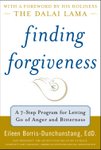
If you would like more help in learning how to forgive go to “Finding Forgiveness: A 7 Step Program for Letting go of Anger and Bitterness” published by McGraw-Hill, the website www.dreileenborris.com and the blog on forgiveness www.findingforgiveness.blogspot.com.
Think about it for a moment. Why would we want to give any control over to someone else who in many cases doesn’t really care about us, some of whom may even be cruel to us? After a while, if we continually blame the same person over and over again it becomes a habit and we get caught in a groove which becomes deeper and deeper. This leads us down the road of feeling helpless and hopeless and definitely like a victim. We now have become disempowered at someone else’s hands.
There is one point I would like to stress. Holding people accountable for their action is not the same as blaming them for how you feel. People can be forgiven for what they have done and also need to be held accountable for their actions. What leads to unnecessary suffering is making people responsible for your continued suffering. Remember, forgiveness allows us to regain our power, breaking the unhealthy behavior created by our anger, guilt or fear. Forgiveness requires that we do our inner work and it is this inner work which will set us free.
Exercise: Think of a time when you gave away your power to someone who may not have cared for you. It could be a cruel and abusive parent or relative, or a friend that didn’t necessarily have your best interest at heart. Or it could be a business associate who did something implying that it was “just business” totally disregarding how hard you may have worked. Or it could be a lover or spouse who has betrayed you.
Ask yourself – why am I spending so much time blaming so and so. Who is it really hurting? Why am I choosing to stay stuck in the past instead of living in the present moment and creating a more productive and peaceful future? Haven’t I suffered enough? Now look into the present and future where this situation is no longer an issue. What does your life look like now? How does it feel to be free of this burden? What have you learned about yourself? Now take a deep relaxing breathe and think about all the things to be thankful for. Hold gratitude and joy in your heart and go on with the rest of your day.
If you would like more help in learning how to forgive go to “Finding Forgiveness: A 7 Step Program for Letting go of Anger and Bitterness” published by McGraw-Hill, the website www.dreileenborris.com and the blog on forgiveness www.findingforgiveness.blogspot.com.
Wednesday, March 10, 2010
It's All My Mothers Fault and No I will NOT Forgive Her!
I remember a friend of mine telling me how mad she was at her mother. It seemed as though every time they got into a car together they would fight. There was a litany of reasons why my friend would not forgive her mother – the least of which she was stuck in the blame game.
When we blame others we are accusing them of something we believe they have done to us. We are placing fault on others insisting that they are the cause of our misery. When we are hurt because of something that has happened in the past and still feel the pain in the present we look for reasons to explain our pain. The truth is that we can never really know all the reasons why someone has hurt us, and more importantly we do not usually take the time to go within ourselves to understand what part we may have played in our life circumstances. We usually take the easy way out and like a knee jerk reaction we blame others for what may be causing our pain. That is not to say that others do not behave poorly and do things that are hurtful. What I am talking about is that when we continually blame someone else for our painful feelings, instead of making us feel better, blaming actually makes us feel worse.
Blaming causes more pain. When we blame someone else for our suffering we believe that someone else is the cause of our pain and that we need something from that person to feel better. We are dependent on them for our well being. What we actually have done is disempowered ourselves, giving other people control over how we feel. We have chosen not to take responsibility for what we are feeling.
Blaming others becomes a habit, sinking us further into the victim role. Like being in quick sand we feel powerless to change our circumstances. Underneath our need to blame is another issue that we are consistently running away from – our own feelings of guilt. Whenever we are accusing someone (blaming) of something we are secretly blaming ourselves. The content may be different but the form will be the same. If we are blaming someone for nasty horrible things they have said to us, we may not say those same kinds of things to them but if we are honest with ourselves we certainly have said unkind things to others. The important point to remember is that we are not here to beat ourselves up when we learn things about ourselves we wish we hadn’t. Now that we have gained a new understanding about ourselves we can make different choices. When we see the humanness in ourselves it is easier to see the humanness in others. Being able to then forgive ourselves we can also forgive others and stop the blame game. And remember, holding on to guilt is a choice too.
You can find more information on how to stop the blame game and to heal our guilt in “Finding Forgiveness: A 7 Step Program for Letting Go of Anger and Bitterness” published by McGraw-Hill.
When we blame others we are accusing them of something we believe they have done to us. We are placing fault on others insisting that they are the cause of our misery. When we are hurt because of something that has happened in the past and still feel the pain in the present we look for reasons to explain our pain. The truth is that we can never really know all the reasons why someone has hurt us, and more importantly we do not usually take the time to go within ourselves to understand what part we may have played in our life circumstances. We usually take the easy way out and like a knee jerk reaction we blame others for what may be causing our pain. That is not to say that others do not behave poorly and do things that are hurtful. What I am talking about is that when we continually blame someone else for our painful feelings, instead of making us feel better, blaming actually makes us feel worse.
Blaming causes more pain. When we blame someone else for our suffering we believe that someone else is the cause of our pain and that we need something from that person to feel better. We are dependent on them for our well being. What we actually have done is disempowered ourselves, giving other people control over how we feel. We have chosen not to take responsibility for what we are feeling.
Blaming others becomes a habit, sinking us further into the victim role. Like being in quick sand we feel powerless to change our circumstances. Underneath our need to blame is another issue that we are consistently running away from – our own feelings of guilt. Whenever we are accusing someone (blaming) of something we are secretly blaming ourselves. The content may be different but the form will be the same. If we are blaming someone for nasty horrible things they have said to us, we may not say those same kinds of things to them but if we are honest with ourselves we certainly have said unkind things to others. The important point to remember is that we are not here to beat ourselves up when we learn things about ourselves we wish we hadn’t. Now that we have gained a new understanding about ourselves we can make different choices. When we see the humanness in ourselves it is easier to see the humanness in others. Being able to then forgive ourselves we can also forgive others and stop the blame game. And remember, holding on to guilt is a choice too.
You can find more information on how to stop the blame game and to heal our guilt in “Finding Forgiveness: A 7 Step Program for Letting Go of Anger and Bitterness” published by McGraw-Hill.
Friday, February 26, 2010
You don't have to be a Victim Anymore
Have you been hurt in a small or big way? The truth is all of us have been wounded through out our lives. Someone may not have come through in the way we wanted them too or hoped for. Or perhaps someone lied to us or abandoned us. We are wounded because something happened in our life which we didn't want to happen and in many cases we become overwhelmed with what took place. We probably lacked the skills to confront the reality of things not turning out the way we had hoped. Without the skills to handle the situation in the very best way, we become wounded.
When we experience a painful life event we often react with anger or depression. You hold on to that life experience not realizing that the specifics of what happened are not as important as learning how to deal with your reactions to your experience. Whatever has happened to you, adding difficult emotions adds to your pain.
Are you someone who has trouble letting go of the past? Do you get tired of all the time you dwell over something which happened yesterday? Remember, you have a choice as to how much time you will spend on thinking about something that has caused you pain.
To help you let go of your past you may want to write about what has happend. Before you do take a few deep relaxing breathes and when you feel relaxed think of a situation in your life which has created pain. When you have the situation clearly in your mind write your story down. What happened that may have led up to the situation, the situation itself and its aftermath. Think not only about what happened but also how you felt about it. Then ask yourself:
1. How much time are you willing to think about your hurt and/or disappointment?
2. When you think about these hurts how much intensity is there?
3. Why haven't you thought of all the good in your life with the same intensity as your pain?
The answer to these questions are an indication of the depth of your forgiveness work. Just because painful things have happened it doesn't mean that you need to dwell on this. The importance of these questions is not to deny that people have hurt you, they are to help you recognize that we get into habits. The more we think of the negative, the deeper the groove becomes in our mind. After awhile that groove is so deep that it becomes difficult to break out of that groove. We always have choice and if you keep dwelling on something you give those thoughts power. What you focus your attention on is what you become. If you focus on your pain that is what you will experience. If you focus on forgiveness your world will begin to look very different.
You can find more information on how to forgive in "Finding Forgiveness: A 7 Step Program for Letting go of Anger and Bitterness" published by McGraw-Hill.
When we experience a painful life event we often react with anger or depression. You hold on to that life experience not realizing that the specifics of what happened are not as important as learning how to deal with your reactions to your experience. Whatever has happened to you, adding difficult emotions adds to your pain.
Are you someone who has trouble letting go of the past? Do you get tired of all the time you dwell over something which happened yesterday? Remember, you have a choice as to how much time you will spend on thinking about something that has caused you pain.
To help you let go of your past you may want to write about what has happend. Before you do take a few deep relaxing breathes and when you feel relaxed think of a situation in your life which has created pain. When you have the situation clearly in your mind write your story down. What happened that may have led up to the situation, the situation itself and its aftermath. Think not only about what happened but also how you felt about it. Then ask yourself:
1. How much time are you willing to think about your hurt and/or disappointment?
2. When you think about these hurts how much intensity is there?
3. Why haven't you thought of all the good in your life with the same intensity as your pain?
The answer to these questions are an indication of the depth of your forgiveness work. Just because painful things have happened it doesn't mean that you need to dwell on this. The importance of these questions is not to deny that people have hurt you, they are to help you recognize that we get into habits. The more we think of the negative, the deeper the groove becomes in our mind. After awhile that groove is so deep that it becomes difficult to break out of that groove. We always have choice and if you keep dwelling on something you give those thoughts power. What you focus your attention on is what you become. If you focus on your pain that is what you will experience. If you focus on forgiveness your world will begin to look very different.
You can find more information on how to forgive in "Finding Forgiveness: A 7 Step Program for Letting go of Anger and Bitterness" published by McGraw-Hill.
Friday, February 19, 2010
The Forgiveness Person of the Week - Tiger Woods
Today is the day that Tiger Woods is to give a statement and ask for forgiveness for his transgressions. There will probably be a great deal of speculation about Tiger's sincerity. As I was thinking about this my thoughts drifted to the movie "invictus," and to the poem below. I cannot judge what is going on inside of Tiger Woods. All I can say is that change and growth must start from where we are. Forgiveness is an act of courage, helping as realized that we do have strength within ourselves. Forgiveness can be very freeing, and it heals both victim and offender. When we listen to Tiger Woods we should not just be observers, reacting to what is being said. Let him remind us that we too can initiate forgiveness in our own lives. As the poem Invictus says, "I am the master of my fate: I am the captain of my soul." We all make a difference in this world and our words and actions affect others. We should focus on being the captain of our soul and face our challenges and not judge others. By practicing forgiveness with sincerity in our own lives we are given the ability to soar above our difficulties. Let us hope that this gift is given to Tiger Woods as well.
Invictus
By William Ernest Henley
Out of the night that covers me,
Black as the pit from pole to pole,
I thank whatever gods may be
For my unconquerable soul.
In the fell clutch of circumstance
I have not winced nor cried aloud.
Under the bludgeonings of chance
My head is bloody, but unbowed.
Beyond this place of wrath and tears
Looms but the Horror of the shade,
And yet the menace of the years
Finds and shall find me unafraid.
It matters not how strait the gate,
How charged with punishments the scroll,
I am the master of my fate:
I am the captain of my soul.
For more information on how to forgive and to be inspired by others who have been able to forgive please go to "Finding Forgiveness: A 7 Step Program for Letting go of Anger and Bitterness." If you want to learn more about forgiveness you can also visit my website www.dreileenborris.com.
Thursday, February 11, 2010
When Our Pain Returns - Finding Forgiveness
It would be so nice if when we told our painful stories of the past, all our suffering would magically disappear. Unfortunately it doesn’t happen like that. Many of us get stuck in the quagmire of our emotions not letting the ghosts of the past be in the past. How can we work through these emotions? We heal our emotions by feeling them completely. The only way we can get to the other side is by walking through that door. Yes, it hurts yet the paradox is that when we give ourselves permission to feel our emotions completely, we begin to dissipate its energy. One of the reasons why we struggle so much with forgiveness is that we want to avoid feeling pain, but in order to finally let our emotional burdens go, we have to know what’s there.
Forgiveness is a process that usually takes time. If done fully, forgiveness changes us in a very fundamental way. It changes our thinking and creates within us a new way of being in this world. When we become a person who can forgive, then we find the ultimate freedom forgiveness brings. This freedom expands our consciousness giving us the gift of an all encompassing love. Challenging ourselves to grow beyond our “small” selves is difficult and yet it reaps great rewards.
So what are the ways you can begin to let go of your past? Soul searching is a good starting point. Take out your journal and ask yourself the following questions.
• Do you really want to forgive this person? It’s ok if you don’t – and if that is the case just be gentle with yourself. It is healthier to be able to acknowledge that then to say “I forgive” when you are still seething inside. Working with our emotions takes time. There are also times when we feel that we “should” forgive someone for a variety of reasons. This never works. Forgive is a choice, a voluntary act and if it is forced resentment builds just beneath the surface.
• Do you want to step out of being a victim? If not why is it that you are choosing to hold on to your anger and/or guilt? This question is a hard one. All of us are invested in being stuck in the victim role. Do you want to get back at someone by being the innocent victim, showing the world how much you are suffering at the hands of another? Remember, we disempower ourselves when we are stuck in the victim role, blaming others and not taking responsibility for our own lives. Conversely we empower ourselves when we take responsibility for our emotional well being. Often it is our feelings of guilt that keeps us stuck. We may not feel that we deserve feeling better or we feel guilty that someone else may have suffered and not us. When this happens ask yourself, what is under these feelings – why do I want to beat myself up? Why am I not willing to love and nurture myself? Remember – holding on to guilt is a choice too.
• Do you really want to heal? This is another hard question and be gentle with yourself with whatever comes up. The important issue here is to be aware that you are making choices, awareness being the first step in any healing process.
As I have mentioned before – forgiveness takes work. Being honest, loving and gentle with yourself will take you on the road to recovery. Get help if you need too for you do not need to do this work on your own. And remember, you are not alone.
Forgiveness is a process that usually takes time. If done fully, forgiveness changes us in a very fundamental way. It changes our thinking and creates within us a new way of being in this world. When we become a person who can forgive, then we find the ultimate freedom forgiveness brings. This freedom expands our consciousness giving us the gift of an all encompassing love. Challenging ourselves to grow beyond our “small” selves is difficult and yet it reaps great rewards.
So what are the ways you can begin to let go of your past? Soul searching is a good starting point. Take out your journal and ask yourself the following questions.
• Do you really want to forgive this person? It’s ok if you don’t – and if that is the case just be gentle with yourself. It is healthier to be able to acknowledge that then to say “I forgive” when you are still seething inside. Working with our emotions takes time. There are also times when we feel that we “should” forgive someone for a variety of reasons. This never works. Forgive is a choice, a voluntary act and if it is forced resentment builds just beneath the surface.
• Do you want to step out of being a victim? If not why is it that you are choosing to hold on to your anger and/or guilt? This question is a hard one. All of us are invested in being stuck in the victim role. Do you want to get back at someone by being the innocent victim, showing the world how much you are suffering at the hands of another? Remember, we disempower ourselves when we are stuck in the victim role, blaming others and not taking responsibility for our own lives. Conversely we empower ourselves when we take responsibility for our emotional well being. Often it is our feelings of guilt that keeps us stuck. We may not feel that we deserve feeling better or we feel guilty that someone else may have suffered and not us. When this happens ask yourself, what is under these feelings – why do I want to beat myself up? Why am I not willing to love and nurture myself? Remember – holding on to guilt is a choice too.
• Do you really want to heal? This is another hard question and be gentle with yourself with whatever comes up. The important issue here is to be aware that you are making choices, awareness being the first step in any healing process.
As I have mentioned before – forgiveness takes work. Being honest, loving and gentle with yourself will take you on the road to recovery. Get help if you need too for you do not need to do this work on your own. And remember, you are not alone.
Sunday, February 7, 2010
"It's Not Love that makes the World go Round - It's Guilt!"
The most important issue to deal with in the forgiveness process is our feelings of guilt. We can have a hard enough time getting in touch with our anger. Getting in touch with our guilt is even more difficult. None of us like to feel that awful feeling in the pit of our stomach. And for those of us feeling guilty for what we have done, that guilt blocks any possibility for us to feel love which we feel so unworthy of. When we don’t accept love we can’t be healed.
There is another reason why it is so important to uncover our guilt. If we pretend that the guilt buried within ourselves doesn’t exist, the only thing we can do with these feelings is literally place that guilt on someone else. Since guilt includes all the negative feelings we believe to be true about ourselves, now we only see those negatives in the people around us. We become very judgmental because of the lack of love within ourselves, and we attack others through the filter of our guilt. As soon as something happens to us, we can only see the situation through our negative thinking caused by our guilt. Until we recognize what we are doing, we will continue to blame others and have a distorted view of what actually happened. We need to learn how to see through our smoke screens and own our guilt
So how do we work with our guilt?
1. Don’t be afraid to talk about your feelings of guilt and recognize that as awful as a situation may be, we did the best we could.
2. Take responsibility for your choices and if you are the one who needs forgiveness realize that now that you can see what you have done – you can choose again.
3. Keep in mind that holding on to guilt and being stuck in a victim role is a choice, too.
4. Accept responsibility for your emotional reactions.
5. Listen within.
To help yourself heal your guilt and move forward in your personal forgiveness process take out your journal and ask yourself “What do I feel guilty of in relation to this situation?” Explore what comes up without judgment. Don’t be afraid to reach back in time for feelings of guilt. This is part of your healing process. Feel your feelings as they surface and be open to what they want to say to you. Is there something now or in the past that needs healing and if so, what actions can I take to heal it? Even if it is clear that you did nothing to the perpetrator, you still may have feelings of guilt. If there is something that you feel ashamed of, explore those feelings to get to the roots of your wound. This action will uncover something you need to forgive yourself for. Journal with whatever comes up. You will probably have to repeat this journal exercise a number of times before you are able to release some of your guilt. Guilt runs deep. It is important that you be gentle with yourself as you do this work. After you have explored your guilt feelings ask yourself, “How have I place my feelings of guilt on others, such as through blaming or judging? What can I do differently now?” Go deep within and listen. (For more on this exercise go to Finding Forgiveness: A 7 Step Program for Letting Go of Anger and Bitterness)
There is another reason why it is so important to uncover our guilt. If we pretend that the guilt buried within ourselves doesn’t exist, the only thing we can do with these feelings is literally place that guilt on someone else. Since guilt includes all the negative feelings we believe to be true about ourselves, now we only see those negatives in the people around us. We become very judgmental because of the lack of love within ourselves, and we attack others through the filter of our guilt. As soon as something happens to us, we can only see the situation through our negative thinking caused by our guilt. Until we recognize what we are doing, we will continue to blame others and have a distorted view of what actually happened. We need to learn how to see through our smoke screens and own our guilt
So how do we work with our guilt?
1. Don’t be afraid to talk about your feelings of guilt and recognize that as awful as a situation may be, we did the best we could.
2. Take responsibility for your choices and if you are the one who needs forgiveness realize that now that you can see what you have done – you can choose again.
3. Keep in mind that holding on to guilt and being stuck in a victim role is a choice, too.
4. Accept responsibility for your emotional reactions.
5. Listen within.
To help yourself heal your guilt and move forward in your personal forgiveness process take out your journal and ask yourself “What do I feel guilty of in relation to this situation?” Explore what comes up without judgment. Don’t be afraid to reach back in time for feelings of guilt. This is part of your healing process. Feel your feelings as they surface and be open to what they want to say to you. Is there something now or in the past that needs healing and if so, what actions can I take to heal it? Even if it is clear that you did nothing to the perpetrator, you still may have feelings of guilt. If there is something that you feel ashamed of, explore those feelings to get to the roots of your wound. This action will uncover something you need to forgive yourself for. Journal with whatever comes up. You will probably have to repeat this journal exercise a number of times before you are able to release some of your guilt. Guilt runs deep. It is important that you be gentle with yourself as you do this work. After you have explored your guilt feelings ask yourself, “How have I place my feelings of guilt on others, such as through blaming or judging? What can I do differently now?” Go deep within and listen. (For more on this exercise go to Finding Forgiveness: A 7 Step Program for Letting Go of Anger and Bitterness)
Wednesday, February 3, 2010
GOT ANGER?
“Fry those Bastards! I want Timothy McVeigh and Terry Nichols hanged no trials necessary.” These were the words of Bud Welch whose 23 year old daughter was killed in the bombing of the Murrah Federal Building in Oklahoma City. “From the moment I learned it was a bomb I survived on anger and hate.”
Bud’s anger was focused on Timothy McVeigh and Terry Nichols, and like so many others, Bud wished for their speedy conviction and execution. “I was opposed to the death penalty all my life until my daughter Julie Marie was killed in the Oklahoma City bombing. For many months after the bombing I could have killed Timothy McVeigh myself. Temporary insanity is real, and I have lived it. You can’t think of enough adjectives to describe the anger and hatred I felt. But after time, I was able to examine my conscience, and I realized that if McVeigh is put to death, it won’t help me in the healing process. People talk about executions bringing closure. But how can there be closure when my little girl is never coming back. I finally realized that the death penalty is all about revenge and hate, and revenge and hate are why Julie Marie and 167 others are died.”
When Bud saw McVeigh’s father on television a few months after the bombing, his emotions began to change. He realized that “this man has lost a child too.” Bud eventually arranged to meet with Timothy McVeigh’s father, Bill. “I saw a deep pain in a father’s eye, but also an incredible love for his son.” Bud says, “I was able to tell him that I truly understood the pain that he was going through, and that he – as I – was a victim of what happened in Oklahoma City.”
Not all of us could come to this conclusion so quickly. Yet before Bud could get to this place of recognizing that both fathers were dealing with a painful lose he had to deal with his personal healing. What Bud was able to accomplish you too will be able to do, if you choose.
Step Three: Working with Anger. Anger tells us that our circumstances need to change. If we can’t let go of our anger it is also telling us that we need to change. This is the time when we get into the trenches of our emotions and have the difficult dialogue with ourselves about what happened and how we will choose to deal with it in a healing capacity. It is the time when we roll up our sleeves and become very honest with ourselves. Our tendencies are to want to feel sorry for ourselves and stay stuck in a victim role. By playing “poor me,” we disempower ourselves or continue to play the blame game and not take responsibility or positive action in our lives. Instead of seeing the situation as the good guy versus the bad guy, we would be better served to learn the lessons our emotions are trying to teach us and to understand what is making the person behave that way.
This is a difficult phase because it requires introspection and honest soul searching. Although we may think we are angry at someone, else if we are having difficulty letting go of anger it is an indication that we are in the need of healing. Don’t be afraid to dialogue with the anger inside of you. Ask your anger what it wants to tell you. You can have this conversation be either writing down whatever comes to mind or sharing what is inside of you with someone you trust. Honor what your anger says to you. You may need to journal many times focusing on your anger. You can also draw it. There may be multiple meanings to your anger. Your anger could be protecting you. It could also be telling you what you need to do to heal.
The question you need to ask yourself is “What am I accusing the other person of?” because the truth is that is what we are secretly accusing ourselves of. Our egos are slippery snakes so the content will be different but the form will be the same. For example we may never betray our spouse by being unfaithful but have we ever been unfaithful to ourselves? When we can look at that within ourselves we can begin to recognize the humanity in your spouse. This is not to say that you don’t take appropriate action to protect yourself. By seeing that we are all capable of betrayal it will help as let go of our anger around the situation and have greater peace of mind.
Bud’s anger was focused on Timothy McVeigh and Terry Nichols, and like so many others, Bud wished for their speedy conviction and execution. “I was opposed to the death penalty all my life until my daughter Julie Marie was killed in the Oklahoma City bombing. For many months after the bombing I could have killed Timothy McVeigh myself. Temporary insanity is real, and I have lived it. You can’t think of enough adjectives to describe the anger and hatred I felt. But after time, I was able to examine my conscience, and I realized that if McVeigh is put to death, it won’t help me in the healing process. People talk about executions bringing closure. But how can there be closure when my little girl is never coming back. I finally realized that the death penalty is all about revenge and hate, and revenge and hate are why Julie Marie and 167 others are died.”
When Bud saw McVeigh’s father on television a few months after the bombing, his emotions began to change. He realized that “this man has lost a child too.” Bud eventually arranged to meet with Timothy McVeigh’s father, Bill. “I saw a deep pain in a father’s eye, but also an incredible love for his son.” Bud says, “I was able to tell him that I truly understood the pain that he was going through, and that he – as I – was a victim of what happened in Oklahoma City.”
Not all of us could come to this conclusion so quickly. Yet before Bud could get to this place of recognizing that both fathers were dealing with a painful lose he had to deal with his personal healing. What Bud was able to accomplish you too will be able to do, if you choose.
Step Three: Working with Anger. Anger tells us that our circumstances need to change. If we can’t let go of our anger it is also telling us that we need to change. This is the time when we get into the trenches of our emotions and have the difficult dialogue with ourselves about what happened and how we will choose to deal with it in a healing capacity. It is the time when we roll up our sleeves and become very honest with ourselves. Our tendencies are to want to feel sorry for ourselves and stay stuck in a victim role. By playing “poor me,” we disempower ourselves or continue to play the blame game and not take responsibility or positive action in our lives. Instead of seeing the situation as the good guy versus the bad guy, we would be better served to learn the lessons our emotions are trying to teach us and to understand what is making the person behave that way.
This is a difficult phase because it requires introspection and honest soul searching. Although we may think we are angry at someone, else if we are having difficulty letting go of anger it is an indication that we are in the need of healing. Don’t be afraid to dialogue with the anger inside of you. Ask your anger what it wants to tell you. You can have this conversation be either writing down whatever comes to mind or sharing what is inside of you with someone you trust. Honor what your anger says to you. You may need to journal many times focusing on your anger. You can also draw it. There may be multiple meanings to your anger. Your anger could be protecting you. It could also be telling you what you need to do to heal.
The question you need to ask yourself is “What am I accusing the other person of?” because the truth is that is what we are secretly accusing ourselves of. Our egos are slippery snakes so the content will be different but the form will be the same. For example we may never betray our spouse by being unfaithful but have we ever been unfaithful to ourselves? When we can look at that within ourselves we can begin to recognize the humanity in your spouse. This is not to say that you don’t take appropriate action to protect yourself. By seeing that we are all capable of betrayal it will help as let go of our anger around the situation and have greater peace of mind.
Wednesday, January 27, 2010
Will I ever get over it and be able to Forgive?
I remember a friend telling me how long it took her to realize and fully understand that the best thing she could do was to forgive her husband when he walked out on her. In the beginning she was devastated. She felt so stupid that she did not see the “handwriting on the wall.” After all, she loved him and wanted the marriage to work. Yes, there was emotional abuse but she never expected betrayal and certainly not infidelity.
As Kathy continued telling me her story I encouraged her to go deep within herself and allow whatever she was feeling to come out. There was so much anger, grief, pain and shame; so many emotions that at times she wanted to scream, then cry making her feel sick inside. We’ve all been there, feeling that these memories will be seared in our hearts and minds always to return with unexpected emotional force.
Yet, telling your story is the beginning of your healing process. When you feel able, talk about what happened to someone you trust and who will be supportive of you. Tell your story as completely as possible including not only the emotions you are feeling as you tell the story, but what was going on inside of you as the events began to unfold. When you first tell your story, it may be incomplete. You ma need to retell your story to bring all the pieces together, what your feelings were, the meaning of what happened to you and perhaps to those around you. Talk about the question of guilt and responsibility. This may help you later in reconstructing a system of belief that makes sense of undeserved suffering. Remember to breathe as you tell your story. Breathing will help you manage strong emotions. If it is too difficult to tell your story, write about it or draw your story.
An exercise that can help you with your healing process is to do some journaling. Think of a situation where you feel you need to forgive someone and want to work through your painful emotions. Write your story describing what took place in detail. What happened to you and what possibly led up to the situation that you may not have been aware of at first. What were your thoughts and feelings and what meaning did you give to the event. What are your attitudes and beliefs about what happened. If there are several events, develop a separate script for each one. Don’t be surprised if new memories are recovered as you explore old ones. Write down everything you feel about the situation and the person causing you pain. Allow a stream of consciousness to flow across the pages of your journal and spare nothing. Remember that this is your private journal for no one else to see. After you have written everything down, ask yourself, “If I were face to face with this person, what would I say?” Let out the anger and the hurt in what you write and keep on writing until there is nothing left to say. Some questions to think about are “Why did this situation happen to me?”, and “What happened in that other person’s life that may have caused pain and brought him/her to the place they are today?”
You may need to rework your story until you have all the pieces together and that is ok. In my next blog I will help you deal with your strong emotions that you may be having difficulty with and how to put your emotional life back together again.
As Kathy continued telling me her story I encouraged her to go deep within herself and allow whatever she was feeling to come out. There was so much anger, grief, pain and shame; so many emotions that at times she wanted to scream, then cry making her feel sick inside. We’ve all been there, feeling that these memories will be seared in our hearts and minds always to return with unexpected emotional force.
Yet, telling your story is the beginning of your healing process. When you feel able, talk about what happened to someone you trust and who will be supportive of you. Tell your story as completely as possible including not only the emotions you are feeling as you tell the story, but what was going on inside of you as the events began to unfold. When you first tell your story, it may be incomplete. You ma need to retell your story to bring all the pieces together, what your feelings were, the meaning of what happened to you and perhaps to those around you. Talk about the question of guilt and responsibility. This may help you later in reconstructing a system of belief that makes sense of undeserved suffering. Remember to breathe as you tell your story. Breathing will help you manage strong emotions. If it is too difficult to tell your story, write about it or draw your story.
An exercise that can help you with your healing process is to do some journaling. Think of a situation where you feel you need to forgive someone and want to work through your painful emotions. Write your story describing what took place in detail. What happened to you and what possibly led up to the situation that you may not have been aware of at first. What were your thoughts and feelings and what meaning did you give to the event. What are your attitudes and beliefs about what happened. If there are several events, develop a separate script for each one. Don’t be surprised if new memories are recovered as you explore old ones. Write down everything you feel about the situation and the person causing you pain. Allow a stream of consciousness to flow across the pages of your journal and spare nothing. Remember that this is your private journal for no one else to see. After you have written everything down, ask yourself, “If I were face to face with this person, what would I say?” Let out the anger and the hurt in what you write and keep on writing until there is nothing left to say. Some questions to think about are “Why did this situation happen to me?”, and “What happened in that other person’s life that may have caused pain and brought him/her to the place they are today?”
You may need to rework your story until you have all the pieces together and that is ok. In my next blog I will help you deal with your strong emotions that you may be having difficulty with and how to put your emotional life back together again.
Wednesday, January 20, 2010
The 7 Step Forgiveness Program - Getting Started
We know that as difficult as forgiveness may be, the psychological case for practicing forgiveness is compelling. Although forgiveness can happen in an instant, for many of us it can take weeks, months, years or possibly a lifetime. The work of forgiveness is different for each of us, yet there are certain predictable steps all of us will go through. This program will describe what these steps are and how we go about achieving them. Some steps will be more difficult than others depending on our personal circumstances. Other steps may be more relevant for some than for others. Focus on what is important. Keep in mind, none of us forgive in the same way, and the forgiveness process is not a rigid process.
So how do we get started? The first thing you will want is a journal or notebook. Writing what comes to mind is one way to give all the stuff trapped inside of you voice. A journal is a wonderful way to tap into deeper parts of yourself and access thoughts and feelings that would not normally come up in talking with someone. It allows you to expose what is hidden in a deeper way that aids tremendously in the release of suppressed emotions.
Write in your journal for a few minutes every day while working on this program. Some people like to write first thing in the morning when their mind isn’t preoccupied with the day’s events. Others prefer the evenings when things quiet down. Commit to a time that works best for you, and get into a routine of writing at that same time every day. Below are some guidelines you may find helpful.
1. Find a quiet and comfortable place to do your writing where you will not be disturbed.
2. Use the same place every time you write.
3. Make sure you will not be disturbed by anyone or anything including the telephone.
4. Before you begin, take a few very deep relaxing breaths to help quiet your mind and body.
5. Begin journaling by allowing whatever needs to come up to be written even if it seems totally off the wall.
6. Follow the stream of consciousness. It will take you where you need to go.
So how do we get started? The first thing you will want is a journal or notebook. Writing what comes to mind is one way to give all the stuff trapped inside of you voice. A journal is a wonderful way to tap into deeper parts of yourself and access thoughts and feelings that would not normally come up in talking with someone. It allows you to expose what is hidden in a deeper way that aids tremendously in the release of suppressed emotions.
Write in your journal for a few minutes every day while working on this program. Some people like to write first thing in the morning when their mind isn’t preoccupied with the day’s events. Others prefer the evenings when things quiet down. Commit to a time that works best for you, and get into a routine of writing at that same time every day. Below are some guidelines you may find helpful.
1. Find a quiet and comfortable place to do your writing where you will not be disturbed.
2. Use the same place every time you write.
3. Make sure you will not be disturbed by anyone or anything including the telephone.
4. Before you begin, take a few very deep relaxing breaths to help quiet your mind and body.
5. Begin journaling by allowing whatever needs to come up to be written even if it seems totally off the wall.
6. Follow the stream of consciousness. It will take you where you need to go.
Tuesday, January 19, 2010
Why Do We Forgive?
Forgiveness takes us on a journey from the very pragmatic to the very sublime depending on our willingness to travel within the depth of our being. Our journey begins usually when our reality had been shattered and the pain of these broken pieces sears our heart. Over time the pain we carry becomes overwhelming and we think about what we can do to lessen our emotional burden. Perhaps this is the time we ask “Why Do We Forgive?” We forgive for a number of reasons. The list may include:
1. You want to stop being an angry person
2. You realize that holding on to this emotional burden is literally killing you.
3. The relationship which caused you pain is worth trying to fix.
4. You believe in the moral goodness of forgiveness.
Before we embark in learning how to forgive and begin to explore the mysteries of forgiveness I would like you to think about times in your life that you chose the path of forgiveness. Ask yourself, “Why did I forgive?” If you are struggling with a painful situation in your life now ask yourself what forgiveness can bring to you.
To start you on your journey of forgiveness I offer this simple exercise. Sit in a comfortable place where your back is straight and not rigid and your feet are on the floor. Now gently close your eyes. Take a few deep relaxing breaths and as you do I would like you to think about a situation where you would like to release pain. As you think about your situation open your heart to the universal love that surrounds you. As you breathe in imagine this energy fill your entire being. Focus on this love as it permeates every cell of your being. As you breathe out release the pain that you are holding in your heart. Feel yourself become lighter and freer with each breathe you take. Once you are filled with this universal love with each inbreathe take full responsibility for your emotional reactions to your situation and as you breathe out, breathe out the compassionate radiance of healing and forgiveness. Allow yourself to feel inner peace as you gently open your eyes.
This is a powerful exercise. It may give you the courage to face your pain and to forgive the person who may have hurt you or betrayed you in any way. It may also answer the question “Why do we Forgive?”
1. You want to stop being an angry person
2. You realize that holding on to this emotional burden is literally killing you.
3. The relationship which caused you pain is worth trying to fix.
4. You believe in the moral goodness of forgiveness.
Before we embark in learning how to forgive and begin to explore the mysteries of forgiveness I would like you to think about times in your life that you chose the path of forgiveness. Ask yourself, “Why did I forgive?” If you are struggling with a painful situation in your life now ask yourself what forgiveness can bring to you.
To start you on your journey of forgiveness I offer this simple exercise. Sit in a comfortable place where your back is straight and not rigid and your feet are on the floor. Now gently close your eyes. Take a few deep relaxing breaths and as you do I would like you to think about a situation where you would like to release pain. As you think about your situation open your heart to the universal love that surrounds you. As you breathe in imagine this energy fill your entire being. Focus on this love as it permeates every cell of your being. As you breathe out release the pain that you are holding in your heart. Feel yourself become lighter and freer with each breathe you take. Once you are filled with this universal love with each inbreathe take full responsibility for your emotional reactions to your situation and as you breathe out, breathe out the compassionate radiance of healing and forgiveness. Allow yourself to feel inner peace as you gently open your eyes.
This is a powerful exercise. It may give you the courage to face your pain and to forgive the person who may have hurt you or betrayed you in any way. It may also answer the question “Why do we Forgive?”
Sunday, January 17, 2010
Martin Luther King Jr. on Forgiveness
This is a sermon delivered by Martin Luther King at Dexter Avenue Baptist Church on Christmas of 1957. It deals with the question of how do we learn to love our enemies. For King the answer lies in forgiveness. In celebration of Martin Luther King day I wanted to share his inspiring words.
"First, we must develop and maintain the capacity to forgive. He who is devoid of the power to forgive is devoid of the power to love. It is impossible even to begin the act of loving one's enemies without the prior acceptance of the necessity, over and over again, of forgiving those who inflict evil and injury upon us. It is also necessary to realize that the forgiving act must always be initiated by the person who has been wronged, the victim of some great hurt, the recipient of some tortuous injustice, the absorber of some terrible act of oppression. The wrongdoer may request forgiveness. He may come to himself, and, like the prodigal son, move up some dusty road, his heart palpitating with the desire for forgiveness. But only the injured neighbor, the loving father back home, can really pour out the warm waters of forgiveness.
"Forgiveness does not mean ignoring what has been done or putting a false label on an evil act. It means, rather, that the evil act no longer remains as a barrier to the relationship. Forgiveness is a catalyst creating the atmosphere necessary for a fresh start and a new beginning. It is the lifting of a burden or the canceling of a debt. The words 'I will forgive you, but I'll never forget what you've done' never explain the real nature of forgiveness. Certainly one can never forget, if that means erasing it totally from his mind. But when we forgive, we forget in the sense that the evil deed is no longer a mental block impeding a new relationship. Likewise, we can never say, 'I will forgive you, but I won't have anything further to do with you.' Forgiveness means reconciliation, a coming together again. Without this, no man can love his enemies
"The degree to which we are able to forgive determines the degree to which we are able to love our enemies.
"Second, we must recognize that the evil deed of the enemy-neighbor, the thing that hurts, never quite expresses all that he is. An element of goodness may be found even in our worst enemy. Each of us has something of a schizophrenic personality, tragically divided against ourselves. A persistent civil war rages within all of our lives. Something within us causes us to lament with Ovid, the Latin poet, 'I see and approve the better things, but follow worse,' or to agree with Plato that human personality is like a charioteer having two headstrong horses, each wanting to go in a different direction, or to repeat with the Apostle Paul, 'The good that I would I do not: but the evil which I would not, that I do.'
"This simply means that there is some good in the worst of us and some evil in the best of us. When we discover this, we are less prone to hate our enemies. When we look beneath the surface, beneath. the impulsive evil deed, we see within our enemy-neighbor a measure of goodness and know that the viciousness and evilness of his acts are not quite representative of all that he is. We see him in a new light. We recognize that his hate grows out of fear, pride, ignorance, prejudice, and misunderstanding, but in spite of this, we know God's image is ineffably etched in being. Then we love our enemies by realizing that they are not totally bad and that they are not beyond the reach of God's redemptive love.
"Third, we must not seek to defeat or humiliate the enemy but to win his friendship and understanding. At times we are able to humiliate our worst enemy. Inevitably, his weak moments come and we are able to thrust in his side the spear of defeat. But this we must not do. Every word and deed must contribute to an understanding with the enemy and release those vast reservoirs of goodwill which have been blocked by impenetrable walls of hate.
"Let us move now from the practical how to the theoretical why: Why should we love our enemies? The first reason is fairly obvious. Returning hate for hate multiplies hate, adding deeper darkness to a night already devoid of stars. Darkness cannot drive out darkness; only light can do that. Hate cannot drive out hate; only love can do that. Hate multiplies hate, violence multiplies violence, and toughness multi# plies toughness in a descending spiral of destruction.
"So when Jesus says 'Love your enemies,' he is setting forth a profound and ultimately inescapable admonition. Have we not come to such an impasse in the modern world that we must love our enemies-or else? The chain reaction of evil-hate begetting hate, wars producing more wars-must be broken, or we shall be plunged into the dark abyss of annihilation.
"Another reason why we must love our enemies is that hate scars the soul and distorts the personality. Mindful that hate is an evil and dangerous force, we too often think of what it does to the person hated. This is understandable, for hate brings irreparable damage to its victims. We have seen its ugly consequences in the ignominious deaths brought to six million Jews by hate-obsessed madman named Hitler, in the unspeakable violence inflicted upon Negroes by bloodthirsty mobs, in the dark horrors of war, and in the terrible indignities and injustices perpetrated against millions of God's children by unconscionable oppressors.
"But there is another side which we must never overlook. Hate is just as injurious to the person who hates. Like an unchecked cancer, hate corrodes the personality and eats away its vital unity. Hate destroys a man's sense of values and his objectivity. It causes him to describe the beautiful as ugly and the ugly as beautiful, and to confuse the true with the false and the false with the true.
"A third reason why we should love our enemies is that love is the only force capable of transforming an enemy into a friend. We never get rid of an enemy by meeting hate with hate; we get rid of an enemy by getting rid of enmity. By its very nature, hate destroys and tears down; by its very nature, love creates and builds up. Love transforms with redemptive power.
"The relevance of what I have said to the crisis in race relations should be readily apparent. There will be no permanent solution to the, race problem until oppressed men develop the capacity to love their enemies. The darkness of racial injustice will be dispelled only by the light of forgiving love. For more than three centuries American Negroes have been battered by the iron rod of oppression, frustrated by day and bewildered by night by unbearable injustice and burdened with the ugly weight of discrimination. Forced to live with these shameful conditions, we are tempted to become bitter and to retaliate with a corresponding hate. But if this happens, the new order we seek will be little more than a duplicate of the old order. We must in strength and humility meet hate with love.
"My friends, we have followed the so-called practical way for too long a time now, and it has led inexorably to deeper confusion and chaos. Time is cluttered with the wreckage of communities which surrendered to hatred and violence. For the salvation of our nation and the salvation of mankind, we must follow another way.
"While abhorring segregation, we shall love the segregationist. This is the only way to create the beloved community.
"To our most bitter opponents we say: 'We shall match your capacity to inflict suffering by our capacity to endure suffering. We shall meet your physical force with soul force. Do to us what you will, and we shall continue to love you. We cannot in all good conscience obey your unjust laws because noncooperation with evil is as much a moral obligation as is cooperation with good. Throw us in jail and we shall still love you. Bomb our homes and threaten our children, and we shall still love you. Send your hooded perpetrators of violence into our community at the midnight hour and beat us and leave us half dead, and we shall still love you. But be ye assured that we will wear you down by our capacity to suffer. One day we shall win freedom but not only for ourselves. We shall so appeal to your heart and conscience that we shall win you in the process and our victory will be a double victory.'"
"First, we must develop and maintain the capacity to forgive. He who is devoid of the power to forgive is devoid of the power to love. It is impossible even to begin the act of loving one's enemies without the prior acceptance of the necessity, over and over again, of forgiving those who inflict evil and injury upon us. It is also necessary to realize that the forgiving act must always be initiated by the person who has been wronged, the victim of some great hurt, the recipient of some tortuous injustice, the absorber of some terrible act of oppression. The wrongdoer may request forgiveness. He may come to himself, and, like the prodigal son, move up some dusty road, his heart palpitating with the desire for forgiveness. But only the injured neighbor, the loving father back home, can really pour out the warm waters of forgiveness.
"Forgiveness does not mean ignoring what has been done or putting a false label on an evil act. It means, rather, that the evil act no longer remains as a barrier to the relationship. Forgiveness is a catalyst creating the atmosphere necessary for a fresh start and a new beginning. It is the lifting of a burden or the canceling of a debt. The words 'I will forgive you, but I'll never forget what you've done' never explain the real nature of forgiveness. Certainly one can never forget, if that means erasing it totally from his mind. But when we forgive, we forget in the sense that the evil deed is no longer a mental block impeding a new relationship. Likewise, we can never say, 'I will forgive you, but I won't have anything further to do with you.' Forgiveness means reconciliation, a coming together again. Without this, no man can love his enemies
"The degree to which we are able to forgive determines the degree to which we are able to love our enemies.
"Second, we must recognize that the evil deed of the enemy-neighbor, the thing that hurts, never quite expresses all that he is. An element of goodness may be found even in our worst enemy. Each of us has something of a schizophrenic personality, tragically divided against ourselves. A persistent civil war rages within all of our lives. Something within us causes us to lament with Ovid, the Latin poet, 'I see and approve the better things, but follow worse,' or to agree with Plato that human personality is like a charioteer having two headstrong horses, each wanting to go in a different direction, or to repeat with the Apostle Paul, 'The good that I would I do not: but the evil which I would not, that I do.'
"This simply means that there is some good in the worst of us and some evil in the best of us. When we discover this, we are less prone to hate our enemies. When we look beneath the surface, beneath. the impulsive evil deed, we see within our enemy-neighbor a measure of goodness and know that the viciousness and evilness of his acts are not quite representative of all that he is. We see him in a new light. We recognize that his hate grows out of fear, pride, ignorance, prejudice, and misunderstanding, but in spite of this, we know God's image is ineffably etched in being. Then we love our enemies by realizing that they are not totally bad and that they are not beyond the reach of God's redemptive love.
"Third, we must not seek to defeat or humiliate the enemy but to win his friendship and understanding. At times we are able to humiliate our worst enemy. Inevitably, his weak moments come and we are able to thrust in his side the spear of defeat. But this we must not do. Every word and deed must contribute to an understanding with the enemy and release those vast reservoirs of goodwill which have been blocked by impenetrable walls of hate.
"Let us move now from the practical how to the theoretical why: Why should we love our enemies? The first reason is fairly obvious. Returning hate for hate multiplies hate, adding deeper darkness to a night already devoid of stars. Darkness cannot drive out darkness; only light can do that. Hate cannot drive out hate; only love can do that. Hate multiplies hate, violence multiplies violence, and toughness multi# plies toughness in a descending spiral of destruction.
"So when Jesus says 'Love your enemies,' he is setting forth a profound and ultimately inescapable admonition. Have we not come to such an impasse in the modern world that we must love our enemies-or else? The chain reaction of evil-hate begetting hate, wars producing more wars-must be broken, or we shall be plunged into the dark abyss of annihilation.
"Another reason why we must love our enemies is that hate scars the soul and distorts the personality. Mindful that hate is an evil and dangerous force, we too often think of what it does to the person hated. This is understandable, for hate brings irreparable damage to its victims. We have seen its ugly consequences in the ignominious deaths brought to six million Jews by hate-obsessed madman named Hitler, in the unspeakable violence inflicted upon Negroes by bloodthirsty mobs, in the dark horrors of war, and in the terrible indignities and injustices perpetrated against millions of God's children by unconscionable oppressors.
"But there is another side which we must never overlook. Hate is just as injurious to the person who hates. Like an unchecked cancer, hate corrodes the personality and eats away its vital unity. Hate destroys a man's sense of values and his objectivity. It causes him to describe the beautiful as ugly and the ugly as beautiful, and to confuse the true with the false and the false with the true.
"A third reason why we should love our enemies is that love is the only force capable of transforming an enemy into a friend. We never get rid of an enemy by meeting hate with hate; we get rid of an enemy by getting rid of enmity. By its very nature, hate destroys and tears down; by its very nature, love creates and builds up. Love transforms with redemptive power.
"The relevance of what I have said to the crisis in race relations should be readily apparent. There will be no permanent solution to the, race problem until oppressed men develop the capacity to love their enemies. The darkness of racial injustice will be dispelled only by the light of forgiving love. For more than three centuries American Negroes have been battered by the iron rod of oppression, frustrated by day and bewildered by night by unbearable injustice and burdened with the ugly weight of discrimination. Forced to live with these shameful conditions, we are tempted to become bitter and to retaliate with a corresponding hate. But if this happens, the new order we seek will be little more than a duplicate of the old order. We must in strength and humility meet hate with love.
"My friends, we have followed the so-called practical way for too long a time now, and it has led inexorably to deeper confusion and chaos. Time is cluttered with the wreckage of communities which surrendered to hatred and violence. For the salvation of our nation and the salvation of mankind, we must follow another way.
"While abhorring segregation, we shall love the segregationist. This is the only way to create the beloved community.
"To our most bitter opponents we say: 'We shall match your capacity to inflict suffering by our capacity to endure suffering. We shall meet your physical force with soul force. Do to us what you will, and we shall continue to love you. We cannot in all good conscience obey your unjust laws because noncooperation with evil is as much a moral obligation as is cooperation with good. Throw us in jail and we shall still love you. Bomb our homes and threaten our children, and we shall still love you. Send your hooded perpetrators of violence into our community at the midnight hour and beat us and leave us half dead, and we shall still love you. But be ye assured that we will wear you down by our capacity to suffer. One day we shall win freedom but not only for ourselves. We shall so appeal to your heart and conscience that we shall win you in the process and our victory will be a double victory.'"
Thursday, January 14, 2010
What Does Freud Have to do with it - The Forgiveness Process that Is!
The profound healing effect of forgiveness lies in its capacity to change the way we think. To help us understand how this happens I would like to give you a brief lesson in how our thinking developed and how it relates to what we call our unconscious mind.
At the turn of the 19th century a very prominent psychoanalyst by the name of Sigmund Freud laid the groundwork for understanding the psychoanalytical view on the way we think. He was especially brilliant when he introduced the concept of psychological defense mechanisms to keep unacceptable impulses, desires, and thoughts out of conscious awareness. Freud believed that one never strives so hard against something unless one was correspondingly attracted to it, even if that attraction remained out of awareness.
Although during Freud’s time psychology and spirituality were kept quite separate from one another that relationship began to change dramatically during the 1960’s. A “Third Force” known as Humanistic psychology came into existence, (with psychoanalysis and behaviorism being the first and second). From it emerged theorist such as Abraham Maslow, Carl Jung, and Carl Rogers. Their focus shifted from the psychoanalytical view that reduces human behavior and experience to unconscious sexual forces, to a view which respected our creative and spiritual strivings, placing a greater emphasis on the present and future rather than being chained to the past.
As Humanistic psychology further developed, a “fourth force” began to grow known to the field as transpersonal psychology. Transpersonal psychology began to explore the ‘S’elf, which they defined as our source of creativity and spirituality and beyond our personal self. This led humanistic and transpersonal psychology to look increasingly to spirituality as a guiding force for their investigations bringing them closer to the Eastern spiritual traditions, predominantly Hinduism or Buddhism.
With the advent of humanistic and transpersonal psychology we began to understand the struggles we were having in accepting our spirituality. As theories emerged they expanded that of Freud’s, opening up the possibility that within us is a divine spark or “Higher Self.” As these newer theories matured, Freud’s ‘ego’ took on a different meaning. Carl Jung who was a student of Freud defined the ‘ego’ as meaning ‘false self’ or the persona we put out for the world to see. This persona included our shadow, those parts of ourselves which we keep hidden. Jungian psychology then went beyond Freudian theory acknowledging that there is also a part within us that transcends our ‘ego’ and which makes up our higher nature. Unfortunately we have focused so much on creating who we think we should be, getting so wrapped up in our ego that we have come to deny our divinity.
According to Jung, when we denied our spiritual nature we imposed an image on ourselves based on a false belief that it was possible to be separate from our spiritual source. In accepting this belief as fact, we created a conflict within our psyche. The psychological pain of this conflict is so deeply imbedded within us that we experience this state of separation as anxiety. Karen Horney, a prominent psychoanalyst, describes this anxiety in terms of feeling isolated and helpless in a world conceived as potentially hostile.
The psychological term used to describe basic anxiety is neurosis. Carl Jung considered neurosis a warning issued by a higher authority, reminding us that our personality is in need of broadening to ultimately include the central “power,” that part which embraces all of who we are. Sigmund Freud was so afraid of this power that he constructed a thought system virtually invulnerable to the threat of spirit and a defense against our true “Self.”
How did this all happen? Why did we choose to focus on our “false” self as the ego is often called, to the detriment of the divinity within?
And how is this relevant to the understanding of the forgiveness process? Interestingly there is a myth common to Western civilization, the creation story, which explains all of this. Although we think of this story as a description of our physical creation, for some it is also a story of the birth of our consciousness and of the development of the ego thought system as we know it today.
At the turn of the 19th century a very prominent psychoanalyst by the name of Sigmund Freud laid the groundwork for understanding the psychoanalytical view on the way we think. He was especially brilliant when he introduced the concept of psychological defense mechanisms to keep unacceptable impulses, desires, and thoughts out of conscious awareness. Freud believed that one never strives so hard against something unless one was correspondingly attracted to it, even if that attraction remained out of awareness.
Although during Freud’s time psychology and spirituality were kept quite separate from one another that relationship began to change dramatically during the 1960’s. A “Third Force” known as Humanistic psychology came into existence, (with psychoanalysis and behaviorism being the first and second). From it emerged theorist such as Abraham Maslow, Carl Jung, and Carl Rogers. Their focus shifted from the psychoanalytical view that reduces human behavior and experience to unconscious sexual forces, to a view which respected our creative and spiritual strivings, placing a greater emphasis on the present and future rather than being chained to the past.
As Humanistic psychology further developed, a “fourth force” began to grow known to the field as transpersonal psychology. Transpersonal psychology began to explore the ‘S’elf, which they defined as our source of creativity and spirituality and beyond our personal self. This led humanistic and transpersonal psychology to look increasingly to spirituality as a guiding force for their investigations bringing them closer to the Eastern spiritual traditions, predominantly Hinduism or Buddhism.
With the advent of humanistic and transpersonal psychology we began to understand the struggles we were having in accepting our spirituality. As theories emerged they expanded that of Freud’s, opening up the possibility that within us is a divine spark or “Higher Self.” As these newer theories matured, Freud’s ‘ego’ took on a different meaning. Carl Jung who was a student of Freud defined the ‘ego’ as meaning ‘false self’ or the persona we put out for the world to see. This persona included our shadow, those parts of ourselves which we keep hidden. Jungian psychology then went beyond Freudian theory acknowledging that there is also a part within us that transcends our ‘ego’ and which makes up our higher nature. Unfortunately we have focused so much on creating who we think we should be, getting so wrapped up in our ego that we have come to deny our divinity.
According to Jung, when we denied our spiritual nature we imposed an image on ourselves based on a false belief that it was possible to be separate from our spiritual source. In accepting this belief as fact, we created a conflict within our psyche. The psychological pain of this conflict is so deeply imbedded within us that we experience this state of separation as anxiety. Karen Horney, a prominent psychoanalyst, describes this anxiety in terms of feeling isolated and helpless in a world conceived as potentially hostile.
The psychological term used to describe basic anxiety is neurosis. Carl Jung considered neurosis a warning issued by a higher authority, reminding us that our personality is in need of broadening to ultimately include the central “power,” that part which embraces all of who we are. Sigmund Freud was so afraid of this power that he constructed a thought system virtually invulnerable to the threat of spirit and a defense against our true “Self.”
How did this all happen? Why did we choose to focus on our “false” self as the ego is often called, to the detriment of the divinity within?
And how is this relevant to the understanding of the forgiveness process? Interestingly there is a myth common to Western civilization, the creation story, which explains all of this. Although we think of this story as a description of our physical creation, for some it is also a story of the birth of our consciousness and of the development of the ego thought system as we know it today.
Sunday, January 3, 2010
The Challenge of Forgiveness
Immaculee Ilibagiza, a Rwandan woman who wrote Left to Tell (Hay House, 2006) was able to forgive the unthinkable. For 91 days of the 1994 genocide in Rwanda she hid in a tiny bathroom with seven other women in the home of her local pastor. She describes the horror she lived through and the stunning transformation she experienced because of her desire to forgive. Something happened within her where she was able to move her consciousness to deeper levels of understanding and experience inexplicable love. When the genocide ended, Immaculee met one of her family’s murderers and was able to forgive him.
How is forgiveness possible in the face of such horrific acts and what exactly is forgiveness? In the most simplistic of terms forgiveness is a willingness to let go of resentment and to stop suffering. I define forgiveness as a voluntary act in which you make a decision to see a situation differently. Instead of seeing a situation through the lens of anger, guilt or fear we see it through the eyes of compassion and understanding. I like to think of forgiveness as the science of the heart, a discipline of discovering all the ways of being that will extend your love to the world and discarding all the ways that do not. On a deeper level forgiveness is about changing the way we think which includes embracing our humanity and spiritual nature and the humanity and spiritual nature of all human beings.
In the Handbook of Forgiveness (Routledge, 2005) an anthology of scientific studies edited by Everett Worthington Jr. experts in the field expose gradations in definitions of forgiveness. In spite of this they all do agree on one thing. Unforgiveness is a state of anger, bitterness and in its extreme form hatred. Forgiveness is a prosocial change in someone’s experience after a transgression. When people choose to forgive, they change.
My question to you is, has there been something in your life in which you were able to forgive and if so, how were you changed?
How is forgiveness possible in the face of such horrific acts and what exactly is forgiveness? In the most simplistic of terms forgiveness is a willingness to let go of resentment and to stop suffering. I define forgiveness as a voluntary act in which you make a decision to see a situation differently. Instead of seeing a situation through the lens of anger, guilt or fear we see it through the eyes of compassion and understanding. I like to think of forgiveness as the science of the heart, a discipline of discovering all the ways of being that will extend your love to the world and discarding all the ways that do not. On a deeper level forgiveness is about changing the way we think which includes embracing our humanity and spiritual nature and the humanity and spiritual nature of all human beings.
In the Handbook of Forgiveness (Routledge, 2005) an anthology of scientific studies edited by Everett Worthington Jr. experts in the field expose gradations in definitions of forgiveness. In spite of this they all do agree on one thing. Unforgiveness is a state of anger, bitterness and in its extreme form hatred. Forgiveness is a prosocial change in someone’s experience after a transgression. When people choose to forgive, they change.
My question to you is, has there been something in your life in which you were able to forgive and if so, how were you changed?
Tuesday, June 30, 2009
Forgiveness helps you recognize that what you think you see is not there
What makes forgiveness so hard to achieve is that it requires us to recognize that what we think we see in each other is not really there. What happens to all of us is that we all have our "shadows" - things about ourselves we would rather not acknowledge. We do not want to see those parts of ourselves which we have judged to be negative. Instead we use this inner lens to view the rest of the world. To heal ourselves means owning all parts of ourselves so we can make different choices and to recognize that we are all capable of doing the same things given similar circumstances. That is what forgiveness teaches us. As "A Course in Miracles" (p401, section 1) has reminded us:
"Forgiveness recognizes what you thought your brother did to you has not occurred.
It does not pardon sins and make them real. It sees there was no sin.
And in that view are all your sins forgiven.
What is sin, except a false idea about God's Son?
Forgiveness merely sees its falsity,and therefore lets it go.
What then is free to take its place is now the Will of God."
"Forgiveness recognizes what you thought your brother did to you has not occurred.
It does not pardon sins and make them real. It sees there was no sin.
And in that view are all your sins forgiven.
What is sin, except a false idea about God's Son?
Forgiveness merely sees its falsity,and therefore lets it go.
What then is free to take its place is now the Will of God."
Saturday, June 27, 2009
Don't try to Forgive!
I was reading something very interesting about forgiveness the other day. It's message was don't work at forgiving. I smiled wondering what was going to be said next. The true meaning of forgiveness is about changing our thinking which in effect is undoing the way we think now. It is a shift from the way our ego wants to see the world, through what we think is important to us, our wants and needs or seeing the world through our anger or fear. When we truly learn how to forgive we make a decision to see the world differently. The way we achieve this is by undoing what we normally tend to do. How do we do this? You sit quietly and just observe your thoughts and behaviors. Just simple watch without judgment. Over time you will see that the choices and thoughts you have are not what you really want if you truly want to be happy. Ken Wapnick, a psychologist who teaches the profoundness of "A Course In Miracles" and runs the Foundation for A Course in Miracles once commented "Forgiveness doesn't mean that you are filled with sweetness and light. It means you forgive yourself for being filled with anger and hatred." It is by seeing what we do not want to see in ourselves that we begin to heal. When we do that we can begin to make other choices which is how we begin to forgive ourselves.
Thursday, October 23, 2008
A father's Forgiveness
I am always thankful to see the story of Azim Khamisa which I find so inspiring. I first heard about the story in 1995 and what touched me most was Azim's comment, "there were victims at both ends of the gun." Azim already was demonstrating the kind of thinking that each one of us should strive for - choosing to see the world not from the eys of our anger, but through the eyes of understanding. Azim demonstrated so much compassion inspite of his pain and grief. He understood that healing was needed for all those concerned and what inspires me most is that he has dedicated his entire life since the tragedy to do just that.
Monday, September 15, 2008
Forgiveness: An Interior Renovation
I’ve been involved with the work of forgiveness for a very long time. In a way it came very unexpectedly when I began studying different spiritual disciplines, in particular, A Course in Miracles. For those who do not know the Course, which describes a sophisticated psychological thought system based on the dynamics of separation, guilt and fear. These dynamics are laid out in the story of Adam and Eve which can be seen as a mythological account of the birth of consciousness, whose cornerstones are separation, guilt, and fear. Adam and Eve enjoying the Garden of Eden were told not to eat from the Tree of Knowledge. Then came the serpent tempting Eve to eat the fruit of the tree of knowledge. Eve took the fruit, ate it, and gave it to Adam. At that moment everything changed. Adam and Eve heard the voice of God walking in the garden and became fearful. When asked who had taken the bite of the forbidden fruit, Adam turned to Eve who then blamed the snake. Then Adam and Eve were punished for their sins. In psychological terms we have gotten so wrapped up in our ego that we have turned away from our spiritual essence. There is a part of ourselves which recognizes this, which is where the guilt comes in. Since guilt is so hard to look at we can only see fault in others denying that we have a shadow side to ourselves. Guilt implies punishment and so we are always defending ourselves by attacking others because of our fear of what may be coming our way.
I share this story because when we understand the dynamics of how we think, only then can we understand the importance of what forgiveness is about. For me forgiveness is about undoing the kind of thinking, motivated by our anger, guilt or fear, which cuts us off from our higher nature. If we can recognize that we see the world through the lens of our personal guilt and fear and if we can heal this within ourselves, then we get closer to our spiritual nature and see what has happened to us in a very different light. The process of forgiveness helps us do this. Forgiveness helps us change the way we think so we can see the light within each one of us instead of only the outward behavior which can block that light. When we are committed to the path of forgiveness and are willing to do the deep inner work that is often required, we are given what we need which can transform our lives in ways we cannot even imagine. I have heard so many inspiring stories of people from all walks of life whose lives were profoundly changed because they were able to forgive. This has put the passion in my heart to help others to learn how to forgive. When we experience the power of forgiveness it is as though something new gets created inside of ourselves, an interior renovation written upon our inner self where there is no need of outer instruction. This spiritual transformation is a beautiful gift that only forgiveness can bring.
I share this story because when we understand the dynamics of how we think, only then can we understand the importance of what forgiveness is about. For me forgiveness is about undoing the kind of thinking, motivated by our anger, guilt or fear, which cuts us off from our higher nature. If we can recognize that we see the world through the lens of our personal guilt and fear and if we can heal this within ourselves, then we get closer to our spiritual nature and see what has happened to us in a very different light. The process of forgiveness helps us do this. Forgiveness helps us change the way we think so we can see the light within each one of us instead of only the outward behavior which can block that light. When we are committed to the path of forgiveness and are willing to do the deep inner work that is often required, we are given what we need which can transform our lives in ways we cannot even imagine. I have heard so many inspiring stories of people from all walks of life whose lives were profoundly changed because they were able to forgive. This has put the passion in my heart to help others to learn how to forgive. When we experience the power of forgiveness it is as though something new gets created inside of ourselves, an interior renovation written upon our inner self where there is no need of outer instruction. This spiritual transformation is a beautiful gift that only forgiveness can bring.
Subscribe to:
Posts (Atom)