


Forgiveness stories are inspiring. Reading about the Cooney family is no exception. On Thursday, March 18th, 2010 a hearing took place in which the family of a Duluth murder victim begged for the mercy. The entire courtroom including the judge was riveted by what they heard.
The story began last July when Curtis Cooney was shot in the head and killed by a man named Philbert “Randy” Barnes who was firing a gun into a crowd of people. In January “Randy” Barnes was convicted of 2nd degree murder and 2nd degree attempted murder. This past Thursday the judge handed down the sentence. Both families were present. But before the judge spoke of his sentence the Cooney family wanted to speak.
Heidi Cooney, the victim’s mother began by saying “I was raised to be forgiving, and if you want others to forgive you you need to forgive.” Curtis Cooney’s sister began to cry commenting that she lost her best friend that night. The two of them had a very special bond. Then Curtis’s father reminded everyone that “If Curtis could be here today he would forgive you, and so do we.” Cooney Sr. asked the judge to show Barnes mercy.
The Barnes family was also present in the courtroom. The older brother, tearfully apologizing to the Cooney family begged for forgiveness. Then the judge acknowledged that what he heard was extraordinary and he would take into account all that was said. After a brief recess the judge announced the sentence. Barnes was to receive 14 years in jail for attempted murder and 29 years for murder to run concurrently. Judge Johnson told those in the courtroom that it was because of “the grace of the Cooney family” he elected to sentence Barnes concurrently. The court was moved by the fact that the Cooney family forgave Barnes and that it wasn’t looking for retribution. The judge felt that it was “extraordinary” in the way the murder victim’s family and the defendant’s family came together. Steven Bynum, Barnes brother walked over to Michael Cooney and shook his hand and rubbed his cheek. Bynum then expressed his thanks to the Cooney family for the “grace, love and compassion” they extended to his family.
Once outside the courtroom Cooney Sr. said “If you’re truly consumed with hate and bitterness, that hurts you more than anything else. Carrying around hate and rage is not good for a person. Once you forgive someone, the healing process can truly begin.”
Steven Bynum responded by saying “We want Curtis Cooney’s family to have peace and that they can go forward in the joy and love of the Lord, that’s the most important thing. . .The absolute love and mercy that the Cooney family has shown to our family is just unforgettable. . . The second most important thing is that my brother have the opportunity to rebuild his life again and to take stock in what has happened. The greatest honor that he could give to the Cooney family, to Curtis and to all of us that love and support him is that he build his life anew, that he find God, and that he takes that love and joy and extends it to others. Today was an example of the power of forgiveness and redemption and reconciliation.”
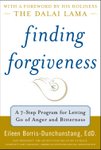
When reading this, what thoughts did you have? I would appreciate hearing them. If you have a forgiveness story you would like to share please submitted through my website www.dreileenborris.com. By sharing your stories and your struggles it will touch many other lives. You can learn more about how to forgive in “Finding Forgiveness: A 7 Step Program for Letting go of Anger and Bitterness” published by McGraw-Hill.
Showing posts with label victim. Show all posts
Showing posts with label victim. Show all posts
Friday, March 19, 2010


Wednesday, March 17, 2010
Giving Away Your Power - And Reclaiming it Through Forgiveness
Are you still holding on to hurtful feelings about something that has happened in the past? Pain can be difficult to let go of. And yet have you ever realized that by holding on to these painful feelings you are giving away your power and control to the person who has hurt you? The truth is, when we blame another person for how we feel, we give them power and control over our emotional well-being. Since we already feel hurt by what was done to us, giving people control will only add to and prolong our suffering.
Think about it for a moment. Why would we want to give any control over to someone else who in many cases doesn’t really care about us, some of whom may even be cruel to us? After a while, if we continually blame the same person over and over again it becomes a habit and we get caught in a groove which becomes deeper and deeper. This leads us down the road of feeling helpless and hopeless and definitely like a victim. We now have become disempowered at someone else’s hands.
There is one point I would like to stress. Holding people accountable for their action is not the same as blaming them for how you feel. People can be forgiven for what they have done and also need to be held accountable for their actions. What leads to unnecessary suffering is making people responsible for your continued suffering. Remember, forgiveness allows us to regain our power, breaking the unhealthy behavior created by our anger, guilt or fear. Forgiveness requires that we do our inner work and it is this inner work which will set us free.
Exercise: Think of a time when you gave away your power to someone who may not have cared for you. It could be a cruel and abusive parent or relative, or a friend that didn’t necessarily have your best interest at heart. Or it could be a business associate who did something implying that it was “just business” totally disregarding how hard you may have worked. Or it could be a lover or spouse who has betrayed you.
Ask yourself – why am I spending so much time blaming so and so. Who is it really hurting? Why am I choosing to stay stuck in the past instead of living in the present moment and creating a more productive and peaceful future? Haven’t I suffered enough? Now look into the present and future where this situation is no longer an issue. What does your life look like now? How does it feel to be free of this burden? What have you learned about yourself? Now take a deep relaxing breathe and think about all the things to be thankful for. Hold gratitude and joy in your heart and go on with the rest of your day.
If you would like more help in learning how to forgive go to “Finding Forgiveness: A 7 Step Program for Letting go of Anger and Bitterness” published by McGraw-Hill, the website www.dreileenborris.com and the blog on forgiveness www.findingforgiveness.blogspot.com.
Think about it for a moment. Why would we want to give any control over to someone else who in many cases doesn’t really care about us, some of whom may even be cruel to us? After a while, if we continually blame the same person over and over again it becomes a habit and we get caught in a groove which becomes deeper and deeper. This leads us down the road of feeling helpless and hopeless and definitely like a victim. We now have become disempowered at someone else’s hands.
There is one point I would like to stress. Holding people accountable for their action is not the same as blaming them for how you feel. People can be forgiven for what they have done and also need to be held accountable for their actions. What leads to unnecessary suffering is making people responsible for your continued suffering. Remember, forgiveness allows us to regain our power, breaking the unhealthy behavior created by our anger, guilt or fear. Forgiveness requires that we do our inner work and it is this inner work which will set us free.
Exercise: Think of a time when you gave away your power to someone who may not have cared for you. It could be a cruel and abusive parent or relative, or a friend that didn’t necessarily have your best interest at heart. Or it could be a business associate who did something implying that it was “just business” totally disregarding how hard you may have worked. Or it could be a lover or spouse who has betrayed you.
Ask yourself – why am I spending so much time blaming so and so. Who is it really hurting? Why am I choosing to stay stuck in the past instead of living in the present moment and creating a more productive and peaceful future? Haven’t I suffered enough? Now look into the present and future where this situation is no longer an issue. What does your life look like now? How does it feel to be free of this burden? What have you learned about yourself? Now take a deep relaxing breathe and think about all the things to be thankful for. Hold gratitude and joy in your heart and go on with the rest of your day.
If you would like more help in learning how to forgive go to “Finding Forgiveness: A 7 Step Program for Letting go of Anger and Bitterness” published by McGraw-Hill, the website www.dreileenborris.com and the blog on forgiveness www.findingforgiveness.blogspot.com.
Friday, March 5, 2010
Why Does it Have to Hurt so Much and Can Forgiveness Heal our Pain.
Feeling hurt or being wounded is unfortunately a life experience that all of us deal with. The difficulty is that we get stuck in these feelings not recognizing that we have choices which can lead to less suffering. Three elements come into play when we become wounded.
1. We take things too personally - When we take things too personally we assume that we know everything that is going on with the person who has hurt us. We judge their behavior not totally understanding what has happened in their life and the pain they may have experienced which has brought them to the place when the woundedness happened.
2 We blamed others for how we felt. - We forget that we are looking at the situation through our perceptual lenses tinted by our own emotional baggage – much of which we are unaware of. Instead of owning our shortcomings which is something we do not want to see within ourselves we can only see this behavior in others, not taking responsibility for our own behavior.
3 We get caught in the victim role - We have a tremendous investment in holding on to our pain so we can blame others, proving that I am right and you are wrong. When we choose to hold on to our pain what we are actually doing is pointing an accusing finger at the wrongdoer saying I am the innocent victim.
How do we begin to heal our wounds? The first step is an awareness process of what we are doing so that we can make other choices. If you can remember the three ingredients just mentioned you are well on your way to emotional freedom. As you tell your story, look at these three elements. By using the knowledge you are gaining about yourself you can hopefully gain insight into your own emotional reactions and begin to see the situation differently. Hopefully you will be able to handle your pain more skillfully.
Exercise: If you have written a story from the past posts you may want to revisit it and ask yourself in what way have I taken this situation too personally and how can I see it differently? Or pick a situation where you needed to forgive someone and write your story down. Then ask yourself:
• How can I see the perpetrator differently?
• What do I need to do to take responsibility for my own emotional reactions?
• What is it about myself that is hard to acknowledge which I blame others for?
Remember, we cannot change what has happened to us but we can change the way we respond to it and grow stronger as a result of the situation we find ourselves in. Life will always through us curve balls and we do not need to create more pain for ourselves as a result of the situations we find ourselves in.
For more information on learning how to forgive go to “Finding Forgiveness: A 7 Step Program for Letting go of Anger and Bitterness” by Dr. Eileen R. Borris-Dunchunstang.
1. We take things too personally - When we take things too personally we assume that we know everything that is going on with the person who has hurt us. We judge their behavior not totally understanding what has happened in their life and the pain they may have experienced which has brought them to the place when the woundedness happened.
2 We blamed others for how we felt. - We forget that we are looking at the situation through our perceptual lenses tinted by our own emotional baggage – much of which we are unaware of. Instead of owning our shortcomings which is something we do not want to see within ourselves we can only see this behavior in others, not taking responsibility for our own behavior.
3 We get caught in the victim role - We have a tremendous investment in holding on to our pain so we can blame others, proving that I am right and you are wrong. When we choose to hold on to our pain what we are actually doing is pointing an accusing finger at the wrongdoer saying I am the innocent victim.
How do we begin to heal our wounds? The first step is an awareness process of what we are doing so that we can make other choices. If you can remember the three ingredients just mentioned you are well on your way to emotional freedom. As you tell your story, look at these three elements. By using the knowledge you are gaining about yourself you can hopefully gain insight into your own emotional reactions and begin to see the situation differently. Hopefully you will be able to handle your pain more skillfully.
Exercise: If you have written a story from the past posts you may want to revisit it and ask yourself in what way have I taken this situation too personally and how can I see it differently? Or pick a situation where you needed to forgive someone and write your story down. Then ask yourself:
• How can I see the perpetrator differently?
• What do I need to do to take responsibility for my own emotional reactions?
• What is it about myself that is hard to acknowledge which I blame others for?
Remember, we cannot change what has happened to us but we can change the way we respond to it and grow stronger as a result of the situation we find ourselves in. Life will always through us curve balls and we do not need to create more pain for ourselves as a result of the situations we find ourselves in.
For more information on learning how to forgive go to “Finding Forgiveness: A 7 Step Program for Letting go of Anger and Bitterness” by Dr. Eileen R. Borris-Dunchunstang.
Subscribe to:
Posts (Atom)