


I remember a friend of mine telling me how mad she was at her mother. It seemed as though every time they got into a car together they would fight. There was a litany of reasons why my friend would not forgive her mother – the least of which she was stuck in the blame game.
When we blame others we are accusing them of something we believe they have done to us. We are placing fault on others insisting that they are the cause of our misery. When we are hurt because of something that has happened in the past and still feel the pain in the present we look for reasons to explain our pain. The truth is that we can never really know all the reasons why someone has hurt us, and more importantly we do not usually take the time to go within ourselves to understand what part we may have played in our life circumstances. We usually take the easy way out and like a knee jerk reaction we blame others for what may be causing our pain. That is not to say that others do not behave poorly and do things that are hurtful. What I am talking about is that when we continually blame someone else for our painful feelings, instead of making us feel better, blaming actually makes us feel worse.
Blaming causes more pain. When we blame someone else for our suffering we believe that someone else is the cause of our pain and that we need something from that person to feel better. We are dependent on them for our well being. What we actually have done is disempowered ourselves, giving other people control over how we feel. We have chosen not to take responsibility for what we are feeling.
Blaming others becomes a habit, sinking us further into the victim role. Like being in quick sand we feel powerless to change our circumstances. Underneath our need to blame is another issue that we are consistently running away from – our own feelings of guilt. Whenever we are accusing someone (blaming) of something we are secretly blaming ourselves. The content may be different but the form will be the same. If we are blaming someone for nasty horrible things they have said to us, we may not say those same kinds of things to them but if we are honest with ourselves we certainly have said unkind things to others. The important point to remember is that we are not here to beat ourselves up when we learn things about ourselves we wish we hadn’t. Now that we have gained a new understanding about ourselves we can make different choices. When we see the humanness in ourselves it is easier to see the humanness in others. Being able to then forgive ourselves we can also forgive others and stop the blame game. And remember, holding on to guilt is a choice too.
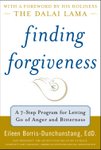
You can find more information on how to stop the blame game and to heal our guilt in “Finding Forgiveness: A 7 Step Program for Letting Go of Anger and Bitterness” published by McGraw-Hill.
Showing posts with label divorce. Show all posts
Showing posts with label divorce. Show all posts
Wednesday, March 10, 2010


Friday, March 5, 2010
Why Does it Have to Hurt so Much and Can Forgiveness Heal our Pain.
Feeling hurt or being wounded is unfortunately a life experience that all of us deal with. The difficulty is that we get stuck in these feelings not recognizing that we have choices which can lead to less suffering. Three elements come into play when we become wounded.
1. We take things too personally - When we take things too personally we assume that we know everything that is going on with the person who has hurt us. We judge their behavior not totally understanding what has happened in their life and the pain they may have experienced which has brought them to the place when the woundedness happened.
2 We blamed others for how we felt. - We forget that we are looking at the situation through our perceptual lenses tinted by our own emotional baggage – much of which we are unaware of. Instead of owning our shortcomings which is something we do not want to see within ourselves we can only see this behavior in others, not taking responsibility for our own behavior.
3 We get caught in the victim role - We have a tremendous investment in holding on to our pain so we can blame others, proving that I am right and you are wrong. When we choose to hold on to our pain what we are actually doing is pointing an accusing finger at the wrongdoer saying I am the innocent victim.
How do we begin to heal our wounds? The first step is an awareness process of what we are doing so that we can make other choices. If you can remember the three ingredients just mentioned you are well on your way to emotional freedom. As you tell your story, look at these three elements. By using the knowledge you are gaining about yourself you can hopefully gain insight into your own emotional reactions and begin to see the situation differently. Hopefully you will be able to handle your pain more skillfully.
Exercise: If you have written a story from the past posts you may want to revisit it and ask yourself in what way have I taken this situation too personally and how can I see it differently? Or pick a situation where you needed to forgive someone and write your story down. Then ask yourself:
• How can I see the perpetrator differently?
• What do I need to do to take responsibility for my own emotional reactions?
• What is it about myself that is hard to acknowledge which I blame others for?
Remember, we cannot change what has happened to us but we can change the way we respond to it and grow stronger as a result of the situation we find ourselves in. Life will always through us curve balls and we do not need to create more pain for ourselves as a result of the situations we find ourselves in.
For more information on learning how to forgive go to “Finding Forgiveness: A 7 Step Program for Letting go of Anger and Bitterness” by Dr. Eileen R. Borris-Dunchunstang.
1. We take things too personally - When we take things too personally we assume that we know everything that is going on with the person who has hurt us. We judge their behavior not totally understanding what has happened in their life and the pain they may have experienced which has brought them to the place when the woundedness happened.
2 We blamed others for how we felt. - We forget that we are looking at the situation through our perceptual lenses tinted by our own emotional baggage – much of which we are unaware of. Instead of owning our shortcomings which is something we do not want to see within ourselves we can only see this behavior in others, not taking responsibility for our own behavior.
3 We get caught in the victim role - We have a tremendous investment in holding on to our pain so we can blame others, proving that I am right and you are wrong. When we choose to hold on to our pain what we are actually doing is pointing an accusing finger at the wrongdoer saying I am the innocent victim.
How do we begin to heal our wounds? The first step is an awareness process of what we are doing so that we can make other choices. If you can remember the three ingredients just mentioned you are well on your way to emotional freedom. As you tell your story, look at these three elements. By using the knowledge you are gaining about yourself you can hopefully gain insight into your own emotional reactions and begin to see the situation differently. Hopefully you will be able to handle your pain more skillfully.
Exercise: If you have written a story from the past posts you may want to revisit it and ask yourself in what way have I taken this situation too personally and how can I see it differently? Or pick a situation where you needed to forgive someone and write your story down. Then ask yourself:
• How can I see the perpetrator differently?
• What do I need to do to take responsibility for my own emotional reactions?
• What is it about myself that is hard to acknowledge which I blame others for?
Remember, we cannot change what has happened to us but we can change the way we respond to it and grow stronger as a result of the situation we find ourselves in. Life will always through us curve balls and we do not need to create more pain for ourselves as a result of the situations we find ourselves in.
For more information on learning how to forgive go to “Finding Forgiveness: A 7 Step Program for Letting go of Anger and Bitterness” by Dr. Eileen R. Borris-Dunchunstang.
Friday, February 19, 2010
The Forgiveness Person of the Week - Tiger Woods
Today is the day that Tiger Woods is to give a statement and ask for forgiveness for his transgressions. There will probably be a great deal of speculation about Tiger's sincerity. As I was thinking about this my thoughts drifted to the movie "invictus," and to the poem below. I cannot judge what is going on inside of Tiger Woods. All I can say is that change and growth must start from where we are. Forgiveness is an act of courage, helping as realized that we do have strength within ourselves. Forgiveness can be very freeing, and it heals both victim and offender. When we listen to Tiger Woods we should not just be observers, reacting to what is being said. Let him remind us that we too can initiate forgiveness in our own lives. As the poem Invictus says, "I am the master of my fate: I am the captain of my soul." We all make a difference in this world and our words and actions affect others. We should focus on being the captain of our soul and face our challenges and not judge others. By practicing forgiveness with sincerity in our own lives we are given the ability to soar above our difficulties. Let us hope that this gift is given to Tiger Woods as well.
Invictus
By William Ernest Henley
Out of the night that covers me,
Black as the pit from pole to pole,
I thank whatever gods may be
For my unconquerable soul.
In the fell clutch of circumstance
I have not winced nor cried aloud.
Under the bludgeonings of chance
My head is bloody, but unbowed.
Beyond this place of wrath and tears
Looms but the Horror of the shade,
And yet the menace of the years
Finds and shall find me unafraid.
It matters not how strait the gate,
How charged with punishments the scroll,
I am the master of my fate:
I am the captain of my soul.
For more information on how to forgive and to be inspired by others who have been able to forgive please go to "Finding Forgiveness: A 7 Step Program for Letting go of Anger and Bitterness." If you want to learn more about forgiveness you can also visit my website www.dreileenborris.com.
Wednesday, February 17, 2010
I'm Innocent So Why Do I Have To Forgive?
The first step in your forgiveness journey begins with telling your story. For many of us this story can be a painful one. Something happened which frightened us, shocked us, made us very angry or hurt us deeply. In many cases when we retell our stories we portrayed ourselves as the victim.
Yes, many of us were victimized yet that doesn’t mean that we need to remain the victim. If this is what we choose to do, we have just disempowered ourselves creating more pain to deal with. We get stuck in the victim role when we take the hurt personally and we don’t take responsibility for how we feel. Just because something awful has happened it does not mean that we have to relive it day after day.
You might be thinking, how can I not take my spouse’s extramarital affairs or emotional abuse personally. You stop taking things personally when you begin to ask the questions, why them instead of why me. What has happened in their lives that have created pain that has made them who they are today? This helps you realize that anyone in your position at that given time would have been treated in exactly the same way. When you recognize the impersonal nature of what has happened to you, then your pain does not have to cripple you.
Not taking things personally doesn’t mean that you ignore or excuse what has happened or deny your pain. It does mean that what has happened to you is not a unique situation. For example unfortunately in many marriages people have experienced pain because their spouses had extramarital affairs. When you can see the impersonal nature of the situation you can begin a new story of healing and forgiveness.
How do we fall prey to the victim role? In a sense it is part of our human condition. All of us want to present “the face of innocence.” We can be very loving, very charming, sweet and kind when we want to be. We can also find people to sympathize with us when we talk about how badly treated we may have been. We identify with other people who are also victims. We see ourselves as good people living with people who can be very hurtful. Yet underneath our innocence our anger grows because we see a world which is unable to provide nurturance and love. Because I am innocent I will not make the first attack, yet every day a hundred little things make small assaults upon our innocence, provoking irritation eventually escalating to anger in all its forms. When we choose to hold on to our pain what we are actually doing is pointing an accusing finger at the wrongdoer saying I am the innocent victim and as you look on me you are condemned because of my suffering.
The central lesson is that we have a tremendous investment in holding on to our pain so we can blame others, proving that I am right and you are wrong. When I point my finger at you, there is also a finger pointing back at me although we want to keep that buried deep within ourselves below our face of innocence. Never underestimate the power of denial for this is what keeps the dynamics of attack and defend alive and well.
It’s important to become aware of our own face of innocence. What keeps us stuck in the victim role is our inability to manage our emotional pain and to confront reality. When we break our denial of wanting to be right instead of happy we have begun our healing, moving away from victim to one who thrives.
There is a journal exercise which will help you move from a victim story to a hero’s story. Think of a time where you needed to forgive someone. Do you repeat your story over and over again and if so what is keeping you stuck and why? Write down whatever comes up for you without judgment. Allow yourself to feel whatever is happening within you. Give your emotions voice including your guilt by writing it down. When you feel that you have given your emotions full expression, ask yourself why them? What has happened in their life that has brought them where they were at the time the incident happened. Is there a way that you can look at your situation in a healthier way and see things a bit differently now? If you can’t, what are you still holding on to and why can’t you let it go. See what comes up for you and allow yourself to feel whatever emotions need more expression. If guilt keeps reappearing – ask yourself what can you do differently now to heal your guilt. Remember, you can’t change the past but you can make different choices now. Remember that holding on to guilt is a choice too.
You can repeat this exercise as often as you like to help you loosen the grip of your pain and move from victim of your circumstances to a hero. Be gentle with yourself and thank yourself for taking the time to walk the path of forgiveness.
Yes, many of us were victimized yet that doesn’t mean that we need to remain the victim. If this is what we choose to do, we have just disempowered ourselves creating more pain to deal with. We get stuck in the victim role when we take the hurt personally and we don’t take responsibility for how we feel. Just because something awful has happened it does not mean that we have to relive it day after day.
You might be thinking, how can I not take my spouse’s extramarital affairs or emotional abuse personally. You stop taking things personally when you begin to ask the questions, why them instead of why me. What has happened in their lives that have created pain that has made them who they are today? This helps you realize that anyone in your position at that given time would have been treated in exactly the same way. When you recognize the impersonal nature of what has happened to you, then your pain does not have to cripple you.
Not taking things personally doesn’t mean that you ignore or excuse what has happened or deny your pain. It does mean that what has happened to you is not a unique situation. For example unfortunately in many marriages people have experienced pain because their spouses had extramarital affairs. When you can see the impersonal nature of the situation you can begin a new story of healing and forgiveness.
How do we fall prey to the victim role? In a sense it is part of our human condition. All of us want to present “the face of innocence.” We can be very loving, very charming, sweet and kind when we want to be. We can also find people to sympathize with us when we talk about how badly treated we may have been. We identify with other people who are also victims. We see ourselves as good people living with people who can be very hurtful. Yet underneath our innocence our anger grows because we see a world which is unable to provide nurturance and love. Because I am innocent I will not make the first attack, yet every day a hundred little things make small assaults upon our innocence, provoking irritation eventually escalating to anger in all its forms. When we choose to hold on to our pain what we are actually doing is pointing an accusing finger at the wrongdoer saying I am the innocent victim and as you look on me you are condemned because of my suffering.
The central lesson is that we have a tremendous investment in holding on to our pain so we can blame others, proving that I am right and you are wrong. When I point my finger at you, there is also a finger pointing back at me although we want to keep that buried deep within ourselves below our face of innocence. Never underestimate the power of denial for this is what keeps the dynamics of attack and defend alive and well.
It’s important to become aware of our own face of innocence. What keeps us stuck in the victim role is our inability to manage our emotional pain and to confront reality. When we break our denial of wanting to be right instead of happy we have begun our healing, moving away from victim to one who thrives.
There is a journal exercise which will help you move from a victim story to a hero’s story. Think of a time where you needed to forgive someone. Do you repeat your story over and over again and if so what is keeping you stuck and why? Write down whatever comes up for you without judgment. Allow yourself to feel whatever is happening within you. Give your emotions voice including your guilt by writing it down. When you feel that you have given your emotions full expression, ask yourself why them? What has happened in their life that has brought them where they were at the time the incident happened. Is there a way that you can look at your situation in a healthier way and see things a bit differently now? If you can’t, what are you still holding on to and why can’t you let it go. See what comes up for you and allow yourself to feel whatever emotions need more expression. If guilt keeps reappearing – ask yourself what can you do differently now to heal your guilt. Remember, you can’t change the past but you can make different choices now. Remember that holding on to guilt is a choice too.
You can repeat this exercise as often as you like to help you loosen the grip of your pain and move from victim of your circumstances to a hero. Be gentle with yourself and thank yourself for taking the time to walk the path of forgiveness.
Thursday, February 11, 2010
When Our Pain Returns - Finding Forgiveness
It would be so nice if when we told our painful stories of the past, all our suffering would magically disappear. Unfortunately it doesn’t happen like that. Many of us get stuck in the quagmire of our emotions not letting the ghosts of the past be in the past. How can we work through these emotions? We heal our emotions by feeling them completely. The only way we can get to the other side is by walking through that door. Yes, it hurts yet the paradox is that when we give ourselves permission to feel our emotions completely, we begin to dissipate its energy. One of the reasons why we struggle so much with forgiveness is that we want to avoid feeling pain, but in order to finally let our emotional burdens go, we have to know what’s there.
Forgiveness is a process that usually takes time. If done fully, forgiveness changes us in a very fundamental way. It changes our thinking and creates within us a new way of being in this world. When we become a person who can forgive, then we find the ultimate freedom forgiveness brings. This freedom expands our consciousness giving us the gift of an all encompassing love. Challenging ourselves to grow beyond our “small” selves is difficult and yet it reaps great rewards.
So what are the ways you can begin to let go of your past? Soul searching is a good starting point. Take out your journal and ask yourself the following questions.
• Do you really want to forgive this person? It’s ok if you don’t – and if that is the case just be gentle with yourself. It is healthier to be able to acknowledge that then to say “I forgive” when you are still seething inside. Working with our emotions takes time. There are also times when we feel that we “should” forgive someone for a variety of reasons. This never works. Forgive is a choice, a voluntary act and if it is forced resentment builds just beneath the surface.
• Do you want to step out of being a victim? If not why is it that you are choosing to hold on to your anger and/or guilt? This question is a hard one. All of us are invested in being stuck in the victim role. Do you want to get back at someone by being the innocent victim, showing the world how much you are suffering at the hands of another? Remember, we disempower ourselves when we are stuck in the victim role, blaming others and not taking responsibility for our own lives. Conversely we empower ourselves when we take responsibility for our emotional well being. Often it is our feelings of guilt that keeps us stuck. We may not feel that we deserve feeling better or we feel guilty that someone else may have suffered and not us. When this happens ask yourself, what is under these feelings – why do I want to beat myself up? Why am I not willing to love and nurture myself? Remember – holding on to guilt is a choice too.
• Do you really want to heal? This is another hard question and be gentle with yourself with whatever comes up. The important issue here is to be aware that you are making choices, awareness being the first step in any healing process.
As I have mentioned before – forgiveness takes work. Being honest, loving and gentle with yourself will take you on the road to recovery. Get help if you need too for you do not need to do this work on your own. And remember, you are not alone.
Forgiveness is a process that usually takes time. If done fully, forgiveness changes us in a very fundamental way. It changes our thinking and creates within us a new way of being in this world. When we become a person who can forgive, then we find the ultimate freedom forgiveness brings. This freedom expands our consciousness giving us the gift of an all encompassing love. Challenging ourselves to grow beyond our “small” selves is difficult and yet it reaps great rewards.
So what are the ways you can begin to let go of your past? Soul searching is a good starting point. Take out your journal and ask yourself the following questions.
• Do you really want to forgive this person? It’s ok if you don’t – and if that is the case just be gentle with yourself. It is healthier to be able to acknowledge that then to say “I forgive” when you are still seething inside. Working with our emotions takes time. There are also times when we feel that we “should” forgive someone for a variety of reasons. This never works. Forgive is a choice, a voluntary act and if it is forced resentment builds just beneath the surface.
• Do you want to step out of being a victim? If not why is it that you are choosing to hold on to your anger and/or guilt? This question is a hard one. All of us are invested in being stuck in the victim role. Do you want to get back at someone by being the innocent victim, showing the world how much you are suffering at the hands of another? Remember, we disempower ourselves when we are stuck in the victim role, blaming others and not taking responsibility for our own lives. Conversely we empower ourselves when we take responsibility for our emotional well being. Often it is our feelings of guilt that keeps us stuck. We may not feel that we deserve feeling better or we feel guilty that someone else may have suffered and not us. When this happens ask yourself, what is under these feelings – why do I want to beat myself up? Why am I not willing to love and nurture myself? Remember – holding on to guilt is a choice too.
• Do you really want to heal? This is another hard question and be gentle with yourself with whatever comes up. The important issue here is to be aware that you are making choices, awareness being the first step in any healing process.
As I have mentioned before – forgiveness takes work. Being honest, loving and gentle with yourself will take you on the road to recovery. Get help if you need too for you do not need to do this work on your own. And remember, you are not alone.
Sunday, February 7, 2010
"It's Not Love that makes the World go Round - It's Guilt!"
The most important issue to deal with in the forgiveness process is our feelings of guilt. We can have a hard enough time getting in touch with our anger. Getting in touch with our guilt is even more difficult. None of us like to feel that awful feeling in the pit of our stomach. And for those of us feeling guilty for what we have done, that guilt blocks any possibility for us to feel love which we feel so unworthy of. When we don’t accept love we can’t be healed.
There is another reason why it is so important to uncover our guilt. If we pretend that the guilt buried within ourselves doesn’t exist, the only thing we can do with these feelings is literally place that guilt on someone else. Since guilt includes all the negative feelings we believe to be true about ourselves, now we only see those negatives in the people around us. We become very judgmental because of the lack of love within ourselves, and we attack others through the filter of our guilt. As soon as something happens to us, we can only see the situation through our negative thinking caused by our guilt. Until we recognize what we are doing, we will continue to blame others and have a distorted view of what actually happened. We need to learn how to see through our smoke screens and own our guilt
So how do we work with our guilt?
1. Don’t be afraid to talk about your feelings of guilt and recognize that as awful as a situation may be, we did the best we could.
2. Take responsibility for your choices and if you are the one who needs forgiveness realize that now that you can see what you have done – you can choose again.
3. Keep in mind that holding on to guilt and being stuck in a victim role is a choice, too.
4. Accept responsibility for your emotional reactions.
5. Listen within.
To help yourself heal your guilt and move forward in your personal forgiveness process take out your journal and ask yourself “What do I feel guilty of in relation to this situation?” Explore what comes up without judgment. Don’t be afraid to reach back in time for feelings of guilt. This is part of your healing process. Feel your feelings as they surface and be open to what they want to say to you. Is there something now or in the past that needs healing and if so, what actions can I take to heal it? Even if it is clear that you did nothing to the perpetrator, you still may have feelings of guilt. If there is something that you feel ashamed of, explore those feelings to get to the roots of your wound. This action will uncover something you need to forgive yourself for. Journal with whatever comes up. You will probably have to repeat this journal exercise a number of times before you are able to release some of your guilt. Guilt runs deep. It is important that you be gentle with yourself as you do this work. After you have explored your guilt feelings ask yourself, “How have I place my feelings of guilt on others, such as through blaming or judging? What can I do differently now?” Go deep within and listen. (For more on this exercise go to Finding Forgiveness: A 7 Step Program for Letting Go of Anger and Bitterness)
There is another reason why it is so important to uncover our guilt. If we pretend that the guilt buried within ourselves doesn’t exist, the only thing we can do with these feelings is literally place that guilt on someone else. Since guilt includes all the negative feelings we believe to be true about ourselves, now we only see those negatives in the people around us. We become very judgmental because of the lack of love within ourselves, and we attack others through the filter of our guilt. As soon as something happens to us, we can only see the situation through our negative thinking caused by our guilt. Until we recognize what we are doing, we will continue to blame others and have a distorted view of what actually happened. We need to learn how to see through our smoke screens and own our guilt
So how do we work with our guilt?
1. Don’t be afraid to talk about your feelings of guilt and recognize that as awful as a situation may be, we did the best we could.
2. Take responsibility for your choices and if you are the one who needs forgiveness realize that now that you can see what you have done – you can choose again.
3. Keep in mind that holding on to guilt and being stuck in a victim role is a choice, too.
4. Accept responsibility for your emotional reactions.
5. Listen within.
To help yourself heal your guilt and move forward in your personal forgiveness process take out your journal and ask yourself “What do I feel guilty of in relation to this situation?” Explore what comes up without judgment. Don’t be afraid to reach back in time for feelings of guilt. This is part of your healing process. Feel your feelings as they surface and be open to what they want to say to you. Is there something now or in the past that needs healing and if so, what actions can I take to heal it? Even if it is clear that you did nothing to the perpetrator, you still may have feelings of guilt. If there is something that you feel ashamed of, explore those feelings to get to the roots of your wound. This action will uncover something you need to forgive yourself for. Journal with whatever comes up. You will probably have to repeat this journal exercise a number of times before you are able to release some of your guilt. Guilt runs deep. It is important that you be gentle with yourself as you do this work. After you have explored your guilt feelings ask yourself, “How have I place my feelings of guilt on others, such as through blaming or judging? What can I do differently now?” Go deep within and listen. (For more on this exercise go to Finding Forgiveness: A 7 Step Program for Letting Go of Anger and Bitterness)
Wednesday, February 3, 2010
GOT ANGER?
“Fry those Bastards! I want Timothy McVeigh and Terry Nichols hanged no trials necessary.” These were the words of Bud Welch whose 23 year old daughter was killed in the bombing of the Murrah Federal Building in Oklahoma City. “From the moment I learned it was a bomb I survived on anger and hate.”
Bud’s anger was focused on Timothy McVeigh and Terry Nichols, and like so many others, Bud wished for their speedy conviction and execution. “I was opposed to the death penalty all my life until my daughter Julie Marie was killed in the Oklahoma City bombing. For many months after the bombing I could have killed Timothy McVeigh myself. Temporary insanity is real, and I have lived it. You can’t think of enough adjectives to describe the anger and hatred I felt. But after time, I was able to examine my conscience, and I realized that if McVeigh is put to death, it won’t help me in the healing process. People talk about executions bringing closure. But how can there be closure when my little girl is never coming back. I finally realized that the death penalty is all about revenge and hate, and revenge and hate are why Julie Marie and 167 others are died.”
When Bud saw McVeigh’s father on television a few months after the bombing, his emotions began to change. He realized that “this man has lost a child too.” Bud eventually arranged to meet with Timothy McVeigh’s father, Bill. “I saw a deep pain in a father’s eye, but also an incredible love for his son.” Bud says, “I was able to tell him that I truly understood the pain that he was going through, and that he – as I – was a victim of what happened in Oklahoma City.”
Not all of us could come to this conclusion so quickly. Yet before Bud could get to this place of recognizing that both fathers were dealing with a painful lose he had to deal with his personal healing. What Bud was able to accomplish you too will be able to do, if you choose.
Step Three: Working with Anger. Anger tells us that our circumstances need to change. If we can’t let go of our anger it is also telling us that we need to change. This is the time when we get into the trenches of our emotions and have the difficult dialogue with ourselves about what happened and how we will choose to deal with it in a healing capacity. It is the time when we roll up our sleeves and become very honest with ourselves. Our tendencies are to want to feel sorry for ourselves and stay stuck in a victim role. By playing “poor me,” we disempower ourselves or continue to play the blame game and not take responsibility or positive action in our lives. Instead of seeing the situation as the good guy versus the bad guy, we would be better served to learn the lessons our emotions are trying to teach us and to understand what is making the person behave that way.
This is a difficult phase because it requires introspection and honest soul searching. Although we may think we are angry at someone, else if we are having difficulty letting go of anger it is an indication that we are in the need of healing. Don’t be afraid to dialogue with the anger inside of you. Ask your anger what it wants to tell you. You can have this conversation be either writing down whatever comes to mind or sharing what is inside of you with someone you trust. Honor what your anger says to you. You may need to journal many times focusing on your anger. You can also draw it. There may be multiple meanings to your anger. Your anger could be protecting you. It could also be telling you what you need to do to heal.
The question you need to ask yourself is “What am I accusing the other person of?” because the truth is that is what we are secretly accusing ourselves of. Our egos are slippery snakes so the content will be different but the form will be the same. For example we may never betray our spouse by being unfaithful but have we ever been unfaithful to ourselves? When we can look at that within ourselves we can begin to recognize the humanity in your spouse. This is not to say that you don’t take appropriate action to protect yourself. By seeing that we are all capable of betrayal it will help as let go of our anger around the situation and have greater peace of mind.
Bud’s anger was focused on Timothy McVeigh and Terry Nichols, and like so many others, Bud wished for their speedy conviction and execution. “I was opposed to the death penalty all my life until my daughter Julie Marie was killed in the Oklahoma City bombing. For many months after the bombing I could have killed Timothy McVeigh myself. Temporary insanity is real, and I have lived it. You can’t think of enough adjectives to describe the anger and hatred I felt. But after time, I was able to examine my conscience, and I realized that if McVeigh is put to death, it won’t help me in the healing process. People talk about executions bringing closure. But how can there be closure when my little girl is never coming back. I finally realized that the death penalty is all about revenge and hate, and revenge and hate are why Julie Marie and 167 others are died.”
When Bud saw McVeigh’s father on television a few months after the bombing, his emotions began to change. He realized that “this man has lost a child too.” Bud eventually arranged to meet with Timothy McVeigh’s father, Bill. “I saw a deep pain in a father’s eye, but also an incredible love for his son.” Bud says, “I was able to tell him that I truly understood the pain that he was going through, and that he – as I – was a victim of what happened in Oklahoma City.”
Not all of us could come to this conclusion so quickly. Yet before Bud could get to this place of recognizing that both fathers were dealing with a painful lose he had to deal with his personal healing. What Bud was able to accomplish you too will be able to do, if you choose.
Step Three: Working with Anger. Anger tells us that our circumstances need to change. If we can’t let go of our anger it is also telling us that we need to change. This is the time when we get into the trenches of our emotions and have the difficult dialogue with ourselves about what happened and how we will choose to deal with it in a healing capacity. It is the time when we roll up our sleeves and become very honest with ourselves. Our tendencies are to want to feel sorry for ourselves and stay stuck in a victim role. By playing “poor me,” we disempower ourselves or continue to play the blame game and not take responsibility or positive action in our lives. Instead of seeing the situation as the good guy versus the bad guy, we would be better served to learn the lessons our emotions are trying to teach us and to understand what is making the person behave that way.
This is a difficult phase because it requires introspection and honest soul searching. Although we may think we are angry at someone, else if we are having difficulty letting go of anger it is an indication that we are in the need of healing. Don’t be afraid to dialogue with the anger inside of you. Ask your anger what it wants to tell you. You can have this conversation be either writing down whatever comes to mind or sharing what is inside of you with someone you trust. Honor what your anger says to you. You may need to journal many times focusing on your anger. You can also draw it. There may be multiple meanings to your anger. Your anger could be protecting you. It could also be telling you what you need to do to heal.
The question you need to ask yourself is “What am I accusing the other person of?” because the truth is that is what we are secretly accusing ourselves of. Our egos are slippery snakes so the content will be different but the form will be the same. For example we may never betray our spouse by being unfaithful but have we ever been unfaithful to ourselves? When we can look at that within ourselves we can begin to recognize the humanity in your spouse. This is not to say that you don’t take appropriate action to protect yourself. By seeing that we are all capable of betrayal it will help as let go of our anger around the situation and have greater peace of mind.
Wednesday, January 27, 2010
Will I ever get over it and be able to Forgive?
I remember a friend telling me how long it took her to realize and fully understand that the best thing she could do was to forgive her husband when he walked out on her. In the beginning she was devastated. She felt so stupid that she did not see the “handwriting on the wall.” After all, she loved him and wanted the marriage to work. Yes, there was emotional abuse but she never expected betrayal and certainly not infidelity.
As Kathy continued telling me her story I encouraged her to go deep within herself and allow whatever she was feeling to come out. There was so much anger, grief, pain and shame; so many emotions that at times she wanted to scream, then cry making her feel sick inside. We’ve all been there, feeling that these memories will be seared in our hearts and minds always to return with unexpected emotional force.
Yet, telling your story is the beginning of your healing process. When you feel able, talk about what happened to someone you trust and who will be supportive of you. Tell your story as completely as possible including not only the emotions you are feeling as you tell the story, but what was going on inside of you as the events began to unfold. When you first tell your story, it may be incomplete. You ma need to retell your story to bring all the pieces together, what your feelings were, the meaning of what happened to you and perhaps to those around you. Talk about the question of guilt and responsibility. This may help you later in reconstructing a system of belief that makes sense of undeserved suffering. Remember to breathe as you tell your story. Breathing will help you manage strong emotions. If it is too difficult to tell your story, write about it or draw your story.
An exercise that can help you with your healing process is to do some journaling. Think of a situation where you feel you need to forgive someone and want to work through your painful emotions. Write your story describing what took place in detail. What happened to you and what possibly led up to the situation that you may not have been aware of at first. What were your thoughts and feelings and what meaning did you give to the event. What are your attitudes and beliefs about what happened. If there are several events, develop a separate script for each one. Don’t be surprised if new memories are recovered as you explore old ones. Write down everything you feel about the situation and the person causing you pain. Allow a stream of consciousness to flow across the pages of your journal and spare nothing. Remember that this is your private journal for no one else to see. After you have written everything down, ask yourself, “If I were face to face with this person, what would I say?” Let out the anger and the hurt in what you write and keep on writing until there is nothing left to say. Some questions to think about are “Why did this situation happen to me?”, and “What happened in that other person’s life that may have caused pain and brought him/her to the place they are today?”
You may need to rework your story until you have all the pieces together and that is ok. In my next blog I will help you deal with your strong emotions that you may be having difficulty with and how to put your emotional life back together again.
As Kathy continued telling me her story I encouraged her to go deep within herself and allow whatever she was feeling to come out. There was so much anger, grief, pain and shame; so many emotions that at times she wanted to scream, then cry making her feel sick inside. We’ve all been there, feeling that these memories will be seared in our hearts and minds always to return with unexpected emotional force.
Yet, telling your story is the beginning of your healing process. When you feel able, talk about what happened to someone you trust and who will be supportive of you. Tell your story as completely as possible including not only the emotions you are feeling as you tell the story, but what was going on inside of you as the events began to unfold. When you first tell your story, it may be incomplete. You ma need to retell your story to bring all the pieces together, what your feelings were, the meaning of what happened to you and perhaps to those around you. Talk about the question of guilt and responsibility. This may help you later in reconstructing a system of belief that makes sense of undeserved suffering. Remember to breathe as you tell your story. Breathing will help you manage strong emotions. If it is too difficult to tell your story, write about it or draw your story.
An exercise that can help you with your healing process is to do some journaling. Think of a situation where you feel you need to forgive someone and want to work through your painful emotions. Write your story describing what took place in detail. What happened to you and what possibly led up to the situation that you may not have been aware of at first. What were your thoughts and feelings and what meaning did you give to the event. What are your attitudes and beliefs about what happened. If there are several events, develop a separate script for each one. Don’t be surprised if new memories are recovered as you explore old ones. Write down everything you feel about the situation and the person causing you pain. Allow a stream of consciousness to flow across the pages of your journal and spare nothing. Remember that this is your private journal for no one else to see. After you have written everything down, ask yourself, “If I were face to face with this person, what would I say?” Let out the anger and the hurt in what you write and keep on writing until there is nothing left to say. Some questions to think about are “Why did this situation happen to me?”, and “What happened in that other person’s life that may have caused pain and brought him/her to the place they are today?”
You may need to rework your story until you have all the pieces together and that is ok. In my next blog I will help you deal with your strong emotions that you may be having difficulty with and how to put your emotional life back together again.
Monday, January 25, 2010
Why is Learning how to forgive so Hard?
We have all been there. Someone hurts us and for a moment we may wish to see them suffer as much as we are suffering now. The injury has just happened and emotions are churning within us, sometimes to the point of us feeling overwhelmed. While we may not want to forgive someone when we are first injured, nor necessarily should we, if we choose to lead a life where forgiveness is an integral part of it, our first step is to understand the meaning of forgiveness.
In past posts I have spoken about what forgiveness means and I would like to review a few of the most important points here.
* Forgiveness is about your inner healing, a release of your pain and not about letting someone else off the hook.
* Forgiveness is about changing the way we think and for most of us, this takes time. It is about changing our perceptions so we can see the situation differently, not through our anger, fear or guilt but through understanding and compassion.
* Forgiveness is the highest form of love that we can extend to others. It is the greatest gift we can give not only to others but especially to ourselves.
For the next few weeks I will take you step by step through a forgiveness process to help you heal the pain in your life. The first step in the forgiveness process is to truly understanding the meaning of forgiveness and to realize that it is for our benefit more than anyone else. Forgiveness is not something we should do to be good people. It is something that we want to do because we know that forgiveness will ultimately give us peace of mind and lead us towards richer fuller lives. When we understand this we can begin to move forward. Then we can look at the incident that has brought us pain. Remember, it is normal to feel angry and natural to want some form of revenge. Do not judge yourself if this is your experience. I often tell my clients if they are feeling overwhelmed with anger and a need for revenge to write out their revenge fantasy. This helps give our emotions voice and helps us to ultimately realize that revenge will not get us what we really want. When we come to this understanding we have just opened the door to the possibility of forgiveness and have started step one of our personal journey towards forgiveness.
To begin your journey ask yourself:
* How clear is my understanding about forgiveness and do I need to talk to someone who can help me better understand what forgiveness is about?
* Is there someone in my life that I am harboring anger and resentment towards and am I having difficulty with these emotions?
* How willing am I in wanting to forgive?
As you answer these questions you will learn something about yourself. In the coming posts I will continue taking you down the path of forgiveness teaching the steps to follow. Further information can be found in “Finding Forgiveness: A 7 Step Program for Letting go of Anger and Bitterness.”
In past posts I have spoken about what forgiveness means and I would like to review a few of the most important points here.
* Forgiveness is about your inner healing, a release of your pain and not about letting someone else off the hook.
* Forgiveness is about changing the way we think and for most of us, this takes time. It is about changing our perceptions so we can see the situation differently, not through our anger, fear or guilt but through understanding and compassion.
* Forgiveness is the highest form of love that we can extend to others. It is the greatest gift we can give not only to others but especially to ourselves.
For the next few weeks I will take you step by step through a forgiveness process to help you heal the pain in your life. The first step in the forgiveness process is to truly understanding the meaning of forgiveness and to realize that it is for our benefit more than anyone else. Forgiveness is not something we should do to be good people. It is something that we want to do because we know that forgiveness will ultimately give us peace of mind and lead us towards richer fuller lives. When we understand this we can begin to move forward. Then we can look at the incident that has brought us pain. Remember, it is normal to feel angry and natural to want some form of revenge. Do not judge yourself if this is your experience. I often tell my clients if they are feeling overwhelmed with anger and a need for revenge to write out their revenge fantasy. This helps give our emotions voice and helps us to ultimately realize that revenge will not get us what we really want. When we come to this understanding we have just opened the door to the possibility of forgiveness and have started step one of our personal journey towards forgiveness.
To begin your journey ask yourself:
* How clear is my understanding about forgiveness and do I need to talk to someone who can help me better understand what forgiveness is about?
* Is there someone in my life that I am harboring anger and resentment towards and am I having difficulty with these emotions?
* How willing am I in wanting to forgive?
As you answer these questions you will learn something about yourself. In the coming posts I will continue taking you down the path of forgiveness teaching the steps to follow. Further information can be found in “Finding Forgiveness: A 7 Step Program for Letting go of Anger and Bitterness.”
Wednesday, January 20, 2010
The 7 Step Forgiveness Program - Getting Started
We know that as difficult as forgiveness may be, the psychological case for practicing forgiveness is compelling. Although forgiveness can happen in an instant, for many of us it can take weeks, months, years or possibly a lifetime. The work of forgiveness is different for each of us, yet there are certain predictable steps all of us will go through. This program will describe what these steps are and how we go about achieving them. Some steps will be more difficult than others depending on our personal circumstances. Other steps may be more relevant for some than for others. Focus on what is important. Keep in mind, none of us forgive in the same way, and the forgiveness process is not a rigid process.
So how do we get started? The first thing you will want is a journal or notebook. Writing what comes to mind is one way to give all the stuff trapped inside of you voice. A journal is a wonderful way to tap into deeper parts of yourself and access thoughts and feelings that would not normally come up in talking with someone. It allows you to expose what is hidden in a deeper way that aids tremendously in the release of suppressed emotions.
Write in your journal for a few minutes every day while working on this program. Some people like to write first thing in the morning when their mind isn’t preoccupied with the day’s events. Others prefer the evenings when things quiet down. Commit to a time that works best for you, and get into a routine of writing at that same time every day. Below are some guidelines you may find helpful.
1. Find a quiet and comfortable place to do your writing where you will not be disturbed.
2. Use the same place every time you write.
3. Make sure you will not be disturbed by anyone or anything including the telephone.
4. Before you begin, take a few very deep relaxing breaths to help quiet your mind and body.
5. Begin journaling by allowing whatever needs to come up to be written even if it seems totally off the wall.
6. Follow the stream of consciousness. It will take you where you need to go.
So how do we get started? The first thing you will want is a journal or notebook. Writing what comes to mind is one way to give all the stuff trapped inside of you voice. A journal is a wonderful way to tap into deeper parts of yourself and access thoughts and feelings that would not normally come up in talking with someone. It allows you to expose what is hidden in a deeper way that aids tremendously in the release of suppressed emotions.
Write in your journal for a few minutes every day while working on this program. Some people like to write first thing in the morning when their mind isn’t preoccupied with the day’s events. Others prefer the evenings when things quiet down. Commit to a time that works best for you, and get into a routine of writing at that same time every day. Below are some guidelines you may find helpful.
1. Find a quiet and comfortable place to do your writing where you will not be disturbed.
2. Use the same place every time you write.
3. Make sure you will not be disturbed by anyone or anything including the telephone.
4. Before you begin, take a few very deep relaxing breaths to help quiet your mind and body.
5. Begin journaling by allowing whatever needs to come up to be written even if it seems totally off the wall.
6. Follow the stream of consciousness. It will take you where you need to go.
Tuesday, January 19, 2010
Why Do We Forgive?
Forgiveness takes us on a journey from the very pragmatic to the very sublime depending on our willingness to travel within the depth of our being. Our journey begins usually when our reality had been shattered and the pain of these broken pieces sears our heart. Over time the pain we carry becomes overwhelming and we think about what we can do to lessen our emotional burden. Perhaps this is the time we ask “Why Do We Forgive?” We forgive for a number of reasons. The list may include:
1. You want to stop being an angry person
2. You realize that holding on to this emotional burden is literally killing you.
3. The relationship which caused you pain is worth trying to fix.
4. You believe in the moral goodness of forgiveness.
Before we embark in learning how to forgive and begin to explore the mysteries of forgiveness I would like you to think about times in your life that you chose the path of forgiveness. Ask yourself, “Why did I forgive?” If you are struggling with a painful situation in your life now ask yourself what forgiveness can bring to you.
To start you on your journey of forgiveness I offer this simple exercise. Sit in a comfortable place where your back is straight and not rigid and your feet are on the floor. Now gently close your eyes. Take a few deep relaxing breaths and as you do I would like you to think about a situation where you would like to release pain. As you think about your situation open your heart to the universal love that surrounds you. As you breathe in imagine this energy fill your entire being. Focus on this love as it permeates every cell of your being. As you breathe out release the pain that you are holding in your heart. Feel yourself become lighter and freer with each breathe you take. Once you are filled with this universal love with each inbreathe take full responsibility for your emotional reactions to your situation and as you breathe out, breathe out the compassionate radiance of healing and forgiveness. Allow yourself to feel inner peace as you gently open your eyes.
This is a powerful exercise. It may give you the courage to face your pain and to forgive the person who may have hurt you or betrayed you in any way. It may also answer the question “Why do we Forgive?”
1. You want to stop being an angry person
2. You realize that holding on to this emotional burden is literally killing you.
3. The relationship which caused you pain is worth trying to fix.
4. You believe in the moral goodness of forgiveness.
Before we embark in learning how to forgive and begin to explore the mysteries of forgiveness I would like you to think about times in your life that you chose the path of forgiveness. Ask yourself, “Why did I forgive?” If you are struggling with a painful situation in your life now ask yourself what forgiveness can bring to you.
To start you on your journey of forgiveness I offer this simple exercise. Sit in a comfortable place where your back is straight and not rigid and your feet are on the floor. Now gently close your eyes. Take a few deep relaxing breaths and as you do I would like you to think about a situation where you would like to release pain. As you think about your situation open your heart to the universal love that surrounds you. As you breathe in imagine this energy fill your entire being. Focus on this love as it permeates every cell of your being. As you breathe out release the pain that you are holding in your heart. Feel yourself become lighter and freer with each breathe you take. Once you are filled with this universal love with each inbreathe take full responsibility for your emotional reactions to your situation and as you breathe out, breathe out the compassionate radiance of healing and forgiveness. Allow yourself to feel inner peace as you gently open your eyes.
This is a powerful exercise. It may give you the courage to face your pain and to forgive the person who may have hurt you or betrayed you in any way. It may also answer the question “Why do we Forgive?”
Thursday, January 14, 2010
What Does Freud Have to do with it - The Forgiveness Process that Is!
The profound healing effect of forgiveness lies in its capacity to change the way we think. To help us understand how this happens I would like to give you a brief lesson in how our thinking developed and how it relates to what we call our unconscious mind.
At the turn of the 19th century a very prominent psychoanalyst by the name of Sigmund Freud laid the groundwork for understanding the psychoanalytical view on the way we think. He was especially brilliant when he introduced the concept of psychological defense mechanisms to keep unacceptable impulses, desires, and thoughts out of conscious awareness. Freud believed that one never strives so hard against something unless one was correspondingly attracted to it, even if that attraction remained out of awareness.
Although during Freud’s time psychology and spirituality were kept quite separate from one another that relationship began to change dramatically during the 1960’s. A “Third Force” known as Humanistic psychology came into existence, (with psychoanalysis and behaviorism being the first and second). From it emerged theorist such as Abraham Maslow, Carl Jung, and Carl Rogers. Their focus shifted from the psychoanalytical view that reduces human behavior and experience to unconscious sexual forces, to a view which respected our creative and spiritual strivings, placing a greater emphasis on the present and future rather than being chained to the past.
As Humanistic psychology further developed, a “fourth force” began to grow known to the field as transpersonal psychology. Transpersonal psychology began to explore the ‘S’elf, which they defined as our source of creativity and spirituality and beyond our personal self. This led humanistic and transpersonal psychology to look increasingly to spirituality as a guiding force for their investigations bringing them closer to the Eastern spiritual traditions, predominantly Hinduism or Buddhism.
With the advent of humanistic and transpersonal psychology we began to understand the struggles we were having in accepting our spirituality. As theories emerged they expanded that of Freud’s, opening up the possibility that within us is a divine spark or “Higher Self.” As these newer theories matured, Freud’s ‘ego’ took on a different meaning. Carl Jung who was a student of Freud defined the ‘ego’ as meaning ‘false self’ or the persona we put out for the world to see. This persona included our shadow, those parts of ourselves which we keep hidden. Jungian psychology then went beyond Freudian theory acknowledging that there is also a part within us that transcends our ‘ego’ and which makes up our higher nature. Unfortunately we have focused so much on creating who we think we should be, getting so wrapped up in our ego that we have come to deny our divinity.
According to Jung, when we denied our spiritual nature we imposed an image on ourselves based on a false belief that it was possible to be separate from our spiritual source. In accepting this belief as fact, we created a conflict within our psyche. The psychological pain of this conflict is so deeply imbedded within us that we experience this state of separation as anxiety. Karen Horney, a prominent psychoanalyst, describes this anxiety in terms of feeling isolated and helpless in a world conceived as potentially hostile.
The psychological term used to describe basic anxiety is neurosis. Carl Jung considered neurosis a warning issued by a higher authority, reminding us that our personality is in need of broadening to ultimately include the central “power,” that part which embraces all of who we are. Sigmund Freud was so afraid of this power that he constructed a thought system virtually invulnerable to the threat of spirit and a defense against our true “Self.”
How did this all happen? Why did we choose to focus on our “false” self as the ego is often called, to the detriment of the divinity within?
And how is this relevant to the understanding of the forgiveness process? Interestingly there is a myth common to Western civilization, the creation story, which explains all of this. Although we think of this story as a description of our physical creation, for some it is also a story of the birth of our consciousness and of the development of the ego thought system as we know it today.
At the turn of the 19th century a very prominent psychoanalyst by the name of Sigmund Freud laid the groundwork for understanding the psychoanalytical view on the way we think. He was especially brilliant when he introduced the concept of psychological defense mechanisms to keep unacceptable impulses, desires, and thoughts out of conscious awareness. Freud believed that one never strives so hard against something unless one was correspondingly attracted to it, even if that attraction remained out of awareness.
Although during Freud’s time psychology and spirituality were kept quite separate from one another that relationship began to change dramatically during the 1960’s. A “Third Force” known as Humanistic psychology came into existence, (with psychoanalysis and behaviorism being the first and second). From it emerged theorist such as Abraham Maslow, Carl Jung, and Carl Rogers. Their focus shifted from the psychoanalytical view that reduces human behavior and experience to unconscious sexual forces, to a view which respected our creative and spiritual strivings, placing a greater emphasis on the present and future rather than being chained to the past.
As Humanistic psychology further developed, a “fourth force” began to grow known to the field as transpersonal psychology. Transpersonal psychology began to explore the ‘S’elf, which they defined as our source of creativity and spirituality and beyond our personal self. This led humanistic and transpersonal psychology to look increasingly to spirituality as a guiding force for their investigations bringing them closer to the Eastern spiritual traditions, predominantly Hinduism or Buddhism.
With the advent of humanistic and transpersonal psychology we began to understand the struggles we were having in accepting our spirituality. As theories emerged they expanded that of Freud’s, opening up the possibility that within us is a divine spark or “Higher Self.” As these newer theories matured, Freud’s ‘ego’ took on a different meaning. Carl Jung who was a student of Freud defined the ‘ego’ as meaning ‘false self’ or the persona we put out for the world to see. This persona included our shadow, those parts of ourselves which we keep hidden. Jungian psychology then went beyond Freudian theory acknowledging that there is also a part within us that transcends our ‘ego’ and which makes up our higher nature. Unfortunately we have focused so much on creating who we think we should be, getting so wrapped up in our ego that we have come to deny our divinity.
According to Jung, when we denied our spiritual nature we imposed an image on ourselves based on a false belief that it was possible to be separate from our spiritual source. In accepting this belief as fact, we created a conflict within our psyche. The psychological pain of this conflict is so deeply imbedded within us that we experience this state of separation as anxiety. Karen Horney, a prominent psychoanalyst, describes this anxiety in terms of feeling isolated and helpless in a world conceived as potentially hostile.
The psychological term used to describe basic anxiety is neurosis. Carl Jung considered neurosis a warning issued by a higher authority, reminding us that our personality is in need of broadening to ultimately include the central “power,” that part which embraces all of who we are. Sigmund Freud was so afraid of this power that he constructed a thought system virtually invulnerable to the threat of spirit and a defense against our true “Self.”
How did this all happen? Why did we choose to focus on our “false” self as the ego is often called, to the detriment of the divinity within?
And how is this relevant to the understanding of the forgiveness process? Interestingly there is a myth common to Western civilization, the creation story, which explains all of this. Although we think of this story as a description of our physical creation, for some it is also a story of the birth of our consciousness and of the development of the ego thought system as we know it today.
Friday, January 1, 2010
Forgiveness and a lot more!
The end of a year is always a time of reflection for me. I often think about the meaning of the holiday season and how we can grow in love and forgiveness. The intention of this blog is to begin a dialogue which will help us learn how to grow in consciousness and forgiveness and to understand what this looks like from a spiritual, psychological and neuropsychological perspective.
For the next few weeks I will be sharing some of my thoughts on forgiveness and how it touches not only our personal lives but how when we can hold forgiveness in our hearts we can also be part of the healing of nations. I would like to invite all of you who read this post to share your stories of forgiveness, including your struggles, where you got stuck and how you were able to overcome your difficulties. For those of us who have been able to forgive, sharing our difficulties and the gifts we received in being able to forgive can help inspire others who may be struggling with their own difficulties. What books are you reading, what stories do you have to share, and what cutting edge research to do you know about? I want to hear from you.
I also welcome stories where some of you lived through group violence, genocide or war and how you were able to forgive the unimaginable. You can share any forgiveness story here or submit them to my website www.dreileenborris.com in its entirety. My hope is that for the next few weeks we can go through a journey together and be part of a growing group of people who not only want to change consciousness within themselves but within the rest of humanity. Are you ready?
I also want to invite you to visit the blogs of some wonderful people, all of whom are members of the Arizona Chapter of the National Speakers Association. We are supporting one another in a month long blogathon and their sites are listed below. I do hope that you will visit them. Everyone is an expert in their field and I know you will learn a lot from them and have some fun as well. I encourage you to leave comments since starting a dialogue is how we enrich one another.
Let me know what you think. I look forward to our journey together and to grow in love and forgiveness.
NSA-AZ BLOGATHON 2010
Jackie Dishner
BIKE WITH JACKIE
http://bikewithjackie.blogspot.com
Susan Ratliff, Exhibit Expert
Bling My Booth
http://www.blingmybooth.com
Stephanie Angelo
Human Resource Essential Blog
http://hressential.com/wordpress/
Greg Peterson
Down On The Urban Farm
http://www.yourguidetogreen.com/TheUrbanFarm/
Bonnie Mattick
YourBusinessDetective
http://www.YourBusinessDetective.com
Andrea Beaulieu
True Potential
http://www.TruePotentialBlog.com
Conspiracy of Love
http://www.ConspiracyOfLove.net
Beth Terry
Cactus Wrangler
http://www.CactusWrangler.com
Debra Exner
Collaboration Pays Off
http://collaborationpaysoff.wordpress.com
Deborah M Dubree
I'll have a new name this week
http://www.deborahdubree.com/blog
Eileen Proctor
The Top Dog's Blog
http://thetopdogsblog.blogspot.com/
Mimi Meredith
Bloomin' Blog
http://blog.thegoodnessgrows.com
Suzanne Holman
http://www.suzanneholman.com/blog
For the next few weeks I will be sharing some of my thoughts on forgiveness and how it touches not only our personal lives but how when we can hold forgiveness in our hearts we can also be part of the healing of nations. I would like to invite all of you who read this post to share your stories of forgiveness, including your struggles, where you got stuck and how you were able to overcome your difficulties. For those of us who have been able to forgive, sharing our difficulties and the gifts we received in being able to forgive can help inspire others who may be struggling with their own difficulties. What books are you reading, what stories do you have to share, and what cutting edge research to do you know about? I want to hear from you.
I also welcome stories where some of you lived through group violence, genocide or war and how you were able to forgive the unimaginable. You can share any forgiveness story here or submit them to my website www.dreileenborris.com in its entirety. My hope is that for the next few weeks we can go through a journey together and be part of a growing group of people who not only want to change consciousness within themselves but within the rest of humanity. Are you ready?
I also want to invite you to visit the blogs of some wonderful people, all of whom are members of the Arizona Chapter of the National Speakers Association. We are supporting one another in a month long blogathon and their sites are listed below. I do hope that you will visit them. Everyone is an expert in their field and I know you will learn a lot from them and have some fun as well. I encourage you to leave comments since starting a dialogue is how we enrich one another.
Let me know what you think. I look forward to our journey together and to grow in love and forgiveness.
NSA-AZ BLOGATHON 2010
Jackie Dishner
BIKE WITH JACKIE
http://bikewithjackie.blogspot.com
Susan Ratliff, Exhibit Expert
Bling My Booth
http://www.blingmybooth.com
Stephanie Angelo
Human Resource Essential Blog
http://hressential.com/wordpress/
Greg Peterson
Down On The Urban Farm
http://www.yourguidetogreen.com/TheUrbanFarm/
Bonnie Mattick
YourBusinessDetective
http://www.YourBusinessDetective.com
Andrea Beaulieu
True Potential
http://www.TruePotentialBlog.com
Conspiracy of Love
http://www.ConspiracyOfLove.net
Beth Terry
Cactus Wrangler
http://www.CactusWrangler.com
Debra Exner
Collaboration Pays Off
http://collaborationpaysoff.wordpress.com
Deborah M Dubree
I'll have a new name this week
http://www.deborahdubree.com/blog
Eileen Proctor
The Top Dog's Blog
http://thetopdogsblog.blogspot.com/
Mimi Meredith
Bloomin' Blog
http://blog.thegoodnessgrows.com
Suzanne Holman
http://www.suzanneholman.com/blog
Thursday, January 15, 2009
Forgiving the Affair - Again
You love one another, so you really believed. Then the realization hits. Your significant other has cheated on you. You feel shaky inside, sick to your stomach wondering why did this ever happen to you. Anger and possibly anxiety begin to well up inside as you wonder what your next steps should be.
We have choices as to how to handle infidelity. Situations like this do not happen in a vacuum and always involve some form of healing and ultimately if you really want peace of mind, forgiveness can take you down that path.
Learning how to forgive the affair means that you are willing to let go of your anger and hatred. Here are some suggestions to help in healing your pain.
Don’t go through the pain alone. Talk to people who are supportive and will help you in a positive way.
Speak honestly to your significant other about what happened and especially about those difficult feelings and needs that both of you have that might not be getting met.
Recognize the importance of rebuilding the lost trust and love. If this can not happen it is telling you something about the relationship which you need to face and deal with. If you can not trust your partner there is no relationship.
Put yourself in each others shoes. This will give you a better understanding of why something like this happened. Again, you may not like what you see but it will give you a greater understanding of what may have happened and what brought your significant other to act unfaithfully. This understanding sets the stage for forgiveness to take place.
Allow yourself to mourn. Betrayals run deep and they hurt. Until you allow yourself to feel the pain, you will not be able to move past it and rebuild your life. No one wants to feel pain and the paradox is once you walk through that door the pain dissipates.
If you have worked through the difficult emotions and in your heart you truly want to forgiven you will get the help you need in what ever way this help speaks to you.
Remember that forgiveness is about your inner healing, not about letting someone else off the hook. You can forgive and chose not to stay in the relationship. The goal of forgiveness is about your inner peace. If your actions are motivated by compassion and understanding you will gain a greater clarity and wisdom in what is best for you and your relationship.
We have choices as to how to handle infidelity. Situations like this do not happen in a vacuum and always involve some form of healing and ultimately if you really want peace of mind, forgiveness can take you down that path.
Learning how to forgive the affair means that you are willing to let go of your anger and hatred. Here are some suggestions to help in healing your pain.
Don’t go through the pain alone. Talk to people who are supportive and will help you in a positive way.
Speak honestly to your significant other about what happened and especially about those difficult feelings and needs that both of you have that might not be getting met.
Recognize the importance of rebuilding the lost trust and love. If this can not happen it is telling you something about the relationship which you need to face and deal with. If you can not trust your partner there is no relationship.
Put yourself in each others shoes. This will give you a better understanding of why something like this happened. Again, you may not like what you see but it will give you a greater understanding of what may have happened and what brought your significant other to act unfaithfully. This understanding sets the stage for forgiveness to take place.
Allow yourself to mourn. Betrayals run deep and they hurt. Until you allow yourself to feel the pain, you will not be able to move past it and rebuild your life. No one wants to feel pain and the paradox is once you walk through that door the pain dissipates.
If you have worked through the difficult emotions and in your heart you truly want to forgiven you will get the help you need in what ever way this help speaks to you.
Remember that forgiveness is about your inner healing, not about letting someone else off the hook. You can forgive and chose not to stay in the relationship. The goal of forgiveness is about your inner peace. If your actions are motivated by compassion and understanding you will gain a greater clarity and wisdom in what is best for you and your relationship.
Subscribe to:
Posts (Atom)