


Is it possible to forgive a murderer? Would you be able to forgive the person who MURDERED someone you loved very deeply? This was the subject of the movie “Amish Grace” shown on the Lifetime Movie Network. The movie is based on a true story about the Amish community who within the fabric of their beings embraced the thinking which is the scaffolding of forgiveness. This community demonstrates how difficult it is to forgive even when deeply steeped in religious beliefs forgiveness is engrained. They also demonstrate how powerful forgiveness is in the healing of the soul.
On October 2, 2006 Carl Roberts entered into a one room school house in the Amish community of Nickel Mines, Pennsylvania. He lined up 11 young girls and shot them at point blank range. Roberts killed five of the girls and then killed himself. In an amazing act of courage the oldest girl, 13-year-old Marian Fisher asked Roberts to shoot her first. She hoped that she could spare the lives of the younger girls. And what was even more remarkable was that in just a few hours after the shooting an Amish neighbor went to the Roberts family to comfort them and to offer forgiveness.
A grandfather of one of the girls killed was telling the boys to forgive what had just happened as they prepared the body of one of the little girls for burial. How many of you could have done that? How many of you could have told the young boys that “We must not think evil of this man?” Yet these were the words of the grandfather. And what is even more unimaginable is that five days later the families who lost their daughters attended the funeral of the man who had killed them. They went not in anger or for retribution, but to comfort the family and let them know that all was forgiven.
The Amish learned to let go of their pain and suffering. What makes the Amish so remarkable is that they chose to see, using the words of Jerry Jampolsky, “the light instead of the lampshade” and saw the situation with spiritual sight, that although what this man did was an act of evil – inwardly, it was a cry for help. They were able to go beyond what their physical eyes were telling them and recognized that Roberts too was worthy of love. They were able to see Roberts not through the lens of anger, fear or guilt, but through the eyes of understanding and compassion.
As we struggle with our own difficulties in being able to forgive, we also open ourselves up to a benevolent force which is far more powerful than we could ever be. This creative force which is sometimes experienced as grace, is that inexplicable power which comes from something beyond ourselves. This power gives us the ability to forgive even when we feel within our hearts, forgiveness is humanly impossible. This moment of grace creates a profound interior renovation which completely changes the way we think. Instead of perceiving the situation through our judgments we see things differently, through what I call spiritual sight. When it happens, you can feel the power and presence of a higher intervention which transforms your relationships as you experience an outpouring of this inexplicable love.
This is the love which enabled the Amish to pray for everyone involved in what took place on October 2nd, not only for the innocent little girls who got killed and those still to recover, but for the killer himself. They knew that by expressing love it would bring about healing for all those concerned, whereas to take on and express the same evil as the attacker, that would only support evil and allow it to spread. The Amish learned that when we forgive we let our pain go.
Showing posts with label Christian. Show all posts
Showing posts with label Christian. Show all posts
Tuesday, March 30, 2010


Thursday, January 14, 2010
What Does Freud Have to do with it - The Forgiveness Process that Is!
The profound healing effect of forgiveness lies in its capacity to change the way we think. To help us understand how this happens I would like to give you a brief lesson in how our thinking developed and how it relates to what we call our unconscious mind.
At the turn of the 19th century a very prominent psychoanalyst by the name of Sigmund Freud laid the groundwork for understanding the psychoanalytical view on the way we think. He was especially brilliant when he introduced the concept of psychological defense mechanisms to keep unacceptable impulses, desires, and thoughts out of conscious awareness. Freud believed that one never strives so hard against something unless one was correspondingly attracted to it, even if that attraction remained out of awareness.
Although during Freud’s time psychology and spirituality were kept quite separate from one another that relationship began to change dramatically during the 1960’s. A “Third Force” known as Humanistic psychology came into existence, (with psychoanalysis and behaviorism being the first and second). From it emerged theorist such as Abraham Maslow, Carl Jung, and Carl Rogers. Their focus shifted from the psychoanalytical view that reduces human behavior and experience to unconscious sexual forces, to a view which respected our creative and spiritual strivings, placing a greater emphasis on the present and future rather than being chained to the past.
As Humanistic psychology further developed, a “fourth force” began to grow known to the field as transpersonal psychology. Transpersonal psychology began to explore the ‘S’elf, which they defined as our source of creativity and spirituality and beyond our personal self. This led humanistic and transpersonal psychology to look increasingly to spirituality as a guiding force for their investigations bringing them closer to the Eastern spiritual traditions, predominantly Hinduism or Buddhism.
With the advent of humanistic and transpersonal psychology we began to understand the struggles we were having in accepting our spirituality. As theories emerged they expanded that of Freud’s, opening up the possibility that within us is a divine spark or “Higher Self.” As these newer theories matured, Freud’s ‘ego’ took on a different meaning. Carl Jung who was a student of Freud defined the ‘ego’ as meaning ‘false self’ or the persona we put out for the world to see. This persona included our shadow, those parts of ourselves which we keep hidden. Jungian psychology then went beyond Freudian theory acknowledging that there is also a part within us that transcends our ‘ego’ and which makes up our higher nature. Unfortunately we have focused so much on creating who we think we should be, getting so wrapped up in our ego that we have come to deny our divinity.
According to Jung, when we denied our spiritual nature we imposed an image on ourselves based on a false belief that it was possible to be separate from our spiritual source. In accepting this belief as fact, we created a conflict within our psyche. The psychological pain of this conflict is so deeply imbedded within us that we experience this state of separation as anxiety. Karen Horney, a prominent psychoanalyst, describes this anxiety in terms of feeling isolated and helpless in a world conceived as potentially hostile.
The psychological term used to describe basic anxiety is neurosis. Carl Jung considered neurosis a warning issued by a higher authority, reminding us that our personality is in need of broadening to ultimately include the central “power,” that part which embraces all of who we are. Sigmund Freud was so afraid of this power that he constructed a thought system virtually invulnerable to the threat of spirit and a defense against our true “Self.”
How did this all happen? Why did we choose to focus on our “false” self as the ego is often called, to the detriment of the divinity within?
And how is this relevant to the understanding of the forgiveness process? Interestingly there is a myth common to Western civilization, the creation story, which explains all of this. Although we think of this story as a description of our physical creation, for some it is also a story of the birth of our consciousness and of the development of the ego thought system as we know it today.
At the turn of the 19th century a very prominent psychoanalyst by the name of Sigmund Freud laid the groundwork for understanding the psychoanalytical view on the way we think. He was especially brilliant when he introduced the concept of psychological defense mechanisms to keep unacceptable impulses, desires, and thoughts out of conscious awareness. Freud believed that one never strives so hard against something unless one was correspondingly attracted to it, even if that attraction remained out of awareness.
Although during Freud’s time psychology and spirituality were kept quite separate from one another that relationship began to change dramatically during the 1960’s. A “Third Force” known as Humanistic psychology came into existence, (with psychoanalysis and behaviorism being the first and second). From it emerged theorist such as Abraham Maslow, Carl Jung, and Carl Rogers. Their focus shifted from the psychoanalytical view that reduces human behavior and experience to unconscious sexual forces, to a view which respected our creative and spiritual strivings, placing a greater emphasis on the present and future rather than being chained to the past.
As Humanistic psychology further developed, a “fourth force” began to grow known to the field as transpersonal psychology. Transpersonal psychology began to explore the ‘S’elf, which they defined as our source of creativity and spirituality and beyond our personal self. This led humanistic and transpersonal psychology to look increasingly to spirituality as a guiding force for their investigations bringing them closer to the Eastern spiritual traditions, predominantly Hinduism or Buddhism.
With the advent of humanistic and transpersonal psychology we began to understand the struggles we were having in accepting our spirituality. As theories emerged they expanded that of Freud’s, opening up the possibility that within us is a divine spark or “Higher Self.” As these newer theories matured, Freud’s ‘ego’ took on a different meaning. Carl Jung who was a student of Freud defined the ‘ego’ as meaning ‘false self’ or the persona we put out for the world to see. This persona included our shadow, those parts of ourselves which we keep hidden. Jungian psychology then went beyond Freudian theory acknowledging that there is also a part within us that transcends our ‘ego’ and which makes up our higher nature. Unfortunately we have focused so much on creating who we think we should be, getting so wrapped up in our ego that we have come to deny our divinity.
According to Jung, when we denied our spiritual nature we imposed an image on ourselves based on a false belief that it was possible to be separate from our spiritual source. In accepting this belief as fact, we created a conflict within our psyche. The psychological pain of this conflict is so deeply imbedded within us that we experience this state of separation as anxiety. Karen Horney, a prominent psychoanalyst, describes this anxiety in terms of feeling isolated and helpless in a world conceived as potentially hostile.
The psychological term used to describe basic anxiety is neurosis. Carl Jung considered neurosis a warning issued by a higher authority, reminding us that our personality is in need of broadening to ultimately include the central “power,” that part which embraces all of who we are. Sigmund Freud was so afraid of this power that he constructed a thought system virtually invulnerable to the threat of spirit and a defense against our true “Self.”
How did this all happen? Why did we choose to focus on our “false” self as the ego is often called, to the detriment of the divinity within?
And how is this relevant to the understanding of the forgiveness process? Interestingly there is a myth common to Western civilization, the creation story, which explains all of this. Although we think of this story as a description of our physical creation, for some it is also a story of the birth of our consciousness and of the development of the ego thought system as we know it today.
Sunday, January 10, 2010
Forgiveness and the Person(s) of the week - Brit Hume and Tiger Woods
We face many challenges regarding forgiveness in our lives. Turn on the news and the question of forgiveness seems to be everywhere. We are confronted with how to deal with the Bernie Madoff’s of the world and more recently issues of infidelity concerning Tiger Woods. Incidents happen on a daily basis and we all have something to say about them. So I have decided to start a column “Forgiveness and the Person of the Week,” not that we should forgive these characters, but to learn something hopefully about forgiveness and ourselves, and how to apply forgiveness in our own lives.
The buzz this week seems to be about Brit Hume and Tiger Woods. In case you missed it, Hume made the following comment on Fox News concerning Tiger Woods. Hume said "He (Tiger Woods) is said to be a Buddhist. I don’t think that faith offers the kind of forgiveness and redemption that is offered by the Christian faith. My message to Tiger would be, ‘Tiger, turn to the Christian faith and you can make a total recovery and be a great example to the world."
Suddenly there was a flurry of activity on the internet. Some people where outraged, others took sides. As I stood back and watched what was going on I had to ask myself, what is this fight really about? Granted, there are issues here and the way people reacted indicated that there were issues within us as well.
People were attacking what Brit Hume said, some either for or against Christianity. The reason we attack others is because there is something inside of us which needs to be healed. Pain is something that most of us try to avoid, yet if we are going to practice forgiveness, implicit in this is experiencing our wholeness. As in any healing work, we begin by getting in touch with what we have denied. The problem is that we are totally unaware that what bothers us so much about others is what we find most disturbing about ourselves. Since facing painful emotion about ourselves is so incredibly difficult and painful we unconsciously look for something outside of ourselves which becomes our psychological dumping grounds.
Carl Jung, a very prominent 20th century psychoanalyst called this our “shadow” or the “dark” side of personality. It functions as an inner opponent whom we struggle throughout our lives. What makes some part of our nature shadow is not its destructiveness per se; it is the fact that we are unconscious of it. The shadow has an emotional charge and presents a significant moral opposition to the ego-personality. Owning our shadow is a critical step for in not owning those aspects we begin a process of separation. We begin to see the world as good or bad, us or them. For example, when these judgments are superimposed on religious, racial, cultural or national differences, we get bigotry, racism, and the prejudices that separate and antagonize deepening the schism between us versus them. As a result, we can only see those unacceptable parts in others, and not in ourselves setting up situations of discrimination, scapegoating, victimization and even war.
Back to Brit Hume, he taught us an important lesson. Sure it is ok to have opinions but when it takes the form of an attack and we can’t seem to let go of it, then we have to ask ourselves – what are we accusing this man of? The answer we give is an indication of what needs to be healed within ourselves. The content of course will be different, but the form will be the same. In other words, we may not tell others to convert from one religion to another but we may tell people what political views they need to have. If we are willing to look at ourselves in this way and recognize that we are all capable of doing similar things then not only can we forgive ourselves, we can extend forgiveness to others for whatever we think they have done.
Only Hume knows for sure why he made his comments. Perhaps it was because of a life experience such as the death of his son in 1998 where Hume found a life preserver in faith and which he was offering it to another drowning man. We don’t really know, yet it is very interesting to watch our own behavior.
The buzz this week seems to be about Brit Hume and Tiger Woods. In case you missed it, Hume made the following comment on Fox News concerning Tiger Woods. Hume said "He (Tiger Woods) is said to be a Buddhist. I don’t think that faith offers the kind of forgiveness and redemption that is offered by the Christian faith. My message to Tiger would be, ‘Tiger, turn to the Christian faith and you can make a total recovery and be a great example to the world."
Suddenly there was a flurry of activity on the internet. Some people where outraged, others took sides. As I stood back and watched what was going on I had to ask myself, what is this fight really about? Granted, there are issues here and the way people reacted indicated that there were issues within us as well.
People were attacking what Brit Hume said, some either for or against Christianity. The reason we attack others is because there is something inside of us which needs to be healed. Pain is something that most of us try to avoid, yet if we are going to practice forgiveness, implicit in this is experiencing our wholeness. As in any healing work, we begin by getting in touch with what we have denied. The problem is that we are totally unaware that what bothers us so much about others is what we find most disturbing about ourselves. Since facing painful emotion about ourselves is so incredibly difficult and painful we unconsciously look for something outside of ourselves which becomes our psychological dumping grounds.
Carl Jung, a very prominent 20th century psychoanalyst called this our “shadow” or the “dark” side of personality. It functions as an inner opponent whom we struggle throughout our lives. What makes some part of our nature shadow is not its destructiveness per se; it is the fact that we are unconscious of it. The shadow has an emotional charge and presents a significant moral opposition to the ego-personality. Owning our shadow is a critical step for in not owning those aspects we begin a process of separation. We begin to see the world as good or bad, us or them. For example, when these judgments are superimposed on religious, racial, cultural or national differences, we get bigotry, racism, and the prejudices that separate and antagonize deepening the schism between us versus them. As a result, we can only see those unacceptable parts in others, and not in ourselves setting up situations of discrimination, scapegoating, victimization and even war.
Back to Brit Hume, he taught us an important lesson. Sure it is ok to have opinions but when it takes the form of an attack and we can’t seem to let go of it, then we have to ask ourselves – what are we accusing this man of? The answer we give is an indication of what needs to be healed within ourselves. The content of course will be different, but the form will be the same. In other words, we may not tell others to convert from one religion to another but we may tell people what political views they need to have. If we are willing to look at ourselves in this way and recognize that we are all capable of doing similar things then not only can we forgive ourselves, we can extend forgiveness to others for whatever we think they have done.
Only Hume knows for sure why he made his comments. Perhaps it was because of a life experience such as the death of his son in 1998 where Hume found a life preserver in faith and which he was offering it to another drowning man. We don’t really know, yet it is very interesting to watch our own behavior.
Saturday, July 21, 2007
Revisiting the Shootings in an Amish Community
I have been reading a lot articles lately about forgiveness and began thinking about what took place in the aftermath of last year’s shootings in Nickel Mines, Pa. The lessons we can learn from this event are so profound and perhaps lost because of their depth. Forgiveness is a voluntary act in which you make a decision to see a situation differently. You chose not to see the situation through the lens of anger, guilt or fear but through the eyes of compassion and understanding. So instead of getting stuck in your own emotional baggage you can now see the situation differently with greater wisdom and understanding. That is forgiveness.
The Amish have an enormous capacity to see things differently. This is because forgiveness is woven into the fabric of the Amish way of life and the more we are willing to entertain the thought of forgiveness, the more we too can experience it. What makes what the Amish did so remarkable is that they never lost sight of the fact that above all else Roberts was a human being, like all of us. They where able to see past Robert’s actions and recognize his humanity. I call this seeing with spiritual sight. This gave the Amish the ability to sympathize with his family for their loss and move forward with compassion and not vengeful hate. This is one of the keys to learning how to forgive. It is seeing past the outer behavior to the light that is within all of us. Another way of saying this is that the Amish never lost touch of the essence of who we are as human beings. For some this is expressed as our spiritual essence or the divinity within us. Forgiveness is about bringing us closer to that beautiful essence within us and as we do, we will experience a greater joy and love in all aspects of our lives and truly know divine presence.
Dr. Eileen Borris
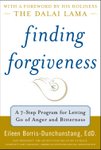
Author of Finding Forgiveness
dreileenborrisdotcom
The Amish have an enormous capacity to see things differently. This is because forgiveness is woven into the fabric of the Amish way of life and the more we are willing to entertain the thought of forgiveness, the more we too can experience it. What makes what the Amish did so remarkable is that they never lost sight of the fact that above all else Roberts was a human being, like all of us. They where able to see past Robert’s actions and recognize his humanity. I call this seeing with spiritual sight. This gave the Amish the ability to sympathize with his family for their loss and move forward with compassion and not vengeful hate. This is one of the keys to learning how to forgive. It is seeing past the outer behavior to the light that is within all of us. Another way of saying this is that the Amish never lost touch of the essence of who we are as human beings. For some this is expressed as our spiritual essence or the divinity within us. Forgiveness is about bringing us closer to that beautiful essence within us and as we do, we will experience a greater joy and love in all aspects of our lives and truly know divine presence.
Dr. Eileen Borris
Author of Finding Forgiveness
dreileenborrisdotcom
Subscribe to:
Comments (Atom)