


Forgiveness stories are inspiring. Reading about the Cooney family is no exception. On Thursday, March 18th, 2010 a hearing took place in which the family of a Duluth murder victim begged for the mercy. The entire courtroom including the judge was riveted by what they heard.
The story began last July when Curtis Cooney was shot in the head and killed by a man named Philbert “Randy” Barnes who was firing a gun into a crowd of people. In January “Randy” Barnes was convicted of 2nd degree murder and 2nd degree attempted murder. This past Thursday the judge handed down the sentence. Both families were present. But before the judge spoke of his sentence the Cooney family wanted to speak.
Heidi Cooney, the victim’s mother began by saying “I was raised to be forgiving, and if you want others to forgive you you need to forgive.” Curtis Cooney’s sister began to cry commenting that she lost her best friend that night. The two of them had a very special bond. Then Curtis’s father reminded everyone that “If Curtis could be here today he would forgive you, and so do we.” Cooney Sr. asked the judge to show Barnes mercy.
The Barnes family was also present in the courtroom. The older brother, tearfully apologizing to the Cooney family begged for forgiveness. Then the judge acknowledged that what he heard was extraordinary and he would take into account all that was said. After a brief recess the judge announced the sentence. Barnes was to receive 14 years in jail for attempted murder and 29 years for murder to run concurrently. Judge Johnson told those in the courtroom that it was because of “the grace of the Cooney family” he elected to sentence Barnes concurrently. The court was moved by the fact that the Cooney family forgave Barnes and that it wasn’t looking for retribution. The judge felt that it was “extraordinary” in the way the murder victim’s family and the defendant’s family came together. Steven Bynum, Barnes brother walked over to Michael Cooney and shook his hand and rubbed his cheek. Bynum then expressed his thanks to the Cooney family for the “grace, love and compassion” they extended to his family.
Once outside the courtroom Cooney Sr. said “If you’re truly consumed with hate and bitterness, that hurts you more than anything else. Carrying around hate and rage is not good for a person. Once you forgive someone, the healing process can truly begin.”
Steven Bynum responded by saying “We want Curtis Cooney’s family to have peace and that they can go forward in the joy and love of the Lord, that’s the most important thing. . .The absolute love and mercy that the Cooney family has shown to our family is just unforgettable. . . The second most important thing is that my brother have the opportunity to rebuild his life again and to take stock in what has happened. The greatest honor that he could give to the Cooney family, to Curtis and to all of us that love and support him is that he build his life anew, that he find God, and that he takes that love and joy and extends it to others. Today was an example of the power of forgiveness and redemption and reconciliation.”
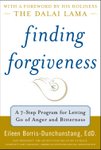
When reading this, what thoughts did you have? I would appreciate hearing them. If you have a forgiveness story you would like to share please submitted through my website www.dreileenborris.com. By sharing your stories and your struggles it will touch many other lives. You can learn more about how to forgive in “Finding Forgiveness: A 7 Step Program for Letting go of Anger and Bitterness” published by McGraw-Hill.
Showing posts with label Forgiving families. Show all posts
Showing posts with label Forgiving families. Show all posts
Friday, March 19, 2010


Wednesday, March 10, 2010
It's All My Mothers Fault and No I will NOT Forgive Her!
I remember a friend of mine telling me how mad she was at her mother. It seemed as though every time they got into a car together they would fight. There was a litany of reasons why my friend would not forgive her mother – the least of which she was stuck in the blame game.
When we blame others we are accusing them of something we believe they have done to us. We are placing fault on others insisting that they are the cause of our misery. When we are hurt because of something that has happened in the past and still feel the pain in the present we look for reasons to explain our pain. The truth is that we can never really know all the reasons why someone has hurt us, and more importantly we do not usually take the time to go within ourselves to understand what part we may have played in our life circumstances. We usually take the easy way out and like a knee jerk reaction we blame others for what may be causing our pain. That is not to say that others do not behave poorly and do things that are hurtful. What I am talking about is that when we continually blame someone else for our painful feelings, instead of making us feel better, blaming actually makes us feel worse.
Blaming causes more pain. When we blame someone else for our suffering we believe that someone else is the cause of our pain and that we need something from that person to feel better. We are dependent on them for our well being. What we actually have done is disempowered ourselves, giving other people control over how we feel. We have chosen not to take responsibility for what we are feeling.
Blaming others becomes a habit, sinking us further into the victim role. Like being in quick sand we feel powerless to change our circumstances. Underneath our need to blame is another issue that we are consistently running away from – our own feelings of guilt. Whenever we are accusing someone (blaming) of something we are secretly blaming ourselves. The content may be different but the form will be the same. If we are blaming someone for nasty horrible things they have said to us, we may not say those same kinds of things to them but if we are honest with ourselves we certainly have said unkind things to others. The important point to remember is that we are not here to beat ourselves up when we learn things about ourselves we wish we hadn’t. Now that we have gained a new understanding about ourselves we can make different choices. When we see the humanness in ourselves it is easier to see the humanness in others. Being able to then forgive ourselves we can also forgive others and stop the blame game. And remember, holding on to guilt is a choice too.
You can find more information on how to stop the blame game and to heal our guilt in “Finding Forgiveness: A 7 Step Program for Letting Go of Anger and Bitterness” published by McGraw-Hill.
When we blame others we are accusing them of something we believe they have done to us. We are placing fault on others insisting that they are the cause of our misery. When we are hurt because of something that has happened in the past and still feel the pain in the present we look for reasons to explain our pain. The truth is that we can never really know all the reasons why someone has hurt us, and more importantly we do not usually take the time to go within ourselves to understand what part we may have played in our life circumstances. We usually take the easy way out and like a knee jerk reaction we blame others for what may be causing our pain. That is not to say that others do not behave poorly and do things that are hurtful. What I am talking about is that when we continually blame someone else for our painful feelings, instead of making us feel better, blaming actually makes us feel worse.
Blaming causes more pain. When we blame someone else for our suffering we believe that someone else is the cause of our pain and that we need something from that person to feel better. We are dependent on them for our well being. What we actually have done is disempowered ourselves, giving other people control over how we feel. We have chosen not to take responsibility for what we are feeling.
Blaming others becomes a habit, sinking us further into the victim role. Like being in quick sand we feel powerless to change our circumstances. Underneath our need to blame is another issue that we are consistently running away from – our own feelings of guilt. Whenever we are accusing someone (blaming) of something we are secretly blaming ourselves. The content may be different but the form will be the same. If we are blaming someone for nasty horrible things they have said to us, we may not say those same kinds of things to them but if we are honest with ourselves we certainly have said unkind things to others. The important point to remember is that we are not here to beat ourselves up when we learn things about ourselves we wish we hadn’t. Now that we have gained a new understanding about ourselves we can make different choices. When we see the humanness in ourselves it is easier to see the humanness in others. Being able to then forgive ourselves we can also forgive others and stop the blame game. And remember, holding on to guilt is a choice too.
You can find more information on how to stop the blame game and to heal our guilt in “Finding Forgiveness: A 7 Step Program for Letting Go of Anger and Bitterness” published by McGraw-Hill.
Friday, February 26, 2010
You don't have to be a Victim Anymore
Have you been hurt in a small or big way? The truth is all of us have been wounded through out our lives. Someone may not have come through in the way we wanted them too or hoped for. Or perhaps someone lied to us or abandoned us. We are wounded because something happened in our life which we didn't want to happen and in many cases we become overwhelmed with what took place. We probably lacked the skills to confront the reality of things not turning out the way we had hoped. Without the skills to handle the situation in the very best way, we become wounded.
When we experience a painful life event we often react with anger or depression. You hold on to that life experience not realizing that the specifics of what happened are not as important as learning how to deal with your reactions to your experience. Whatever has happened to you, adding difficult emotions adds to your pain.
Are you someone who has trouble letting go of the past? Do you get tired of all the time you dwell over something which happened yesterday? Remember, you have a choice as to how much time you will spend on thinking about something that has caused you pain.
To help you let go of your past you may want to write about what has happend. Before you do take a few deep relaxing breathes and when you feel relaxed think of a situation in your life which has created pain. When you have the situation clearly in your mind write your story down. What happened that may have led up to the situation, the situation itself and its aftermath. Think not only about what happened but also how you felt about it. Then ask yourself:
1. How much time are you willing to think about your hurt and/or disappointment?
2. When you think about these hurts how much intensity is there?
3. Why haven't you thought of all the good in your life with the same intensity as your pain?
The answer to these questions are an indication of the depth of your forgiveness work. Just because painful things have happened it doesn't mean that you need to dwell on this. The importance of these questions is not to deny that people have hurt you, they are to help you recognize that we get into habits. The more we think of the negative, the deeper the groove becomes in our mind. After awhile that groove is so deep that it becomes difficult to break out of that groove. We always have choice and if you keep dwelling on something you give those thoughts power. What you focus your attention on is what you become. If you focus on your pain that is what you will experience. If you focus on forgiveness your world will begin to look very different.
You can find more information on how to forgive in "Finding Forgiveness: A 7 Step Program for Letting go of Anger and Bitterness" published by McGraw-Hill.
When we experience a painful life event we often react with anger or depression. You hold on to that life experience not realizing that the specifics of what happened are not as important as learning how to deal with your reactions to your experience. Whatever has happened to you, adding difficult emotions adds to your pain.
Are you someone who has trouble letting go of the past? Do you get tired of all the time you dwell over something which happened yesterday? Remember, you have a choice as to how much time you will spend on thinking about something that has caused you pain.
To help you let go of your past you may want to write about what has happend. Before you do take a few deep relaxing breathes and when you feel relaxed think of a situation in your life which has created pain. When you have the situation clearly in your mind write your story down. What happened that may have led up to the situation, the situation itself and its aftermath. Think not only about what happened but also how you felt about it. Then ask yourself:
1. How much time are you willing to think about your hurt and/or disappointment?
2. When you think about these hurts how much intensity is there?
3. Why haven't you thought of all the good in your life with the same intensity as your pain?
The answer to these questions are an indication of the depth of your forgiveness work. Just because painful things have happened it doesn't mean that you need to dwell on this. The importance of these questions is not to deny that people have hurt you, they are to help you recognize that we get into habits. The more we think of the negative, the deeper the groove becomes in our mind. After awhile that groove is so deep that it becomes difficult to break out of that groove. We always have choice and if you keep dwelling on something you give those thoughts power. What you focus your attention on is what you become. If you focus on your pain that is what you will experience. If you focus on forgiveness your world will begin to look very different.
You can find more information on how to forgive in "Finding Forgiveness: A 7 Step Program for Letting go of Anger and Bitterness" published by McGraw-Hill.
Monday, December 15, 2008
Forgiving the Affair
You think your marriage is fine and then one day you notice something which you begin to wonder about. You begin to get anxious feelings that perhaps something is going on. At first you may ignore this and then something else triggers those uneasy feelings. You may deny what are actually tell tale signs until one day it hits you in the face. You are overcome with the sick feeling that your partner has been unfaithful. You may go into shock and when that begins to wear off you feel the rage.
Unfortunately many of us have been there. Some of us may want to do the revenge route; others may just want to kick our partner out and never see them again. Yet if we can think more rationally we also realize that we have possibly a history with this person that is worth preserving and that we in some way may have also contributed to the infidelity. This is when being opened to forgiveness can become the necessary healing force to bring people together.
How can we forgive a betrayal that can run so deeply in our hearts? We begin by telling our story to people who will listen and support us. We listen to our anger and ask ourselves, what is our anger really telling us. If we look deeply enough we will realize that our anger is telling us that something as to change, usually within ourselves. We also need to deal with our guilt, that horrible feeling that we sometimes feel within the pit of our stomach. Guilt is all of the negative beliefs we hold about ourselves. We need to remember that holding on to these feelings is a choice too. If we realize that we have done something wrong we acknowledge it and make a commitment to ourselves that now that we have seen something in ourselves that we want to chance we now can begin to make different choices. Then we put ourselves in the other person’s shoes and ask ourselves, what has brought that person to the place they are which brought them to act that way. In asking this question we are able to develop a clearer understanding of what may have happened. We will also need to mourn what was lost, the trust we once had and release that pain in whatever way speaks to us. Hopefully at this point we are able to sit down and talk to the other person. Everyone needs to take responsibility for their actions and their emotional responses. By doing your inner work you will be able to set the stage for what is best for you to do and heal the relationship. This kind of clarity will help you make the right choices, not out of anger but out of understanding so you can move forward in a healthy way. This is what forgiveness enables us to do.
Unfortunately many of us have been there. Some of us may want to do the revenge route; others may just want to kick our partner out and never see them again. Yet if we can think more rationally we also realize that we have possibly a history with this person that is worth preserving and that we in some way may have also contributed to the infidelity. This is when being opened to forgiveness can become the necessary healing force to bring people together.
How can we forgive a betrayal that can run so deeply in our hearts? We begin by telling our story to people who will listen and support us. We listen to our anger and ask ourselves, what is our anger really telling us. If we look deeply enough we will realize that our anger is telling us that something as to change, usually within ourselves. We also need to deal with our guilt, that horrible feeling that we sometimes feel within the pit of our stomach. Guilt is all of the negative beliefs we hold about ourselves. We need to remember that holding on to these feelings is a choice too. If we realize that we have done something wrong we acknowledge it and make a commitment to ourselves that now that we have seen something in ourselves that we want to chance we now can begin to make different choices. Then we put ourselves in the other person’s shoes and ask ourselves, what has brought that person to the place they are which brought them to act that way. In asking this question we are able to develop a clearer understanding of what may have happened. We will also need to mourn what was lost, the trust we once had and release that pain in whatever way speaks to us. Hopefully at this point we are able to sit down and talk to the other person. Everyone needs to take responsibility for their actions and their emotional responses. By doing your inner work you will be able to set the stage for what is best for you to do and heal the relationship. This kind of clarity will help you make the right choices, not out of anger but out of understanding so you can move forward in a healthy way. This is what forgiveness enables us to do.
Thursday, October 23, 2008
A father's Forgiveness
I am always thankful to see the story of Azim Khamisa which I find so inspiring. I first heard about the story in 1995 and what touched me most was Azim's comment, "there were victims at both ends of the gun." Azim already was demonstrating the kind of thinking that each one of us should strive for - choosing to see the world not from the eys of our anger, but through the eyes of understanding. Azim demonstrated so much compassion inspite of his pain and grief. He understood that healing was needed for all those concerned and what inspires me most is that he has dedicated his entire life since the tragedy to do just that.
Monday, July 30, 2007
Forgiving families belong together, are unstoppable
This story demonstrates the importance of introducing the ideas of forgiveness in any society. If people a shown a different way, one based in love not fear, people will respond to the love that they have received. We all want to be forgiven for things we have done and when we do experience that forgiveness it does leave an impression. If we can support that kind of thinking in our societies then we are creating cultures which become predisposed to the ideas of forgiveness. This can begin a very powerful healing process that can ultimately not only save this tribe but the world.
Dr. Eileen Borris
Author of Finding Forgiveness
www.dreileen borris.com
Dr. Eileen Borris
Author of Finding Forgiveness
www.dreileen borris.com
Subscribe to:
Posts (Atom)