
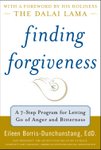


During the week of April 19, 2010 I was in Rome attending meetings as a member of the Council for Dignity, Forgiveness, and Reconciliation. Created by Maria Nicoletta Gaida the Council is part of the Ara Pacis Initiative initiated by the Glocal Forum Italy Foundation and promoted by the City of Rome with the High Patronage of the Republic of Italy and under the auspices of the Prime Minister and the Italian Ministry of Foreign Affairs. The Ara Pacis Initiative is dedicated to the human dimension of peace before, during and after conflict. This project has attracted the active interest of the President of the State of Israel, Shimon Peres, and the President of the Palestinian National Authority, Mahmoud Abbas, and has been favorably received by H.M. Mohammed VI, the King of Morocco.
The project aims to launch an active reflection on forgiveness, in its various religious and cultural meanings, as a moral, spiritual and political tool for achieving reconciliation among peoples – with a particular focus on the Mediterranean and the Israeli-Palestinian conflict. This is an initiative that will bring to light and recognize the root causes of contemporary suffering and the wounds buried deep in collective memory in order to restore dignity to those who have suffered, thereby creating the premise for a reconciliation that allows for the building of a common future.
The heart of the Ara Pacis Initiative is the Council for Dignity, Forgiveness, and Reconciliation, made up primarily of men and women who have suffered personally because of armed conflict and who have chosen the path of forgiveness, and forgiveness and reconciliation experts and practitioners who work to imagine a new community, to propose the way of political forgiveness, and to develop ongoing activities aimed at raising awareness of the necessity of working on the path of forgiveness/reconciliation through education as well as intercultural and inter-religious dialogue in all fields. Through concrete projects the Council will aim to transform relations between communities in conflict to help them take the paths of reconciliation. The work of the Council will be to share their knowledge, experiences and insight concerning dignity, forgiveness and reconciliation, and initiating projects such as sending small teams of experts to promote approaches rarely used, but dramatically necessary – like forgiveness with justice, restoring dignity, and healing from trauma.
The Council will work in strict coordination with the national and international diplomatic channels and in collaboration with grassroots organizations active on the ground – on initiatives promoting reflection and participation of the various populations in the area of forgiveness. It will guide the activities related to the gathering and documenting of testimonies of conflict victims to memorialize them, as well as the selection of representatives of the victims from all sides – as victimization from hate and violence leaves no side untouched – to participate in the Council’s hearings.
Showing posts with label forgivenss and healing. Show all posts
Showing posts with label forgivenss and healing. Show all posts
Thursday, April 29, 2010


Tuesday, March 30, 2010
Forgiveness and Amish Grace
Is it possible to forgive a murderer? Would you be able to forgive the person who MURDERED someone you loved very deeply? This was the subject of the movie “Amish Grace” shown on the Lifetime Movie Network. The movie is based on a true story about the Amish community who within the fabric of their beings embraced the thinking which is the scaffolding of forgiveness. This community demonstrates how difficult it is to forgive even when deeply steeped in religious beliefs forgiveness is engrained. They also demonstrate how powerful forgiveness is in the healing of the soul.
On October 2, 2006 Carl Roberts entered into a one room school house in the Amish community of Nickel Mines, Pennsylvania. He lined up 11 young girls and shot them at point blank range. Roberts killed five of the girls and then killed himself. In an amazing act of courage the oldest girl, 13-year-old Marian Fisher asked Roberts to shoot her first. She hoped that she could spare the lives of the younger girls. And what was even more remarkable was that in just a few hours after the shooting an Amish neighbor went to the Roberts family to comfort them and to offer forgiveness.
A grandfather of one of the girls killed was telling the boys to forgive what had just happened as they prepared the body of one of the little girls for burial. How many of you could have done that? How many of you could have told the young boys that “We must not think evil of this man?” Yet these were the words of the grandfather. And what is even more unimaginable is that five days later the families who lost their daughters attended the funeral of the man who had killed them. They went not in anger or for retribution, but to comfort the family and let them know that all was forgiven.
The Amish learned to let go of their pain and suffering. What makes the Amish so remarkable is that they chose to see, using the words of Jerry Jampolsky, “the light instead of the lampshade” and saw the situation with spiritual sight, that although what this man did was an act of evil – inwardly, it was a cry for help. They were able to go beyond what their physical eyes were telling them and recognized that Roberts too was worthy of love. They were able to see Roberts not through the lens of anger, fear or guilt, but through the eyes of understanding and compassion.
As we struggle with our own difficulties in being able to forgive, we also open ourselves up to a benevolent force which is far more powerful than we could ever be. This creative force which is sometimes experienced as grace, is that inexplicable power which comes from something beyond ourselves. This power gives us the ability to forgive even when we feel within our hearts, forgiveness is humanly impossible. This moment of grace creates a profound interior renovation which completely changes the way we think. Instead of perceiving the situation through our judgments we see things differently, through what I call spiritual sight. When it happens, you can feel the power and presence of a higher intervention which transforms your relationships as you experience an outpouring of this inexplicable love.
This is the love which enabled the Amish to pray for everyone involved in what took place on October 2nd, not only for the innocent little girls who got killed and those still to recover, but for the killer himself. They knew that by expressing love it would bring about healing for all those concerned, whereas to take on and express the same evil as the attacker, that would only support evil and allow it to spread. The Amish learned that when we forgive we let our pain go.
On October 2, 2006 Carl Roberts entered into a one room school house in the Amish community of Nickel Mines, Pennsylvania. He lined up 11 young girls and shot them at point blank range. Roberts killed five of the girls and then killed himself. In an amazing act of courage the oldest girl, 13-year-old Marian Fisher asked Roberts to shoot her first. She hoped that she could spare the lives of the younger girls. And what was even more remarkable was that in just a few hours after the shooting an Amish neighbor went to the Roberts family to comfort them and to offer forgiveness.
A grandfather of one of the girls killed was telling the boys to forgive what had just happened as they prepared the body of one of the little girls for burial. How many of you could have done that? How many of you could have told the young boys that “We must not think evil of this man?” Yet these were the words of the grandfather. And what is even more unimaginable is that five days later the families who lost their daughters attended the funeral of the man who had killed them. They went not in anger or for retribution, but to comfort the family and let them know that all was forgiven.
The Amish learned to let go of their pain and suffering. What makes the Amish so remarkable is that they chose to see, using the words of Jerry Jampolsky, “the light instead of the lampshade” and saw the situation with spiritual sight, that although what this man did was an act of evil – inwardly, it was a cry for help. They were able to go beyond what their physical eyes were telling them and recognized that Roberts too was worthy of love. They were able to see Roberts not through the lens of anger, fear or guilt, but through the eyes of understanding and compassion.
As we struggle with our own difficulties in being able to forgive, we also open ourselves up to a benevolent force which is far more powerful than we could ever be. This creative force which is sometimes experienced as grace, is that inexplicable power which comes from something beyond ourselves. This power gives us the ability to forgive even when we feel within our hearts, forgiveness is humanly impossible. This moment of grace creates a profound interior renovation which completely changes the way we think. Instead of perceiving the situation through our judgments we see things differently, through what I call spiritual sight. When it happens, you can feel the power and presence of a higher intervention which transforms your relationships as you experience an outpouring of this inexplicable love.
This is the love which enabled the Amish to pray for everyone involved in what took place on October 2nd, not only for the innocent little girls who got killed and those still to recover, but for the killer himself. They knew that by expressing love it would bring about healing for all those concerned, whereas to take on and express the same evil as the attacker, that would only support evil and allow it to spread. The Amish learned that when we forgive we let our pain go.
Wednesday, January 27, 2010
Will I ever get over it and be able to Forgive?
I remember a friend telling me how long it took her to realize and fully understand that the best thing she could do was to forgive her husband when he walked out on her. In the beginning she was devastated. She felt so stupid that she did not see the “handwriting on the wall.” After all, she loved him and wanted the marriage to work. Yes, there was emotional abuse but she never expected betrayal and certainly not infidelity.
As Kathy continued telling me her story I encouraged her to go deep within herself and allow whatever she was feeling to come out. There was so much anger, grief, pain and shame; so many emotions that at times she wanted to scream, then cry making her feel sick inside. We’ve all been there, feeling that these memories will be seared in our hearts and minds always to return with unexpected emotional force.
Yet, telling your story is the beginning of your healing process. When you feel able, talk about what happened to someone you trust and who will be supportive of you. Tell your story as completely as possible including not only the emotions you are feeling as you tell the story, but what was going on inside of you as the events began to unfold. When you first tell your story, it may be incomplete. You ma need to retell your story to bring all the pieces together, what your feelings were, the meaning of what happened to you and perhaps to those around you. Talk about the question of guilt and responsibility. This may help you later in reconstructing a system of belief that makes sense of undeserved suffering. Remember to breathe as you tell your story. Breathing will help you manage strong emotions. If it is too difficult to tell your story, write about it or draw your story.
An exercise that can help you with your healing process is to do some journaling. Think of a situation where you feel you need to forgive someone and want to work through your painful emotions. Write your story describing what took place in detail. What happened to you and what possibly led up to the situation that you may not have been aware of at first. What were your thoughts and feelings and what meaning did you give to the event. What are your attitudes and beliefs about what happened. If there are several events, develop a separate script for each one. Don’t be surprised if new memories are recovered as you explore old ones. Write down everything you feel about the situation and the person causing you pain. Allow a stream of consciousness to flow across the pages of your journal and spare nothing. Remember that this is your private journal for no one else to see. After you have written everything down, ask yourself, “If I were face to face with this person, what would I say?” Let out the anger and the hurt in what you write and keep on writing until there is nothing left to say. Some questions to think about are “Why did this situation happen to me?”, and “What happened in that other person’s life that may have caused pain and brought him/her to the place they are today?”
You may need to rework your story until you have all the pieces together and that is ok. In my next blog I will help you deal with your strong emotions that you may be having difficulty with and how to put your emotional life back together again.
As Kathy continued telling me her story I encouraged her to go deep within herself and allow whatever she was feeling to come out. There was so much anger, grief, pain and shame; so many emotions that at times she wanted to scream, then cry making her feel sick inside. We’ve all been there, feeling that these memories will be seared in our hearts and minds always to return with unexpected emotional force.
Yet, telling your story is the beginning of your healing process. When you feel able, talk about what happened to someone you trust and who will be supportive of you. Tell your story as completely as possible including not only the emotions you are feeling as you tell the story, but what was going on inside of you as the events began to unfold. When you first tell your story, it may be incomplete. You ma need to retell your story to bring all the pieces together, what your feelings were, the meaning of what happened to you and perhaps to those around you. Talk about the question of guilt and responsibility. This may help you later in reconstructing a system of belief that makes sense of undeserved suffering. Remember to breathe as you tell your story. Breathing will help you manage strong emotions. If it is too difficult to tell your story, write about it or draw your story.
An exercise that can help you with your healing process is to do some journaling. Think of a situation where you feel you need to forgive someone and want to work through your painful emotions. Write your story describing what took place in detail. What happened to you and what possibly led up to the situation that you may not have been aware of at first. What were your thoughts and feelings and what meaning did you give to the event. What are your attitudes and beliefs about what happened. If there are several events, develop a separate script for each one. Don’t be surprised if new memories are recovered as you explore old ones. Write down everything you feel about the situation and the person causing you pain. Allow a stream of consciousness to flow across the pages of your journal and spare nothing. Remember that this is your private journal for no one else to see. After you have written everything down, ask yourself, “If I were face to face with this person, what would I say?” Let out the anger and the hurt in what you write and keep on writing until there is nothing left to say. Some questions to think about are “Why did this situation happen to me?”, and “What happened in that other person’s life that may have caused pain and brought him/her to the place they are today?”
You may need to rework your story until you have all the pieces together and that is ok. In my next blog I will help you deal with your strong emotions that you may be having difficulty with and how to put your emotional life back together again.
Sunday, January 3, 2010
The Challenge of Forgiveness
Immaculee Ilibagiza, a Rwandan woman who wrote Left to Tell (Hay House, 2006) was able to forgive the unthinkable. For 91 days of the 1994 genocide in Rwanda she hid in a tiny bathroom with seven other women in the home of her local pastor. She describes the horror she lived through and the stunning transformation she experienced because of her desire to forgive. Something happened within her where she was able to move her consciousness to deeper levels of understanding and experience inexplicable love. When the genocide ended, Immaculee met one of her family’s murderers and was able to forgive him.
How is forgiveness possible in the face of such horrific acts and what exactly is forgiveness? In the most simplistic of terms forgiveness is a willingness to let go of resentment and to stop suffering. I define forgiveness as a voluntary act in which you make a decision to see a situation differently. Instead of seeing a situation through the lens of anger, guilt or fear we see it through the eyes of compassion and understanding. I like to think of forgiveness as the science of the heart, a discipline of discovering all the ways of being that will extend your love to the world and discarding all the ways that do not. On a deeper level forgiveness is about changing the way we think which includes embracing our humanity and spiritual nature and the humanity and spiritual nature of all human beings.
In the Handbook of Forgiveness (Routledge, 2005) an anthology of scientific studies edited by Everett Worthington Jr. experts in the field expose gradations in definitions of forgiveness. In spite of this they all do agree on one thing. Unforgiveness is a state of anger, bitterness and in its extreme form hatred. Forgiveness is a prosocial change in someone’s experience after a transgression. When people choose to forgive, they change.
My question to you is, has there been something in your life in which you were able to forgive and if so, how were you changed?
How is forgiveness possible in the face of such horrific acts and what exactly is forgiveness? In the most simplistic of terms forgiveness is a willingness to let go of resentment and to stop suffering. I define forgiveness as a voluntary act in which you make a decision to see a situation differently. Instead of seeing a situation through the lens of anger, guilt or fear we see it through the eyes of compassion and understanding. I like to think of forgiveness as the science of the heart, a discipline of discovering all the ways of being that will extend your love to the world and discarding all the ways that do not. On a deeper level forgiveness is about changing the way we think which includes embracing our humanity and spiritual nature and the humanity and spiritual nature of all human beings.
In the Handbook of Forgiveness (Routledge, 2005) an anthology of scientific studies edited by Everett Worthington Jr. experts in the field expose gradations in definitions of forgiveness. In spite of this they all do agree on one thing. Unforgiveness is a state of anger, bitterness and in its extreme form hatred. Forgiveness is a prosocial change in someone’s experience after a transgression. When people choose to forgive, they change.
My question to you is, has there been something in your life in which you were able to forgive and if so, how were you changed?
Saturday, January 2, 2010
The Power of Forgiveness
With the turbulent times that we are all experiencing, how do we comfort ourselves? Outer worlds are falling apart and for many a new journey begins as we look elsewhere, within ourselves, to find the comfort the outer world has taken away. Where this inner searching takes us is different for each one of us but the catalyst for its beginning is usually very similar.
How do we tap into this inner peace and is there something that resides deep within ourselves that is available 24/7 and can always bring us comfort? The mystics talk about this spiritual essence and now scientists are beginning to explore and gain an understanding of this too. There may be many paths to the core of our being and changing our consciousness is a key factor. One of the greatest healing mechanisms to help us along the way is the path of forgiveness.
I am reading a very interesting book "Fingerprints of God: The Search for the Science of Spirituality" by Barbara Bradley Hagerty. Within the book Bradley Hagerty shares her the story of her spiritual evolution. What caught my attention was how Bradley Hagerty was interweaving science with the search for a communion to a higher power. I couldn’t help but to think about all of this in relationship to forgiveness. Are we hard wired to forgive? What do you think? More on this later.
How do we tap into this inner peace and is there something that resides deep within ourselves that is available 24/7 and can always bring us comfort? The mystics talk about this spiritual essence and now scientists are beginning to explore and gain an understanding of this too. There may be many paths to the core of our being and changing our consciousness is a key factor. One of the greatest healing mechanisms to help us along the way is the path of forgiveness.
I am reading a very interesting book "Fingerprints of God: The Search for the Science of Spirituality" by Barbara Bradley Hagerty. Within the book Bradley Hagerty shares her the story of her spiritual evolution. What caught my attention was how Bradley Hagerty was interweaving science with the search for a communion to a higher power. I couldn’t help but to think about all of this in relationship to forgiveness. Are we hard wired to forgive? What do you think? More on this later.
Subscribe to:
Comments (Atom)