


Forgiveness stories are inspiring. Reading about the Cooney family is no exception. On Thursday, March 18th, 2010 a hearing took place in which the family of a Duluth murder victim begged for the mercy. The entire courtroom including the judge was riveted by what they heard.
The story began last July when Curtis Cooney was shot in the head and killed by a man named Philbert “Randy” Barnes who was firing a gun into a crowd of people. In January “Randy” Barnes was convicted of 2nd degree murder and 2nd degree attempted murder. This past Thursday the judge handed down the sentence. Both families were present. But before the judge spoke of his sentence the Cooney family wanted to speak.
Heidi Cooney, the victim’s mother began by saying “I was raised to be forgiving, and if you want others to forgive you you need to forgive.” Curtis Cooney’s sister began to cry commenting that she lost her best friend that night. The two of them had a very special bond. Then Curtis’s father reminded everyone that “If Curtis could be here today he would forgive you, and so do we.” Cooney Sr. asked the judge to show Barnes mercy.
The Barnes family was also present in the courtroom. The older brother, tearfully apologizing to the Cooney family begged for forgiveness. Then the judge acknowledged that what he heard was extraordinary and he would take into account all that was said. After a brief recess the judge announced the sentence. Barnes was to receive 14 years in jail for attempted murder and 29 years for murder to run concurrently. Judge Johnson told those in the courtroom that it was because of “the grace of the Cooney family” he elected to sentence Barnes concurrently. The court was moved by the fact that the Cooney family forgave Barnes and that it wasn’t looking for retribution. The judge felt that it was “extraordinary” in the way the murder victim’s family and the defendant’s family came together. Steven Bynum, Barnes brother walked over to Michael Cooney and shook his hand and rubbed his cheek. Bynum then expressed his thanks to the Cooney family for the “grace, love and compassion” they extended to his family.
Once outside the courtroom Cooney Sr. said “If you’re truly consumed with hate and bitterness, that hurts you more than anything else. Carrying around hate and rage is not good for a person. Once you forgive someone, the healing process can truly begin.”
Steven Bynum responded by saying “We want Curtis Cooney’s family to have peace and that they can go forward in the joy and love of the Lord, that’s the most important thing. . .The absolute love and mercy that the Cooney family has shown to our family is just unforgettable. . . The second most important thing is that my brother have the opportunity to rebuild his life again and to take stock in what has happened. The greatest honor that he could give to the Cooney family, to Curtis and to all of us that love and support him is that he build his life anew, that he find God, and that he takes that love and joy and extends it to others. Today was an example of the power of forgiveness and redemption and reconciliation.”
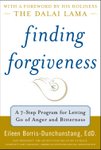
When reading this, what thoughts did you have? I would appreciate hearing them. If you have a forgiveness story you would like to share please submitted through my website www.dreileenborris.com. By sharing your stories and your struggles it will touch many other lives. You can learn more about how to forgive in “Finding Forgiveness: A 7 Step Program for Letting go of Anger and Bitterness” published by McGraw-Hill.
Showing posts with label relationships. Show all posts
Showing posts with label relationships. Show all posts
Friday, March 19, 2010


Wednesday, March 10, 2010
It's All My Mothers Fault and No I will NOT Forgive Her!
I remember a friend of mine telling me how mad she was at her mother. It seemed as though every time they got into a car together they would fight. There was a litany of reasons why my friend would not forgive her mother – the least of which she was stuck in the blame game.
When we blame others we are accusing them of something we believe they have done to us. We are placing fault on others insisting that they are the cause of our misery. When we are hurt because of something that has happened in the past and still feel the pain in the present we look for reasons to explain our pain. The truth is that we can never really know all the reasons why someone has hurt us, and more importantly we do not usually take the time to go within ourselves to understand what part we may have played in our life circumstances. We usually take the easy way out and like a knee jerk reaction we blame others for what may be causing our pain. That is not to say that others do not behave poorly and do things that are hurtful. What I am talking about is that when we continually blame someone else for our painful feelings, instead of making us feel better, blaming actually makes us feel worse.
Blaming causes more pain. When we blame someone else for our suffering we believe that someone else is the cause of our pain and that we need something from that person to feel better. We are dependent on them for our well being. What we actually have done is disempowered ourselves, giving other people control over how we feel. We have chosen not to take responsibility for what we are feeling.
Blaming others becomes a habit, sinking us further into the victim role. Like being in quick sand we feel powerless to change our circumstances. Underneath our need to blame is another issue that we are consistently running away from – our own feelings of guilt. Whenever we are accusing someone (blaming) of something we are secretly blaming ourselves. The content may be different but the form will be the same. If we are blaming someone for nasty horrible things they have said to us, we may not say those same kinds of things to them but if we are honest with ourselves we certainly have said unkind things to others. The important point to remember is that we are not here to beat ourselves up when we learn things about ourselves we wish we hadn’t. Now that we have gained a new understanding about ourselves we can make different choices. When we see the humanness in ourselves it is easier to see the humanness in others. Being able to then forgive ourselves we can also forgive others and stop the blame game. And remember, holding on to guilt is a choice too.
You can find more information on how to stop the blame game and to heal our guilt in “Finding Forgiveness: A 7 Step Program for Letting Go of Anger and Bitterness” published by McGraw-Hill.
When we blame others we are accusing them of something we believe they have done to us. We are placing fault on others insisting that they are the cause of our misery. When we are hurt because of something that has happened in the past and still feel the pain in the present we look for reasons to explain our pain. The truth is that we can never really know all the reasons why someone has hurt us, and more importantly we do not usually take the time to go within ourselves to understand what part we may have played in our life circumstances. We usually take the easy way out and like a knee jerk reaction we blame others for what may be causing our pain. That is not to say that others do not behave poorly and do things that are hurtful. What I am talking about is that when we continually blame someone else for our painful feelings, instead of making us feel better, blaming actually makes us feel worse.
Blaming causes more pain. When we blame someone else for our suffering we believe that someone else is the cause of our pain and that we need something from that person to feel better. We are dependent on them for our well being. What we actually have done is disempowered ourselves, giving other people control over how we feel. We have chosen not to take responsibility for what we are feeling.
Blaming others becomes a habit, sinking us further into the victim role. Like being in quick sand we feel powerless to change our circumstances. Underneath our need to blame is another issue that we are consistently running away from – our own feelings of guilt. Whenever we are accusing someone (blaming) of something we are secretly blaming ourselves. The content may be different but the form will be the same. If we are blaming someone for nasty horrible things they have said to us, we may not say those same kinds of things to them but if we are honest with ourselves we certainly have said unkind things to others. The important point to remember is that we are not here to beat ourselves up when we learn things about ourselves we wish we hadn’t. Now that we have gained a new understanding about ourselves we can make different choices. When we see the humanness in ourselves it is easier to see the humanness in others. Being able to then forgive ourselves we can also forgive others and stop the blame game. And remember, holding on to guilt is a choice too.
You can find more information on how to stop the blame game and to heal our guilt in “Finding Forgiveness: A 7 Step Program for Letting Go of Anger and Bitterness” published by McGraw-Hill.
Wednesday, February 17, 2010
I'm Innocent So Why Do I Have To Forgive?
The first step in your forgiveness journey begins with telling your story. For many of us this story can be a painful one. Something happened which frightened us, shocked us, made us very angry or hurt us deeply. In many cases when we retell our stories we portrayed ourselves as the victim.
Yes, many of us were victimized yet that doesn’t mean that we need to remain the victim. If this is what we choose to do, we have just disempowered ourselves creating more pain to deal with. We get stuck in the victim role when we take the hurt personally and we don’t take responsibility for how we feel. Just because something awful has happened it does not mean that we have to relive it day after day.
You might be thinking, how can I not take my spouse’s extramarital affairs or emotional abuse personally. You stop taking things personally when you begin to ask the questions, why them instead of why me. What has happened in their lives that have created pain that has made them who they are today? This helps you realize that anyone in your position at that given time would have been treated in exactly the same way. When you recognize the impersonal nature of what has happened to you, then your pain does not have to cripple you.
Not taking things personally doesn’t mean that you ignore or excuse what has happened or deny your pain. It does mean that what has happened to you is not a unique situation. For example unfortunately in many marriages people have experienced pain because their spouses had extramarital affairs. When you can see the impersonal nature of the situation you can begin a new story of healing and forgiveness.
How do we fall prey to the victim role? In a sense it is part of our human condition. All of us want to present “the face of innocence.” We can be very loving, very charming, sweet and kind when we want to be. We can also find people to sympathize with us when we talk about how badly treated we may have been. We identify with other people who are also victims. We see ourselves as good people living with people who can be very hurtful. Yet underneath our innocence our anger grows because we see a world which is unable to provide nurturance and love. Because I am innocent I will not make the first attack, yet every day a hundred little things make small assaults upon our innocence, provoking irritation eventually escalating to anger in all its forms. When we choose to hold on to our pain what we are actually doing is pointing an accusing finger at the wrongdoer saying I am the innocent victim and as you look on me you are condemned because of my suffering.
The central lesson is that we have a tremendous investment in holding on to our pain so we can blame others, proving that I am right and you are wrong. When I point my finger at you, there is also a finger pointing back at me although we want to keep that buried deep within ourselves below our face of innocence. Never underestimate the power of denial for this is what keeps the dynamics of attack and defend alive and well.
It’s important to become aware of our own face of innocence. What keeps us stuck in the victim role is our inability to manage our emotional pain and to confront reality. When we break our denial of wanting to be right instead of happy we have begun our healing, moving away from victim to one who thrives.
There is a journal exercise which will help you move from a victim story to a hero’s story. Think of a time where you needed to forgive someone. Do you repeat your story over and over again and if so what is keeping you stuck and why? Write down whatever comes up for you without judgment. Allow yourself to feel whatever is happening within you. Give your emotions voice including your guilt by writing it down. When you feel that you have given your emotions full expression, ask yourself why them? What has happened in their life that has brought them where they were at the time the incident happened. Is there a way that you can look at your situation in a healthier way and see things a bit differently now? If you can’t, what are you still holding on to and why can’t you let it go. See what comes up for you and allow yourself to feel whatever emotions need more expression. If guilt keeps reappearing – ask yourself what can you do differently now to heal your guilt. Remember, you can’t change the past but you can make different choices now. Remember that holding on to guilt is a choice too.
You can repeat this exercise as often as you like to help you loosen the grip of your pain and move from victim of your circumstances to a hero. Be gentle with yourself and thank yourself for taking the time to walk the path of forgiveness.
Yes, many of us were victimized yet that doesn’t mean that we need to remain the victim. If this is what we choose to do, we have just disempowered ourselves creating more pain to deal with. We get stuck in the victim role when we take the hurt personally and we don’t take responsibility for how we feel. Just because something awful has happened it does not mean that we have to relive it day after day.
You might be thinking, how can I not take my spouse’s extramarital affairs or emotional abuse personally. You stop taking things personally when you begin to ask the questions, why them instead of why me. What has happened in their lives that have created pain that has made them who they are today? This helps you realize that anyone in your position at that given time would have been treated in exactly the same way. When you recognize the impersonal nature of what has happened to you, then your pain does not have to cripple you.
Not taking things personally doesn’t mean that you ignore or excuse what has happened or deny your pain. It does mean that what has happened to you is not a unique situation. For example unfortunately in many marriages people have experienced pain because their spouses had extramarital affairs. When you can see the impersonal nature of the situation you can begin a new story of healing and forgiveness.
How do we fall prey to the victim role? In a sense it is part of our human condition. All of us want to present “the face of innocence.” We can be very loving, very charming, sweet and kind when we want to be. We can also find people to sympathize with us when we talk about how badly treated we may have been. We identify with other people who are also victims. We see ourselves as good people living with people who can be very hurtful. Yet underneath our innocence our anger grows because we see a world which is unable to provide nurturance and love. Because I am innocent I will not make the first attack, yet every day a hundred little things make small assaults upon our innocence, provoking irritation eventually escalating to anger in all its forms. When we choose to hold on to our pain what we are actually doing is pointing an accusing finger at the wrongdoer saying I am the innocent victim and as you look on me you are condemned because of my suffering.
The central lesson is that we have a tremendous investment in holding on to our pain so we can blame others, proving that I am right and you are wrong. When I point my finger at you, there is also a finger pointing back at me although we want to keep that buried deep within ourselves below our face of innocence. Never underestimate the power of denial for this is what keeps the dynamics of attack and defend alive and well.
It’s important to become aware of our own face of innocence. What keeps us stuck in the victim role is our inability to manage our emotional pain and to confront reality. When we break our denial of wanting to be right instead of happy we have begun our healing, moving away from victim to one who thrives.
There is a journal exercise which will help you move from a victim story to a hero’s story. Think of a time where you needed to forgive someone. Do you repeat your story over and over again and if so what is keeping you stuck and why? Write down whatever comes up for you without judgment. Allow yourself to feel whatever is happening within you. Give your emotions voice including your guilt by writing it down. When you feel that you have given your emotions full expression, ask yourself why them? What has happened in their life that has brought them where they were at the time the incident happened. Is there a way that you can look at your situation in a healthier way and see things a bit differently now? If you can’t, what are you still holding on to and why can’t you let it go. See what comes up for you and allow yourself to feel whatever emotions need more expression. If guilt keeps reappearing – ask yourself what can you do differently now to heal your guilt. Remember, you can’t change the past but you can make different choices now. Remember that holding on to guilt is a choice too.
You can repeat this exercise as often as you like to help you loosen the grip of your pain and move from victim of your circumstances to a hero. Be gentle with yourself and thank yourself for taking the time to walk the path of forgiveness.
Sunday, February 7, 2010
"It's Not Love that makes the World go Round - It's Guilt!"
The most important issue to deal with in the forgiveness process is our feelings of guilt. We can have a hard enough time getting in touch with our anger. Getting in touch with our guilt is even more difficult. None of us like to feel that awful feeling in the pit of our stomach. And for those of us feeling guilty for what we have done, that guilt blocks any possibility for us to feel love which we feel so unworthy of. When we don’t accept love we can’t be healed.
There is another reason why it is so important to uncover our guilt. If we pretend that the guilt buried within ourselves doesn’t exist, the only thing we can do with these feelings is literally place that guilt on someone else. Since guilt includes all the negative feelings we believe to be true about ourselves, now we only see those negatives in the people around us. We become very judgmental because of the lack of love within ourselves, and we attack others through the filter of our guilt. As soon as something happens to us, we can only see the situation through our negative thinking caused by our guilt. Until we recognize what we are doing, we will continue to blame others and have a distorted view of what actually happened. We need to learn how to see through our smoke screens and own our guilt
So how do we work with our guilt?
1. Don’t be afraid to talk about your feelings of guilt and recognize that as awful as a situation may be, we did the best we could.
2. Take responsibility for your choices and if you are the one who needs forgiveness realize that now that you can see what you have done – you can choose again.
3. Keep in mind that holding on to guilt and being stuck in a victim role is a choice, too.
4. Accept responsibility for your emotional reactions.
5. Listen within.
To help yourself heal your guilt and move forward in your personal forgiveness process take out your journal and ask yourself “What do I feel guilty of in relation to this situation?” Explore what comes up without judgment. Don’t be afraid to reach back in time for feelings of guilt. This is part of your healing process. Feel your feelings as they surface and be open to what they want to say to you. Is there something now or in the past that needs healing and if so, what actions can I take to heal it? Even if it is clear that you did nothing to the perpetrator, you still may have feelings of guilt. If there is something that you feel ashamed of, explore those feelings to get to the roots of your wound. This action will uncover something you need to forgive yourself for. Journal with whatever comes up. You will probably have to repeat this journal exercise a number of times before you are able to release some of your guilt. Guilt runs deep. It is important that you be gentle with yourself as you do this work. After you have explored your guilt feelings ask yourself, “How have I place my feelings of guilt on others, such as through blaming or judging? What can I do differently now?” Go deep within and listen. (For more on this exercise go to Finding Forgiveness: A 7 Step Program for Letting Go of Anger and Bitterness)
There is another reason why it is so important to uncover our guilt. If we pretend that the guilt buried within ourselves doesn’t exist, the only thing we can do with these feelings is literally place that guilt on someone else. Since guilt includes all the negative feelings we believe to be true about ourselves, now we only see those negatives in the people around us. We become very judgmental because of the lack of love within ourselves, and we attack others through the filter of our guilt. As soon as something happens to us, we can only see the situation through our negative thinking caused by our guilt. Until we recognize what we are doing, we will continue to blame others and have a distorted view of what actually happened. We need to learn how to see through our smoke screens and own our guilt
So how do we work with our guilt?
1. Don’t be afraid to talk about your feelings of guilt and recognize that as awful as a situation may be, we did the best we could.
2. Take responsibility for your choices and if you are the one who needs forgiveness realize that now that you can see what you have done – you can choose again.
3. Keep in mind that holding on to guilt and being stuck in a victim role is a choice, too.
4. Accept responsibility for your emotional reactions.
5. Listen within.
To help yourself heal your guilt and move forward in your personal forgiveness process take out your journal and ask yourself “What do I feel guilty of in relation to this situation?” Explore what comes up without judgment. Don’t be afraid to reach back in time for feelings of guilt. This is part of your healing process. Feel your feelings as they surface and be open to what they want to say to you. Is there something now or in the past that needs healing and if so, what actions can I take to heal it? Even if it is clear that you did nothing to the perpetrator, you still may have feelings of guilt. If there is something that you feel ashamed of, explore those feelings to get to the roots of your wound. This action will uncover something you need to forgive yourself for. Journal with whatever comes up. You will probably have to repeat this journal exercise a number of times before you are able to release some of your guilt. Guilt runs deep. It is important that you be gentle with yourself as you do this work. After you have explored your guilt feelings ask yourself, “How have I place my feelings of guilt on others, such as through blaming or judging? What can I do differently now?” Go deep within and listen. (For more on this exercise go to Finding Forgiveness: A 7 Step Program for Letting Go of Anger and Bitterness)
Wednesday, January 27, 2010
Will I ever get over it and be able to Forgive?
I remember a friend telling me how long it took her to realize and fully understand that the best thing she could do was to forgive her husband when he walked out on her. In the beginning she was devastated. She felt so stupid that she did not see the “handwriting on the wall.” After all, she loved him and wanted the marriage to work. Yes, there was emotional abuse but she never expected betrayal and certainly not infidelity.
As Kathy continued telling me her story I encouraged her to go deep within herself and allow whatever she was feeling to come out. There was so much anger, grief, pain and shame; so many emotions that at times she wanted to scream, then cry making her feel sick inside. We’ve all been there, feeling that these memories will be seared in our hearts and minds always to return with unexpected emotional force.
Yet, telling your story is the beginning of your healing process. When you feel able, talk about what happened to someone you trust and who will be supportive of you. Tell your story as completely as possible including not only the emotions you are feeling as you tell the story, but what was going on inside of you as the events began to unfold. When you first tell your story, it may be incomplete. You ma need to retell your story to bring all the pieces together, what your feelings were, the meaning of what happened to you and perhaps to those around you. Talk about the question of guilt and responsibility. This may help you later in reconstructing a system of belief that makes sense of undeserved suffering. Remember to breathe as you tell your story. Breathing will help you manage strong emotions. If it is too difficult to tell your story, write about it or draw your story.
An exercise that can help you with your healing process is to do some journaling. Think of a situation where you feel you need to forgive someone and want to work through your painful emotions. Write your story describing what took place in detail. What happened to you and what possibly led up to the situation that you may not have been aware of at first. What were your thoughts and feelings and what meaning did you give to the event. What are your attitudes and beliefs about what happened. If there are several events, develop a separate script for each one. Don’t be surprised if new memories are recovered as you explore old ones. Write down everything you feel about the situation and the person causing you pain. Allow a stream of consciousness to flow across the pages of your journal and spare nothing. Remember that this is your private journal for no one else to see. After you have written everything down, ask yourself, “If I were face to face with this person, what would I say?” Let out the anger and the hurt in what you write and keep on writing until there is nothing left to say. Some questions to think about are “Why did this situation happen to me?”, and “What happened in that other person’s life that may have caused pain and brought him/her to the place they are today?”
You may need to rework your story until you have all the pieces together and that is ok. In my next blog I will help you deal with your strong emotions that you may be having difficulty with and how to put your emotional life back together again.
As Kathy continued telling me her story I encouraged her to go deep within herself and allow whatever she was feeling to come out. There was so much anger, grief, pain and shame; so many emotions that at times she wanted to scream, then cry making her feel sick inside. We’ve all been there, feeling that these memories will be seared in our hearts and minds always to return with unexpected emotional force.
Yet, telling your story is the beginning of your healing process. When you feel able, talk about what happened to someone you trust and who will be supportive of you. Tell your story as completely as possible including not only the emotions you are feeling as you tell the story, but what was going on inside of you as the events began to unfold. When you first tell your story, it may be incomplete. You ma need to retell your story to bring all the pieces together, what your feelings were, the meaning of what happened to you and perhaps to those around you. Talk about the question of guilt and responsibility. This may help you later in reconstructing a system of belief that makes sense of undeserved suffering. Remember to breathe as you tell your story. Breathing will help you manage strong emotions. If it is too difficult to tell your story, write about it or draw your story.
An exercise that can help you with your healing process is to do some journaling. Think of a situation where you feel you need to forgive someone and want to work through your painful emotions. Write your story describing what took place in detail. What happened to you and what possibly led up to the situation that you may not have been aware of at first. What were your thoughts and feelings and what meaning did you give to the event. What are your attitudes and beliefs about what happened. If there are several events, develop a separate script for each one. Don’t be surprised if new memories are recovered as you explore old ones. Write down everything you feel about the situation and the person causing you pain. Allow a stream of consciousness to flow across the pages of your journal and spare nothing. Remember that this is your private journal for no one else to see. After you have written everything down, ask yourself, “If I were face to face with this person, what would I say?” Let out the anger and the hurt in what you write and keep on writing until there is nothing left to say. Some questions to think about are “Why did this situation happen to me?”, and “What happened in that other person’s life that may have caused pain and brought him/her to the place they are today?”
You may need to rework your story until you have all the pieces together and that is ok. In my next blog I will help you deal with your strong emotions that you may be having difficulty with and how to put your emotional life back together again.
Monday, January 25, 2010
Why is Learning how to forgive so Hard?
We have all been there. Someone hurts us and for a moment we may wish to see them suffer as much as we are suffering now. The injury has just happened and emotions are churning within us, sometimes to the point of us feeling overwhelmed. While we may not want to forgive someone when we are first injured, nor necessarily should we, if we choose to lead a life where forgiveness is an integral part of it, our first step is to understand the meaning of forgiveness.
In past posts I have spoken about what forgiveness means and I would like to review a few of the most important points here.
* Forgiveness is about your inner healing, a release of your pain and not about letting someone else off the hook.
* Forgiveness is about changing the way we think and for most of us, this takes time. It is about changing our perceptions so we can see the situation differently, not through our anger, fear or guilt but through understanding and compassion.
* Forgiveness is the highest form of love that we can extend to others. It is the greatest gift we can give not only to others but especially to ourselves.
For the next few weeks I will take you step by step through a forgiveness process to help you heal the pain in your life. The first step in the forgiveness process is to truly understanding the meaning of forgiveness and to realize that it is for our benefit more than anyone else. Forgiveness is not something we should do to be good people. It is something that we want to do because we know that forgiveness will ultimately give us peace of mind and lead us towards richer fuller lives. When we understand this we can begin to move forward. Then we can look at the incident that has brought us pain. Remember, it is normal to feel angry and natural to want some form of revenge. Do not judge yourself if this is your experience. I often tell my clients if they are feeling overwhelmed with anger and a need for revenge to write out their revenge fantasy. This helps give our emotions voice and helps us to ultimately realize that revenge will not get us what we really want. When we come to this understanding we have just opened the door to the possibility of forgiveness and have started step one of our personal journey towards forgiveness.
To begin your journey ask yourself:
* How clear is my understanding about forgiveness and do I need to talk to someone who can help me better understand what forgiveness is about?
* Is there someone in my life that I am harboring anger and resentment towards and am I having difficulty with these emotions?
* How willing am I in wanting to forgive?
As you answer these questions you will learn something about yourself. In the coming posts I will continue taking you down the path of forgiveness teaching the steps to follow. Further information can be found in “Finding Forgiveness: A 7 Step Program for Letting go of Anger and Bitterness.”
In past posts I have spoken about what forgiveness means and I would like to review a few of the most important points here.
* Forgiveness is about your inner healing, a release of your pain and not about letting someone else off the hook.
* Forgiveness is about changing the way we think and for most of us, this takes time. It is about changing our perceptions so we can see the situation differently, not through our anger, fear or guilt but through understanding and compassion.
* Forgiveness is the highest form of love that we can extend to others. It is the greatest gift we can give not only to others but especially to ourselves.
For the next few weeks I will take you step by step through a forgiveness process to help you heal the pain in your life. The first step in the forgiveness process is to truly understanding the meaning of forgiveness and to realize that it is for our benefit more than anyone else. Forgiveness is not something we should do to be good people. It is something that we want to do because we know that forgiveness will ultimately give us peace of mind and lead us towards richer fuller lives. When we understand this we can begin to move forward. Then we can look at the incident that has brought us pain. Remember, it is normal to feel angry and natural to want some form of revenge. Do not judge yourself if this is your experience. I often tell my clients if they are feeling overwhelmed with anger and a need for revenge to write out their revenge fantasy. This helps give our emotions voice and helps us to ultimately realize that revenge will not get us what we really want. When we come to this understanding we have just opened the door to the possibility of forgiveness and have started step one of our personal journey towards forgiveness.
To begin your journey ask yourself:
* How clear is my understanding about forgiveness and do I need to talk to someone who can help me better understand what forgiveness is about?
* Is there someone in my life that I am harboring anger and resentment towards and am I having difficulty with these emotions?
* How willing am I in wanting to forgive?
As you answer these questions you will learn something about yourself. In the coming posts I will continue taking you down the path of forgiveness teaching the steps to follow. Further information can be found in “Finding Forgiveness: A 7 Step Program for Letting go of Anger and Bitterness.”
Wednesday, January 20, 2010
The 7 Step Forgiveness Program - Getting Started
We know that as difficult as forgiveness may be, the psychological case for practicing forgiveness is compelling. Although forgiveness can happen in an instant, for many of us it can take weeks, months, years or possibly a lifetime. The work of forgiveness is different for each of us, yet there are certain predictable steps all of us will go through. This program will describe what these steps are and how we go about achieving them. Some steps will be more difficult than others depending on our personal circumstances. Other steps may be more relevant for some than for others. Focus on what is important. Keep in mind, none of us forgive in the same way, and the forgiveness process is not a rigid process.
So how do we get started? The first thing you will want is a journal or notebook. Writing what comes to mind is one way to give all the stuff trapped inside of you voice. A journal is a wonderful way to tap into deeper parts of yourself and access thoughts and feelings that would not normally come up in talking with someone. It allows you to expose what is hidden in a deeper way that aids tremendously in the release of suppressed emotions.
Write in your journal for a few minutes every day while working on this program. Some people like to write first thing in the morning when their mind isn’t preoccupied with the day’s events. Others prefer the evenings when things quiet down. Commit to a time that works best for you, and get into a routine of writing at that same time every day. Below are some guidelines you may find helpful.
1. Find a quiet and comfortable place to do your writing where you will not be disturbed.
2. Use the same place every time you write.
3. Make sure you will not be disturbed by anyone or anything including the telephone.
4. Before you begin, take a few very deep relaxing breaths to help quiet your mind and body.
5. Begin journaling by allowing whatever needs to come up to be written even if it seems totally off the wall.
6. Follow the stream of consciousness. It will take you where you need to go.
So how do we get started? The first thing you will want is a journal or notebook. Writing what comes to mind is one way to give all the stuff trapped inside of you voice. A journal is a wonderful way to tap into deeper parts of yourself and access thoughts and feelings that would not normally come up in talking with someone. It allows you to expose what is hidden in a deeper way that aids tremendously in the release of suppressed emotions.
Write in your journal for a few minutes every day while working on this program. Some people like to write first thing in the morning when their mind isn’t preoccupied with the day’s events. Others prefer the evenings when things quiet down. Commit to a time that works best for you, and get into a routine of writing at that same time every day. Below are some guidelines you may find helpful.
1. Find a quiet and comfortable place to do your writing where you will not be disturbed.
2. Use the same place every time you write.
3. Make sure you will not be disturbed by anyone or anything including the telephone.
4. Before you begin, take a few very deep relaxing breaths to help quiet your mind and body.
5. Begin journaling by allowing whatever needs to come up to be written even if it seems totally off the wall.
6. Follow the stream of consciousness. It will take you where you need to go.
Tuesday, January 19, 2010
Why Do We Forgive?
Forgiveness takes us on a journey from the very pragmatic to the very sublime depending on our willingness to travel within the depth of our being. Our journey begins usually when our reality had been shattered and the pain of these broken pieces sears our heart. Over time the pain we carry becomes overwhelming and we think about what we can do to lessen our emotional burden. Perhaps this is the time we ask “Why Do We Forgive?” We forgive for a number of reasons. The list may include:
1. You want to stop being an angry person
2. You realize that holding on to this emotional burden is literally killing you.
3. The relationship which caused you pain is worth trying to fix.
4. You believe in the moral goodness of forgiveness.
Before we embark in learning how to forgive and begin to explore the mysteries of forgiveness I would like you to think about times in your life that you chose the path of forgiveness. Ask yourself, “Why did I forgive?” If you are struggling with a painful situation in your life now ask yourself what forgiveness can bring to you.
To start you on your journey of forgiveness I offer this simple exercise. Sit in a comfortable place where your back is straight and not rigid and your feet are on the floor. Now gently close your eyes. Take a few deep relaxing breaths and as you do I would like you to think about a situation where you would like to release pain. As you think about your situation open your heart to the universal love that surrounds you. As you breathe in imagine this energy fill your entire being. Focus on this love as it permeates every cell of your being. As you breathe out release the pain that you are holding in your heart. Feel yourself become lighter and freer with each breathe you take. Once you are filled with this universal love with each inbreathe take full responsibility for your emotional reactions to your situation and as you breathe out, breathe out the compassionate radiance of healing and forgiveness. Allow yourself to feel inner peace as you gently open your eyes.
This is a powerful exercise. It may give you the courage to face your pain and to forgive the person who may have hurt you or betrayed you in any way. It may also answer the question “Why do we Forgive?”
1. You want to stop being an angry person
2. You realize that holding on to this emotional burden is literally killing you.
3. The relationship which caused you pain is worth trying to fix.
4. You believe in the moral goodness of forgiveness.
Before we embark in learning how to forgive and begin to explore the mysteries of forgiveness I would like you to think about times in your life that you chose the path of forgiveness. Ask yourself, “Why did I forgive?” If you are struggling with a painful situation in your life now ask yourself what forgiveness can bring to you.
To start you on your journey of forgiveness I offer this simple exercise. Sit in a comfortable place where your back is straight and not rigid and your feet are on the floor. Now gently close your eyes. Take a few deep relaxing breaths and as you do I would like you to think about a situation where you would like to release pain. As you think about your situation open your heart to the universal love that surrounds you. As you breathe in imagine this energy fill your entire being. Focus on this love as it permeates every cell of your being. As you breathe out release the pain that you are holding in your heart. Feel yourself become lighter and freer with each breathe you take. Once you are filled with this universal love with each inbreathe take full responsibility for your emotional reactions to your situation and as you breathe out, breathe out the compassionate radiance of healing and forgiveness. Allow yourself to feel inner peace as you gently open your eyes.
This is a powerful exercise. It may give you the courage to face your pain and to forgive the person who may have hurt you or betrayed you in any way. It may also answer the question “Why do we Forgive?”
Sunday, January 10, 2010
Forgiveness and the Person(s) of the week - Brit Hume and Tiger Woods
We face many challenges regarding forgiveness in our lives. Turn on the news and the question of forgiveness seems to be everywhere. We are confronted with how to deal with the Bernie Madoff’s of the world and more recently issues of infidelity concerning Tiger Woods. Incidents happen on a daily basis and we all have something to say about them. So I have decided to start a column “Forgiveness and the Person of the Week,” not that we should forgive these characters, but to learn something hopefully about forgiveness and ourselves, and how to apply forgiveness in our own lives.
The buzz this week seems to be about Brit Hume and Tiger Woods. In case you missed it, Hume made the following comment on Fox News concerning Tiger Woods. Hume said "He (Tiger Woods) is said to be a Buddhist. I don’t think that faith offers the kind of forgiveness and redemption that is offered by the Christian faith. My message to Tiger would be, ‘Tiger, turn to the Christian faith and you can make a total recovery and be a great example to the world."
Suddenly there was a flurry of activity on the internet. Some people where outraged, others took sides. As I stood back and watched what was going on I had to ask myself, what is this fight really about? Granted, there are issues here and the way people reacted indicated that there were issues within us as well.
People were attacking what Brit Hume said, some either for or against Christianity. The reason we attack others is because there is something inside of us which needs to be healed. Pain is something that most of us try to avoid, yet if we are going to practice forgiveness, implicit in this is experiencing our wholeness. As in any healing work, we begin by getting in touch with what we have denied. The problem is that we are totally unaware that what bothers us so much about others is what we find most disturbing about ourselves. Since facing painful emotion about ourselves is so incredibly difficult and painful we unconsciously look for something outside of ourselves which becomes our psychological dumping grounds.
Carl Jung, a very prominent 20th century psychoanalyst called this our “shadow” or the “dark” side of personality. It functions as an inner opponent whom we struggle throughout our lives. What makes some part of our nature shadow is not its destructiveness per se; it is the fact that we are unconscious of it. The shadow has an emotional charge and presents a significant moral opposition to the ego-personality. Owning our shadow is a critical step for in not owning those aspects we begin a process of separation. We begin to see the world as good or bad, us or them. For example, when these judgments are superimposed on religious, racial, cultural or national differences, we get bigotry, racism, and the prejudices that separate and antagonize deepening the schism between us versus them. As a result, we can only see those unacceptable parts in others, and not in ourselves setting up situations of discrimination, scapegoating, victimization and even war.
Back to Brit Hume, he taught us an important lesson. Sure it is ok to have opinions but when it takes the form of an attack and we can’t seem to let go of it, then we have to ask ourselves – what are we accusing this man of? The answer we give is an indication of what needs to be healed within ourselves. The content of course will be different, but the form will be the same. In other words, we may not tell others to convert from one religion to another but we may tell people what political views they need to have. If we are willing to look at ourselves in this way and recognize that we are all capable of doing similar things then not only can we forgive ourselves, we can extend forgiveness to others for whatever we think they have done.
Only Hume knows for sure why he made his comments. Perhaps it was because of a life experience such as the death of his son in 1998 where Hume found a life preserver in faith and which he was offering it to another drowning man. We don’t really know, yet it is very interesting to watch our own behavior.
The buzz this week seems to be about Brit Hume and Tiger Woods. In case you missed it, Hume made the following comment on Fox News concerning Tiger Woods. Hume said "He (Tiger Woods) is said to be a Buddhist. I don’t think that faith offers the kind of forgiveness and redemption that is offered by the Christian faith. My message to Tiger would be, ‘Tiger, turn to the Christian faith and you can make a total recovery and be a great example to the world."
Suddenly there was a flurry of activity on the internet. Some people where outraged, others took sides. As I stood back and watched what was going on I had to ask myself, what is this fight really about? Granted, there are issues here and the way people reacted indicated that there were issues within us as well.
People were attacking what Brit Hume said, some either for or against Christianity. The reason we attack others is because there is something inside of us which needs to be healed. Pain is something that most of us try to avoid, yet if we are going to practice forgiveness, implicit in this is experiencing our wholeness. As in any healing work, we begin by getting in touch with what we have denied. The problem is that we are totally unaware that what bothers us so much about others is what we find most disturbing about ourselves. Since facing painful emotion about ourselves is so incredibly difficult and painful we unconsciously look for something outside of ourselves which becomes our psychological dumping grounds.
Carl Jung, a very prominent 20th century psychoanalyst called this our “shadow” or the “dark” side of personality. It functions as an inner opponent whom we struggle throughout our lives. What makes some part of our nature shadow is not its destructiveness per se; it is the fact that we are unconscious of it. The shadow has an emotional charge and presents a significant moral opposition to the ego-personality. Owning our shadow is a critical step for in not owning those aspects we begin a process of separation. We begin to see the world as good or bad, us or them. For example, when these judgments are superimposed on religious, racial, cultural or national differences, we get bigotry, racism, and the prejudices that separate and antagonize deepening the schism between us versus them. As a result, we can only see those unacceptable parts in others, and not in ourselves setting up situations of discrimination, scapegoating, victimization and even war.
Back to Brit Hume, he taught us an important lesson. Sure it is ok to have opinions but when it takes the form of an attack and we can’t seem to let go of it, then we have to ask ourselves – what are we accusing this man of? The answer we give is an indication of what needs to be healed within ourselves. The content of course will be different, but the form will be the same. In other words, we may not tell others to convert from one religion to another but we may tell people what political views they need to have. If we are willing to look at ourselves in this way and recognize that we are all capable of doing similar things then not only can we forgive ourselves, we can extend forgiveness to others for whatever we think they have done.
Only Hume knows for sure why he made his comments. Perhaps it was because of a life experience such as the death of his son in 1998 where Hume found a life preserver in faith and which he was offering it to another drowning man. We don’t really know, yet it is very interesting to watch our own behavior.
Sunday, January 3, 2010
The Challenge of Forgiveness
Immaculee Ilibagiza, a Rwandan woman who wrote Left to Tell (Hay House, 2006) was able to forgive the unthinkable. For 91 days of the 1994 genocide in Rwanda she hid in a tiny bathroom with seven other women in the home of her local pastor. She describes the horror she lived through and the stunning transformation she experienced because of her desire to forgive. Something happened within her where she was able to move her consciousness to deeper levels of understanding and experience inexplicable love. When the genocide ended, Immaculee met one of her family’s murderers and was able to forgive him.
How is forgiveness possible in the face of such horrific acts and what exactly is forgiveness? In the most simplistic of terms forgiveness is a willingness to let go of resentment and to stop suffering. I define forgiveness as a voluntary act in which you make a decision to see a situation differently. Instead of seeing a situation through the lens of anger, guilt or fear we see it through the eyes of compassion and understanding. I like to think of forgiveness as the science of the heart, a discipline of discovering all the ways of being that will extend your love to the world and discarding all the ways that do not. On a deeper level forgiveness is about changing the way we think which includes embracing our humanity and spiritual nature and the humanity and spiritual nature of all human beings.
In the Handbook of Forgiveness (Routledge, 2005) an anthology of scientific studies edited by Everett Worthington Jr. experts in the field expose gradations in definitions of forgiveness. In spite of this they all do agree on one thing. Unforgiveness is a state of anger, bitterness and in its extreme form hatred. Forgiveness is a prosocial change in someone’s experience after a transgression. When people choose to forgive, they change.
My question to you is, has there been something in your life in which you were able to forgive and if so, how were you changed?
How is forgiveness possible in the face of such horrific acts and what exactly is forgiveness? In the most simplistic of terms forgiveness is a willingness to let go of resentment and to stop suffering. I define forgiveness as a voluntary act in which you make a decision to see a situation differently. Instead of seeing a situation through the lens of anger, guilt or fear we see it through the eyes of compassion and understanding. I like to think of forgiveness as the science of the heart, a discipline of discovering all the ways of being that will extend your love to the world and discarding all the ways that do not. On a deeper level forgiveness is about changing the way we think which includes embracing our humanity and spiritual nature and the humanity and spiritual nature of all human beings.
In the Handbook of Forgiveness (Routledge, 2005) an anthology of scientific studies edited by Everett Worthington Jr. experts in the field expose gradations in definitions of forgiveness. In spite of this they all do agree on one thing. Unforgiveness is a state of anger, bitterness and in its extreme form hatred. Forgiveness is a prosocial change in someone’s experience after a transgression. When people choose to forgive, they change.
My question to you is, has there been something in your life in which you were able to forgive and if so, how were you changed?
Tuesday, June 30, 2009
Forgiveness helps you recognize that what you think you see is not there
What makes forgiveness so hard to achieve is that it requires us to recognize that what we think we see in each other is not really there. What happens to all of us is that we all have our "shadows" - things about ourselves we would rather not acknowledge. We do not want to see those parts of ourselves which we have judged to be negative. Instead we use this inner lens to view the rest of the world. To heal ourselves means owning all parts of ourselves so we can make different choices and to recognize that we are all capable of doing the same things given similar circumstances. That is what forgiveness teaches us. As "A Course in Miracles" (p401, section 1) has reminded us:
"Forgiveness recognizes what you thought your brother did to you has not occurred.
It does not pardon sins and make them real. It sees there was no sin.
And in that view are all your sins forgiven.
What is sin, except a false idea about God's Son?
Forgiveness merely sees its falsity,and therefore lets it go.
What then is free to take its place is now the Will of God."
"Forgiveness recognizes what you thought your brother did to you has not occurred.
It does not pardon sins and make them real. It sees there was no sin.
And in that view are all your sins forgiven.
What is sin, except a false idea about God's Son?
Forgiveness merely sees its falsity,and therefore lets it go.
What then is free to take its place is now the Will of God."
Tuesday, January 6, 2009
Forgiveness, Relationships and Marriage
Relationships and marriage are not easy. They take work to cultivate. Most often well meaning people come together and may not have the skills or the role models to know how to have a good marriage or relationship. As a psychologist and someone who gives coaching sessions and counsels people with relationship difficulties two golden rules come to mind. Remember to do 5 acts of kindness a day and to practice forgiveness. When we are kind to one another our emotional bonds become stronger and our emotional "reserves" with one another begins to build. None of us are perfect and this is where forgiveness comes in. We are all human and make mistakes. One of the greatest gifts we can give each other is to love one another unconditionally, recognizing that our judgments cloud the way we see each other. Forgiving one another helps us let go of our judgments and live happier, healthier lives.
Friday, December 19, 2008
Eliminate Holiday Stress through Forgiveness
Holidays are about getting together with family and friends. Although these gatherings can bring joy it can also create a lot of stress. Relationships between some family members may not always be smooth going and cause tension and stress. It is also not unusual for us to go home and begin judging or blaming people for what we think they have done. Our expectations may also get us in trouble and can be out of line with what our reality is all about.
One way to deal with the stress of the holidays is to remember what the holidays are really about, the practice of forgiveness. Forgiveness is a voluntary act in which we make a decision to see things differently, not through the eyes of anger or guilt, but through the eyes of understanding and compassion. Forgiveness is a decision to let go of our emotional baggage. It is not about letting someone off the hook, it is about our decision to let go of the past and move on. Holding a grudge against someone really only hurts the person holding the grudge. Deciding not to forgive is a decision to actually continue our suffering.
The following are some suggestions to help us in being able to forgive.
* Be willing to entertain the thought of forgiveness.
* Recognize our tendency to play the victim role and be willing to let go.
* Remember that forgiveness is about letting go of our emotional baggage. our hurts and our resentments.
* Recognize that our judgments are not facts.
* Ask yourself, would you rather be right or happy?
* Think about making peace of mind your primary goal to happiness this holiday season.
* Remember that forgiveness is a key to that happiness.
One way to deal with the stress of the holidays is to remember what the holidays are really about, the practice of forgiveness. Forgiveness is a voluntary act in which we make a decision to see things differently, not through the eyes of anger or guilt, but through the eyes of understanding and compassion. Forgiveness is a decision to let go of our emotional baggage. It is not about letting someone off the hook, it is about our decision to let go of the past and move on. Holding a grudge against someone really only hurts the person holding the grudge. Deciding not to forgive is a decision to actually continue our suffering.
The following are some suggestions to help us in being able to forgive.
* Be willing to entertain the thought of forgiveness.
* Recognize our tendency to play the victim role and be willing to let go.
* Remember that forgiveness is about letting go of our emotional baggage. our hurts and our resentments.
* Recognize that our judgments are not facts.
* Ask yourself, would you rather be right or happy?
* Think about making peace of mind your primary goal to happiness this holiday season.
* Remember that forgiveness is a key to that happiness.
Monday, December 15, 2008
Forgiving the Affair
You think your marriage is fine and then one day you notice something which you begin to wonder about. You begin to get anxious feelings that perhaps something is going on. At first you may ignore this and then something else triggers those uneasy feelings. You may deny what are actually tell tale signs until one day it hits you in the face. You are overcome with the sick feeling that your partner has been unfaithful. You may go into shock and when that begins to wear off you feel the rage.
Unfortunately many of us have been there. Some of us may want to do the revenge route; others may just want to kick our partner out and never see them again. Yet if we can think more rationally we also realize that we have possibly a history with this person that is worth preserving and that we in some way may have also contributed to the infidelity. This is when being opened to forgiveness can become the necessary healing force to bring people together.
How can we forgive a betrayal that can run so deeply in our hearts? We begin by telling our story to people who will listen and support us. We listen to our anger and ask ourselves, what is our anger really telling us. If we look deeply enough we will realize that our anger is telling us that something as to change, usually within ourselves. We also need to deal with our guilt, that horrible feeling that we sometimes feel within the pit of our stomach. Guilt is all of the negative beliefs we hold about ourselves. We need to remember that holding on to these feelings is a choice too. If we realize that we have done something wrong we acknowledge it and make a commitment to ourselves that now that we have seen something in ourselves that we want to chance we now can begin to make different choices. Then we put ourselves in the other person’s shoes and ask ourselves, what has brought that person to the place they are which brought them to act that way. In asking this question we are able to develop a clearer understanding of what may have happened. We will also need to mourn what was lost, the trust we once had and release that pain in whatever way speaks to us. Hopefully at this point we are able to sit down and talk to the other person. Everyone needs to take responsibility for their actions and their emotional responses. By doing your inner work you will be able to set the stage for what is best for you to do and heal the relationship. This kind of clarity will help you make the right choices, not out of anger but out of understanding so you can move forward in a healthy way. This is what forgiveness enables us to do.
Unfortunately many of us have been there. Some of us may want to do the revenge route; others may just want to kick our partner out and never see them again. Yet if we can think more rationally we also realize that we have possibly a history with this person that is worth preserving and that we in some way may have also contributed to the infidelity. This is when being opened to forgiveness can become the necessary healing force to bring people together.
How can we forgive a betrayal that can run so deeply in our hearts? We begin by telling our story to people who will listen and support us. We listen to our anger and ask ourselves, what is our anger really telling us. If we look deeply enough we will realize that our anger is telling us that something as to change, usually within ourselves. We also need to deal with our guilt, that horrible feeling that we sometimes feel within the pit of our stomach. Guilt is all of the negative beliefs we hold about ourselves. We need to remember that holding on to these feelings is a choice too. If we realize that we have done something wrong we acknowledge it and make a commitment to ourselves that now that we have seen something in ourselves that we want to chance we now can begin to make different choices. Then we put ourselves in the other person’s shoes and ask ourselves, what has brought that person to the place they are which brought them to act that way. In asking this question we are able to develop a clearer understanding of what may have happened. We will also need to mourn what was lost, the trust we once had and release that pain in whatever way speaks to us. Hopefully at this point we are able to sit down and talk to the other person. Everyone needs to take responsibility for their actions and their emotional responses. By doing your inner work you will be able to set the stage for what is best for you to do and heal the relationship. This kind of clarity will help you make the right choices, not out of anger but out of understanding so you can move forward in a healthy way. This is what forgiveness enables us to do.
Subscribe to:
Posts (Atom)