


Forgiveness stories are inspiring. Reading about the Cooney family is no exception. On Thursday, March 18th, 2010 a hearing took place in which the family of a Duluth murder victim begged for the mercy. The entire courtroom including the judge was riveted by what they heard.
The story began last July when Curtis Cooney was shot in the head and killed by a man named Philbert “Randy” Barnes who was firing a gun into a crowd of people. In January “Randy” Barnes was convicted of 2nd degree murder and 2nd degree attempted murder. This past Thursday the judge handed down the sentence. Both families were present. But before the judge spoke of his sentence the Cooney family wanted to speak.
Heidi Cooney, the victim’s mother began by saying “I was raised to be forgiving, and if you want others to forgive you you need to forgive.” Curtis Cooney’s sister began to cry commenting that she lost her best friend that night. The two of them had a very special bond. Then Curtis’s father reminded everyone that “If Curtis could be here today he would forgive you, and so do we.” Cooney Sr. asked the judge to show Barnes mercy.
The Barnes family was also present in the courtroom. The older brother, tearfully apologizing to the Cooney family begged for forgiveness. Then the judge acknowledged that what he heard was extraordinary and he would take into account all that was said. After a brief recess the judge announced the sentence. Barnes was to receive 14 years in jail for attempted murder and 29 years for murder to run concurrently. Judge Johnson told those in the courtroom that it was because of “the grace of the Cooney family” he elected to sentence Barnes concurrently. The court was moved by the fact that the Cooney family forgave Barnes and that it wasn’t looking for retribution. The judge felt that it was “extraordinary” in the way the murder victim’s family and the defendant’s family came together. Steven Bynum, Barnes brother walked over to Michael Cooney and shook his hand and rubbed his cheek. Bynum then expressed his thanks to the Cooney family for the “grace, love and compassion” they extended to his family.
Once outside the courtroom Cooney Sr. said “If you’re truly consumed with hate and bitterness, that hurts you more than anything else. Carrying around hate and rage is not good for a person. Once you forgive someone, the healing process can truly begin.”
Steven Bynum responded by saying “We want Curtis Cooney’s family to have peace and that they can go forward in the joy and love of the Lord, that’s the most important thing. . .The absolute love and mercy that the Cooney family has shown to our family is just unforgettable. . . The second most important thing is that my brother have the opportunity to rebuild his life again and to take stock in what has happened. The greatest honor that he could give to the Cooney family, to Curtis and to all of us that love and support him is that he build his life anew, that he find God, and that he takes that love and joy and extends it to others. Today was an example of the power of forgiveness and redemption and reconciliation.”
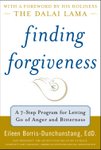
When reading this, what thoughts did you have? I would appreciate hearing them. If you have a forgiveness story you would like to share please submitted through my website www.dreileenborris.com. By sharing your stories and your struggles it will touch many other lives. You can learn more about how to forgive in “Finding Forgiveness: A 7 Step Program for Letting go of Anger and Bitterness” published by McGraw-Hill.
Showing posts with label blame. Show all posts
Showing posts with label blame. Show all posts
Friday, March 19, 2010


Wednesday, March 17, 2010
Giving Away Your Power - And Reclaiming it Through Forgiveness
Are you still holding on to hurtful feelings about something that has happened in the past? Pain can be difficult to let go of. And yet have you ever realized that by holding on to these painful feelings you are giving away your power and control to the person who has hurt you? The truth is, when we blame another person for how we feel, we give them power and control over our emotional well-being. Since we already feel hurt by what was done to us, giving people control will only add to and prolong our suffering.
Think about it for a moment. Why would we want to give any control over to someone else who in many cases doesn’t really care about us, some of whom may even be cruel to us? After a while, if we continually blame the same person over and over again it becomes a habit and we get caught in a groove which becomes deeper and deeper. This leads us down the road of feeling helpless and hopeless and definitely like a victim. We now have become disempowered at someone else’s hands.
There is one point I would like to stress. Holding people accountable for their action is not the same as blaming them for how you feel. People can be forgiven for what they have done and also need to be held accountable for their actions. What leads to unnecessary suffering is making people responsible for your continued suffering. Remember, forgiveness allows us to regain our power, breaking the unhealthy behavior created by our anger, guilt or fear. Forgiveness requires that we do our inner work and it is this inner work which will set us free.
Exercise: Think of a time when you gave away your power to someone who may not have cared for you. It could be a cruel and abusive parent or relative, or a friend that didn’t necessarily have your best interest at heart. Or it could be a business associate who did something implying that it was “just business” totally disregarding how hard you may have worked. Or it could be a lover or spouse who has betrayed you.
Ask yourself – why am I spending so much time blaming so and so. Who is it really hurting? Why am I choosing to stay stuck in the past instead of living in the present moment and creating a more productive and peaceful future? Haven’t I suffered enough? Now look into the present and future where this situation is no longer an issue. What does your life look like now? How does it feel to be free of this burden? What have you learned about yourself? Now take a deep relaxing breathe and think about all the things to be thankful for. Hold gratitude and joy in your heart and go on with the rest of your day.
If you would like more help in learning how to forgive go to “Finding Forgiveness: A 7 Step Program for Letting go of Anger and Bitterness” published by McGraw-Hill, the website www.dreileenborris.com and the blog on forgiveness www.findingforgiveness.blogspot.com.
Think about it for a moment. Why would we want to give any control over to someone else who in many cases doesn’t really care about us, some of whom may even be cruel to us? After a while, if we continually blame the same person over and over again it becomes a habit and we get caught in a groove which becomes deeper and deeper. This leads us down the road of feeling helpless and hopeless and definitely like a victim. We now have become disempowered at someone else’s hands.
There is one point I would like to stress. Holding people accountable for their action is not the same as blaming them for how you feel. People can be forgiven for what they have done and also need to be held accountable for their actions. What leads to unnecessary suffering is making people responsible for your continued suffering. Remember, forgiveness allows us to regain our power, breaking the unhealthy behavior created by our anger, guilt or fear. Forgiveness requires that we do our inner work and it is this inner work which will set us free.
Exercise: Think of a time when you gave away your power to someone who may not have cared for you. It could be a cruel and abusive parent or relative, or a friend that didn’t necessarily have your best interest at heart. Or it could be a business associate who did something implying that it was “just business” totally disregarding how hard you may have worked. Or it could be a lover or spouse who has betrayed you.
Ask yourself – why am I spending so much time blaming so and so. Who is it really hurting? Why am I choosing to stay stuck in the past instead of living in the present moment and creating a more productive and peaceful future? Haven’t I suffered enough? Now look into the present and future where this situation is no longer an issue. What does your life look like now? How does it feel to be free of this burden? What have you learned about yourself? Now take a deep relaxing breathe and think about all the things to be thankful for. Hold gratitude and joy in your heart and go on with the rest of your day.
If you would like more help in learning how to forgive go to “Finding Forgiveness: A 7 Step Program for Letting go of Anger and Bitterness” published by McGraw-Hill, the website www.dreileenborris.com and the blog on forgiveness www.findingforgiveness.blogspot.com.
Wednesday, March 10, 2010
It's All My Mothers Fault and No I will NOT Forgive Her!
I remember a friend of mine telling me how mad she was at her mother. It seemed as though every time they got into a car together they would fight. There was a litany of reasons why my friend would not forgive her mother – the least of which she was stuck in the blame game.
When we blame others we are accusing them of something we believe they have done to us. We are placing fault on others insisting that they are the cause of our misery. When we are hurt because of something that has happened in the past and still feel the pain in the present we look for reasons to explain our pain. The truth is that we can never really know all the reasons why someone has hurt us, and more importantly we do not usually take the time to go within ourselves to understand what part we may have played in our life circumstances. We usually take the easy way out and like a knee jerk reaction we blame others for what may be causing our pain. That is not to say that others do not behave poorly and do things that are hurtful. What I am talking about is that when we continually blame someone else for our painful feelings, instead of making us feel better, blaming actually makes us feel worse.
Blaming causes more pain. When we blame someone else for our suffering we believe that someone else is the cause of our pain and that we need something from that person to feel better. We are dependent on them for our well being. What we actually have done is disempowered ourselves, giving other people control over how we feel. We have chosen not to take responsibility for what we are feeling.
Blaming others becomes a habit, sinking us further into the victim role. Like being in quick sand we feel powerless to change our circumstances. Underneath our need to blame is another issue that we are consistently running away from – our own feelings of guilt. Whenever we are accusing someone (blaming) of something we are secretly blaming ourselves. The content may be different but the form will be the same. If we are blaming someone for nasty horrible things they have said to us, we may not say those same kinds of things to them but if we are honest with ourselves we certainly have said unkind things to others. The important point to remember is that we are not here to beat ourselves up when we learn things about ourselves we wish we hadn’t. Now that we have gained a new understanding about ourselves we can make different choices. When we see the humanness in ourselves it is easier to see the humanness in others. Being able to then forgive ourselves we can also forgive others and stop the blame game. And remember, holding on to guilt is a choice too.
You can find more information on how to stop the blame game and to heal our guilt in “Finding Forgiveness: A 7 Step Program for Letting Go of Anger and Bitterness” published by McGraw-Hill.
When we blame others we are accusing them of something we believe they have done to us. We are placing fault on others insisting that they are the cause of our misery. When we are hurt because of something that has happened in the past and still feel the pain in the present we look for reasons to explain our pain. The truth is that we can never really know all the reasons why someone has hurt us, and more importantly we do not usually take the time to go within ourselves to understand what part we may have played in our life circumstances. We usually take the easy way out and like a knee jerk reaction we blame others for what may be causing our pain. That is not to say that others do not behave poorly and do things that are hurtful. What I am talking about is that when we continually blame someone else for our painful feelings, instead of making us feel better, blaming actually makes us feel worse.
Blaming causes more pain. When we blame someone else for our suffering we believe that someone else is the cause of our pain and that we need something from that person to feel better. We are dependent on them for our well being. What we actually have done is disempowered ourselves, giving other people control over how we feel. We have chosen not to take responsibility for what we are feeling.
Blaming others becomes a habit, sinking us further into the victim role. Like being in quick sand we feel powerless to change our circumstances. Underneath our need to blame is another issue that we are consistently running away from – our own feelings of guilt. Whenever we are accusing someone (blaming) of something we are secretly blaming ourselves. The content may be different but the form will be the same. If we are blaming someone for nasty horrible things they have said to us, we may not say those same kinds of things to them but if we are honest with ourselves we certainly have said unkind things to others. The important point to remember is that we are not here to beat ourselves up when we learn things about ourselves we wish we hadn’t. Now that we have gained a new understanding about ourselves we can make different choices. When we see the humanness in ourselves it is easier to see the humanness in others. Being able to then forgive ourselves we can also forgive others and stop the blame game. And remember, holding on to guilt is a choice too.
You can find more information on how to stop the blame game and to heal our guilt in “Finding Forgiveness: A 7 Step Program for Letting Go of Anger and Bitterness” published by McGraw-Hill.
Friday, March 5, 2010
Why Does it Have to Hurt so Much and Can Forgiveness Heal our Pain.
Feeling hurt or being wounded is unfortunately a life experience that all of us deal with. The difficulty is that we get stuck in these feelings not recognizing that we have choices which can lead to less suffering. Three elements come into play when we become wounded.
1. We take things too personally - When we take things too personally we assume that we know everything that is going on with the person who has hurt us. We judge their behavior not totally understanding what has happened in their life and the pain they may have experienced which has brought them to the place when the woundedness happened.
2 We blamed others for how we felt. - We forget that we are looking at the situation through our perceptual lenses tinted by our own emotional baggage – much of which we are unaware of. Instead of owning our shortcomings which is something we do not want to see within ourselves we can only see this behavior in others, not taking responsibility for our own behavior.
3 We get caught in the victim role - We have a tremendous investment in holding on to our pain so we can blame others, proving that I am right and you are wrong. When we choose to hold on to our pain what we are actually doing is pointing an accusing finger at the wrongdoer saying I am the innocent victim.
How do we begin to heal our wounds? The first step is an awareness process of what we are doing so that we can make other choices. If you can remember the three ingredients just mentioned you are well on your way to emotional freedom. As you tell your story, look at these three elements. By using the knowledge you are gaining about yourself you can hopefully gain insight into your own emotional reactions and begin to see the situation differently. Hopefully you will be able to handle your pain more skillfully.
Exercise: If you have written a story from the past posts you may want to revisit it and ask yourself in what way have I taken this situation too personally and how can I see it differently? Or pick a situation where you needed to forgive someone and write your story down. Then ask yourself:
• How can I see the perpetrator differently?
• What do I need to do to take responsibility for my own emotional reactions?
• What is it about myself that is hard to acknowledge which I blame others for?
Remember, we cannot change what has happened to us but we can change the way we respond to it and grow stronger as a result of the situation we find ourselves in. Life will always through us curve balls and we do not need to create more pain for ourselves as a result of the situations we find ourselves in.
For more information on learning how to forgive go to “Finding Forgiveness: A 7 Step Program for Letting go of Anger and Bitterness” by Dr. Eileen R. Borris-Dunchunstang.
1. We take things too personally - When we take things too personally we assume that we know everything that is going on with the person who has hurt us. We judge their behavior not totally understanding what has happened in their life and the pain they may have experienced which has brought them to the place when the woundedness happened.
2 We blamed others for how we felt. - We forget that we are looking at the situation through our perceptual lenses tinted by our own emotional baggage – much of which we are unaware of. Instead of owning our shortcomings which is something we do not want to see within ourselves we can only see this behavior in others, not taking responsibility for our own behavior.
3 We get caught in the victim role - We have a tremendous investment in holding on to our pain so we can blame others, proving that I am right and you are wrong. When we choose to hold on to our pain what we are actually doing is pointing an accusing finger at the wrongdoer saying I am the innocent victim.
How do we begin to heal our wounds? The first step is an awareness process of what we are doing so that we can make other choices. If you can remember the three ingredients just mentioned you are well on your way to emotional freedom. As you tell your story, look at these three elements. By using the knowledge you are gaining about yourself you can hopefully gain insight into your own emotional reactions and begin to see the situation differently. Hopefully you will be able to handle your pain more skillfully.
Exercise: If you have written a story from the past posts you may want to revisit it and ask yourself in what way have I taken this situation too personally and how can I see it differently? Or pick a situation where you needed to forgive someone and write your story down. Then ask yourself:
• How can I see the perpetrator differently?
• What do I need to do to take responsibility for my own emotional reactions?
• What is it about myself that is hard to acknowledge which I blame others for?
Remember, we cannot change what has happened to us but we can change the way we respond to it and grow stronger as a result of the situation we find ourselves in. Life will always through us curve balls and we do not need to create more pain for ourselves as a result of the situations we find ourselves in.
For more information on learning how to forgive go to “Finding Forgiveness: A 7 Step Program for Letting go of Anger and Bitterness” by Dr. Eileen R. Borris-Dunchunstang.
Friday, February 19, 2010
The Forgiveness Person of the Week - Tiger Woods
Today is the day that Tiger Woods is to give a statement and ask for forgiveness for his transgressions. There will probably be a great deal of speculation about Tiger's sincerity. As I was thinking about this my thoughts drifted to the movie "invictus," and to the poem below. I cannot judge what is going on inside of Tiger Woods. All I can say is that change and growth must start from where we are. Forgiveness is an act of courage, helping as realized that we do have strength within ourselves. Forgiveness can be very freeing, and it heals both victim and offender. When we listen to Tiger Woods we should not just be observers, reacting to what is being said. Let him remind us that we too can initiate forgiveness in our own lives. As the poem Invictus says, "I am the master of my fate: I am the captain of my soul." We all make a difference in this world and our words and actions affect others. We should focus on being the captain of our soul and face our challenges and not judge others. By practicing forgiveness with sincerity in our own lives we are given the ability to soar above our difficulties. Let us hope that this gift is given to Tiger Woods as well.
Invictus
By William Ernest Henley
Out of the night that covers me,
Black as the pit from pole to pole,
I thank whatever gods may be
For my unconquerable soul.
In the fell clutch of circumstance
I have not winced nor cried aloud.
Under the bludgeonings of chance
My head is bloody, but unbowed.
Beyond this place of wrath and tears
Looms but the Horror of the shade,
And yet the menace of the years
Finds and shall find me unafraid.
It matters not how strait the gate,
How charged with punishments the scroll,
I am the master of my fate:
I am the captain of my soul.
For more information on how to forgive and to be inspired by others who have been able to forgive please go to "Finding Forgiveness: A 7 Step Program for Letting go of Anger and Bitterness." If you want to learn more about forgiveness you can also visit my website www.dreileenborris.com.
Thursday, February 11, 2010
When Our Pain Returns - Finding Forgiveness
It would be so nice if when we told our painful stories of the past, all our suffering would magically disappear. Unfortunately it doesn’t happen like that. Many of us get stuck in the quagmire of our emotions not letting the ghosts of the past be in the past. How can we work through these emotions? We heal our emotions by feeling them completely. The only way we can get to the other side is by walking through that door. Yes, it hurts yet the paradox is that when we give ourselves permission to feel our emotions completely, we begin to dissipate its energy. One of the reasons why we struggle so much with forgiveness is that we want to avoid feeling pain, but in order to finally let our emotional burdens go, we have to know what’s there.
Forgiveness is a process that usually takes time. If done fully, forgiveness changes us in a very fundamental way. It changes our thinking and creates within us a new way of being in this world. When we become a person who can forgive, then we find the ultimate freedom forgiveness brings. This freedom expands our consciousness giving us the gift of an all encompassing love. Challenging ourselves to grow beyond our “small” selves is difficult and yet it reaps great rewards.
So what are the ways you can begin to let go of your past? Soul searching is a good starting point. Take out your journal and ask yourself the following questions.
• Do you really want to forgive this person? It’s ok if you don’t – and if that is the case just be gentle with yourself. It is healthier to be able to acknowledge that then to say “I forgive” when you are still seething inside. Working with our emotions takes time. There are also times when we feel that we “should” forgive someone for a variety of reasons. This never works. Forgive is a choice, a voluntary act and if it is forced resentment builds just beneath the surface.
• Do you want to step out of being a victim? If not why is it that you are choosing to hold on to your anger and/or guilt? This question is a hard one. All of us are invested in being stuck in the victim role. Do you want to get back at someone by being the innocent victim, showing the world how much you are suffering at the hands of another? Remember, we disempower ourselves when we are stuck in the victim role, blaming others and not taking responsibility for our own lives. Conversely we empower ourselves when we take responsibility for our emotional well being. Often it is our feelings of guilt that keeps us stuck. We may not feel that we deserve feeling better or we feel guilty that someone else may have suffered and not us. When this happens ask yourself, what is under these feelings – why do I want to beat myself up? Why am I not willing to love and nurture myself? Remember – holding on to guilt is a choice too.
• Do you really want to heal? This is another hard question and be gentle with yourself with whatever comes up. The important issue here is to be aware that you are making choices, awareness being the first step in any healing process.
As I have mentioned before – forgiveness takes work. Being honest, loving and gentle with yourself will take you on the road to recovery. Get help if you need too for you do not need to do this work on your own. And remember, you are not alone.
Forgiveness is a process that usually takes time. If done fully, forgiveness changes us in a very fundamental way. It changes our thinking and creates within us a new way of being in this world. When we become a person who can forgive, then we find the ultimate freedom forgiveness brings. This freedom expands our consciousness giving us the gift of an all encompassing love. Challenging ourselves to grow beyond our “small” selves is difficult and yet it reaps great rewards.
So what are the ways you can begin to let go of your past? Soul searching is a good starting point. Take out your journal and ask yourself the following questions.
• Do you really want to forgive this person? It’s ok if you don’t – and if that is the case just be gentle with yourself. It is healthier to be able to acknowledge that then to say “I forgive” when you are still seething inside. Working with our emotions takes time. There are also times when we feel that we “should” forgive someone for a variety of reasons. This never works. Forgive is a choice, a voluntary act and if it is forced resentment builds just beneath the surface.
• Do you want to step out of being a victim? If not why is it that you are choosing to hold on to your anger and/or guilt? This question is a hard one. All of us are invested in being stuck in the victim role. Do you want to get back at someone by being the innocent victim, showing the world how much you are suffering at the hands of another? Remember, we disempower ourselves when we are stuck in the victim role, blaming others and not taking responsibility for our own lives. Conversely we empower ourselves when we take responsibility for our emotional well being. Often it is our feelings of guilt that keeps us stuck. We may not feel that we deserve feeling better or we feel guilty that someone else may have suffered and not us. When this happens ask yourself, what is under these feelings – why do I want to beat myself up? Why am I not willing to love and nurture myself? Remember – holding on to guilt is a choice too.
• Do you really want to heal? This is another hard question and be gentle with yourself with whatever comes up. The important issue here is to be aware that you are making choices, awareness being the first step in any healing process.
As I have mentioned before – forgiveness takes work. Being honest, loving and gentle with yourself will take you on the road to recovery. Get help if you need too for you do not need to do this work on your own. And remember, you are not alone.
Wednesday, January 27, 2010
Will I ever get over it and be able to Forgive?
I remember a friend telling me how long it took her to realize and fully understand that the best thing she could do was to forgive her husband when he walked out on her. In the beginning she was devastated. She felt so stupid that she did not see the “handwriting on the wall.” After all, she loved him and wanted the marriage to work. Yes, there was emotional abuse but she never expected betrayal and certainly not infidelity.
As Kathy continued telling me her story I encouraged her to go deep within herself and allow whatever she was feeling to come out. There was so much anger, grief, pain and shame; so many emotions that at times she wanted to scream, then cry making her feel sick inside. We’ve all been there, feeling that these memories will be seared in our hearts and minds always to return with unexpected emotional force.
Yet, telling your story is the beginning of your healing process. When you feel able, talk about what happened to someone you trust and who will be supportive of you. Tell your story as completely as possible including not only the emotions you are feeling as you tell the story, but what was going on inside of you as the events began to unfold. When you first tell your story, it may be incomplete. You ma need to retell your story to bring all the pieces together, what your feelings were, the meaning of what happened to you and perhaps to those around you. Talk about the question of guilt and responsibility. This may help you later in reconstructing a system of belief that makes sense of undeserved suffering. Remember to breathe as you tell your story. Breathing will help you manage strong emotions. If it is too difficult to tell your story, write about it or draw your story.
An exercise that can help you with your healing process is to do some journaling. Think of a situation where you feel you need to forgive someone and want to work through your painful emotions. Write your story describing what took place in detail. What happened to you and what possibly led up to the situation that you may not have been aware of at first. What were your thoughts and feelings and what meaning did you give to the event. What are your attitudes and beliefs about what happened. If there are several events, develop a separate script for each one. Don’t be surprised if new memories are recovered as you explore old ones. Write down everything you feel about the situation and the person causing you pain. Allow a stream of consciousness to flow across the pages of your journal and spare nothing. Remember that this is your private journal for no one else to see. After you have written everything down, ask yourself, “If I were face to face with this person, what would I say?” Let out the anger and the hurt in what you write and keep on writing until there is nothing left to say. Some questions to think about are “Why did this situation happen to me?”, and “What happened in that other person’s life that may have caused pain and brought him/her to the place they are today?”
You may need to rework your story until you have all the pieces together and that is ok. In my next blog I will help you deal with your strong emotions that you may be having difficulty with and how to put your emotional life back together again.
As Kathy continued telling me her story I encouraged her to go deep within herself and allow whatever she was feeling to come out. There was so much anger, grief, pain and shame; so many emotions that at times she wanted to scream, then cry making her feel sick inside. We’ve all been there, feeling that these memories will be seared in our hearts and minds always to return with unexpected emotional force.
Yet, telling your story is the beginning of your healing process. When you feel able, talk about what happened to someone you trust and who will be supportive of you. Tell your story as completely as possible including not only the emotions you are feeling as you tell the story, but what was going on inside of you as the events began to unfold. When you first tell your story, it may be incomplete. You ma need to retell your story to bring all the pieces together, what your feelings were, the meaning of what happened to you and perhaps to those around you. Talk about the question of guilt and responsibility. This may help you later in reconstructing a system of belief that makes sense of undeserved suffering. Remember to breathe as you tell your story. Breathing will help you manage strong emotions. If it is too difficult to tell your story, write about it or draw your story.
An exercise that can help you with your healing process is to do some journaling. Think of a situation where you feel you need to forgive someone and want to work through your painful emotions. Write your story describing what took place in detail. What happened to you and what possibly led up to the situation that you may not have been aware of at first. What were your thoughts and feelings and what meaning did you give to the event. What are your attitudes and beliefs about what happened. If there are several events, develop a separate script for each one. Don’t be surprised if new memories are recovered as you explore old ones. Write down everything you feel about the situation and the person causing you pain. Allow a stream of consciousness to flow across the pages of your journal and spare nothing. Remember that this is your private journal for no one else to see. After you have written everything down, ask yourself, “If I were face to face with this person, what would I say?” Let out the anger and the hurt in what you write and keep on writing until there is nothing left to say. Some questions to think about are “Why did this situation happen to me?”, and “What happened in that other person’s life that may have caused pain and brought him/her to the place they are today?”
You may need to rework your story until you have all the pieces together and that is ok. In my next blog I will help you deal with your strong emotions that you may be having difficulty with and how to put your emotional life back together again.
Tuesday, June 30, 2009
Forgiving Bernie Madoff
Bernie Madoff, the mastermind behind one of the greatest financial frauds has been given the maximum sentence allowed for what many are saying is an extremely evil crime. People cheered and so many people are suffering because of his actions. So why am I writing about forgiveness - something which is probably the furthest thing from peoples minds. The reason - I do not want to see any more suffering. Yes, Bernard Madoff needs to pay for his crime and he is. The rest of his life will be in a jail cell. Many victims also feel that they have a jail sentence when they have to stand on line with food stamps feeling as though they will never be able to enjoy life again.
What is overlooked is that when we hold hatred and anger in our hearts that exacts a price on us. What cannot been seen by those who are victimized is that wanting an eye for an eye only means more blindness. Madoff cannot give those he stole from their money back and restore their hopes and dreams. It is now up to the victims to start a new day. It is up to them if they want to move on to more hopefulness or hold on to anger and regret. Yes, the path to forgiveness and hope is a much harder path to take even when Madoff has gotten the sentence he deserves. And yes, his sentence does not pay the bills or put food on the table. It is easier to get angry about these things but think about this. Do you want to be a victim twice over? Are you still willing to give Bernie Madoff power to hurt you while he is sitting in his jail cell? Yes, people have made a huge mistake for trusting Madoff and he is in prison now. Nothing more can be done. His freedom and luxurious life has been taken away. Madoff is being held accountable for his actions.
When we think of forgiveness we think of letting someone off the hook. This is not what forgiveness is about. Forgiveness is about healing ourselves so we can have peace of mind. It doesn't come easy yet the gift of forgiveness is not for the perpetrator but for the victim. Pragmatically forgiveness is an act of self-interest. So many times people are afraid to forgive because they do think of forgiveness as letting a person off the hook. We all need to recognize that by focusing on our anger we are inflicting more on ourselves, our bodies, our souls, our relationships - everything that is important to us. That too is a very hefty price for our hatred towards Madoff. Our anger and hatred will slowly kill us. Our self-interest comes in when the victim realizes that the best thing to do is to let go of all the pain and anger and embrace life again. Our greatest revenge is to live life well again.
What is overlooked is that when we hold hatred and anger in our hearts that exacts a price on us. What cannot been seen by those who are victimized is that wanting an eye for an eye only means more blindness. Madoff cannot give those he stole from their money back and restore their hopes and dreams. It is now up to the victims to start a new day. It is up to them if they want to move on to more hopefulness or hold on to anger and regret. Yes, the path to forgiveness and hope is a much harder path to take even when Madoff has gotten the sentence he deserves. And yes, his sentence does not pay the bills or put food on the table. It is easier to get angry about these things but think about this. Do you want to be a victim twice over? Are you still willing to give Bernie Madoff power to hurt you while he is sitting in his jail cell? Yes, people have made a huge mistake for trusting Madoff and he is in prison now. Nothing more can be done. His freedom and luxurious life has been taken away. Madoff is being held accountable for his actions.
When we think of forgiveness we think of letting someone off the hook. This is not what forgiveness is about. Forgiveness is about healing ourselves so we can have peace of mind. It doesn't come easy yet the gift of forgiveness is not for the perpetrator but for the victim. Pragmatically forgiveness is an act of self-interest. So many times people are afraid to forgive because they do think of forgiveness as letting a person off the hook. We all need to recognize that by focusing on our anger we are inflicting more on ourselves, our bodies, our souls, our relationships - everything that is important to us. That too is a very hefty price for our hatred towards Madoff. Our anger and hatred will slowly kill us. Our self-interest comes in when the victim realizes that the best thing to do is to let go of all the pain and anger and embrace life again. Our greatest revenge is to live life well again.
Friday, December 19, 2008
Eliminate Holiday Stress through Forgiveness
Holidays are about getting together with family and friends. Although these gatherings can bring joy it can also create a lot of stress. Relationships between some family members may not always be smooth going and cause tension and stress. It is also not unusual for us to go home and begin judging or blaming people for what we think they have done. Our expectations may also get us in trouble and can be out of line with what our reality is all about.
One way to deal with the stress of the holidays is to remember what the holidays are really about, the practice of forgiveness. Forgiveness is a voluntary act in which we make a decision to see things differently, not through the eyes of anger or guilt, but through the eyes of understanding and compassion. Forgiveness is a decision to let go of our emotional baggage. It is not about letting someone off the hook, it is about our decision to let go of the past and move on. Holding a grudge against someone really only hurts the person holding the grudge. Deciding not to forgive is a decision to actually continue our suffering.
The following are some suggestions to help us in being able to forgive.
* Be willing to entertain the thought of forgiveness.
* Recognize our tendency to play the victim role and be willing to let go.
* Remember that forgiveness is about letting go of our emotional baggage. our hurts and our resentments.
* Recognize that our judgments are not facts.
* Ask yourself, would you rather be right or happy?
* Think about making peace of mind your primary goal to happiness this holiday season.
* Remember that forgiveness is a key to that happiness.
One way to deal with the stress of the holidays is to remember what the holidays are really about, the practice of forgiveness. Forgiveness is a voluntary act in which we make a decision to see things differently, not through the eyes of anger or guilt, but through the eyes of understanding and compassion. Forgiveness is a decision to let go of our emotional baggage. It is not about letting someone off the hook, it is about our decision to let go of the past and move on. Holding a grudge against someone really only hurts the person holding the grudge. Deciding not to forgive is a decision to actually continue our suffering.
The following are some suggestions to help us in being able to forgive.
* Be willing to entertain the thought of forgiveness.
* Recognize our tendency to play the victim role and be willing to let go.
* Remember that forgiveness is about letting go of our emotional baggage. our hurts and our resentments.
* Recognize that our judgments are not facts.
* Ask yourself, would you rather be right or happy?
* Think about making peace of mind your primary goal to happiness this holiday season.
* Remember that forgiveness is a key to that happiness.
Subscribe to:
Posts (Atom)