
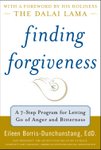


Forgiveness stories are inspiring. Reading about the Cooney family is no exception. On Thursday, March 18th, 2010 a hearing took place in which the family of a Duluth murder victim begged for the mercy. The entire courtroom including the judge was riveted by what they heard.
The story began last July when Curtis Cooney was shot in the head and killed by a man named Philbert “Randy” Barnes who was firing a gun into a crowd of people. In January “Randy” Barnes was convicted of 2nd degree murder and 2nd degree attempted murder. This past Thursday the judge handed down the sentence. Both families were present. But before the judge spoke of his sentence the Cooney family wanted to speak.
Heidi Cooney, the victim’s mother began by saying “I was raised to be forgiving, and if you want others to forgive you you need to forgive.” Curtis Cooney’s sister began to cry commenting that she lost her best friend that night. The two of them had a very special bond. Then Curtis’s father reminded everyone that “If Curtis could be here today he would forgive you, and so do we.” Cooney Sr. asked the judge to show Barnes mercy.
The Barnes family was also present in the courtroom. The older brother, tearfully apologizing to the Cooney family begged for forgiveness. Then the judge acknowledged that what he heard was extraordinary and he would take into account all that was said. After a brief recess the judge announced the sentence. Barnes was to receive 14 years in jail for attempted murder and 29 years for murder to run concurrently. Judge Johnson told those in the courtroom that it was because of “the grace of the Cooney family” he elected to sentence Barnes concurrently. The court was moved by the fact that the Cooney family forgave Barnes and that it wasn’t looking for retribution. The judge felt that it was “extraordinary” in the way the murder victim’s family and the defendant’s family came together. Steven Bynum, Barnes brother walked over to Michael Cooney and shook his hand and rubbed his cheek. Bynum then expressed his thanks to the Cooney family for the “grace, love and compassion” they extended to his family.
Once outside the courtroom Cooney Sr. said “If you’re truly consumed with hate and bitterness, that hurts you more than anything else. Carrying around hate and rage is not good for a person. Once you forgive someone, the healing process can truly begin.”
Steven Bynum responded by saying “We want Curtis Cooney’s family to have peace and that they can go forward in the joy and love of the Lord, that’s the most important thing. . .The absolute love and mercy that the Cooney family has shown to our family is just unforgettable. . . The second most important thing is that my brother have the opportunity to rebuild his life again and to take stock in what has happened. The greatest honor that he could give to the Cooney family, to Curtis and to all of us that love and support him is that he build his life anew, that he find God, and that he takes that love and joy and extends it to others. Today was an example of the power of forgiveness and redemption and reconciliation.”
When reading this, what thoughts did you have? I would appreciate hearing them. If you have a forgiveness story you would like to share please submitted through my website www.dreileenborris.com. By sharing your stories and your struggles it will touch many other lives. You can learn more about how to forgive in “Finding Forgiveness: A 7 Step Program for Letting go of Anger and Bitterness” published by McGraw-Hill.
Showing posts with label psychologist. Show all posts
Showing posts with label psychologist. Show all posts
Friday, March 19, 2010


Wednesday, March 17, 2010
Giving Away Your Power - And Reclaiming it Through Forgiveness
Are you still holding on to hurtful feelings about something that has happened in the past? Pain can be difficult to let go of. And yet have you ever realized that by holding on to these painful feelings you are giving away your power and control to the person who has hurt you? The truth is, when we blame another person for how we feel, we give them power and control over our emotional well-being. Since we already feel hurt by what was done to us, giving people control will only add to and prolong our suffering.
Think about it for a moment. Why would we want to give any control over to someone else who in many cases doesn’t really care about us, some of whom may even be cruel to us? After a while, if we continually blame the same person over and over again it becomes a habit and we get caught in a groove which becomes deeper and deeper. This leads us down the road of feeling helpless and hopeless and definitely like a victim. We now have become disempowered at someone else’s hands.
There is one point I would like to stress. Holding people accountable for their action is not the same as blaming them for how you feel. People can be forgiven for what they have done and also need to be held accountable for their actions. What leads to unnecessary suffering is making people responsible for your continued suffering. Remember, forgiveness allows us to regain our power, breaking the unhealthy behavior created by our anger, guilt or fear. Forgiveness requires that we do our inner work and it is this inner work which will set us free.
Exercise: Think of a time when you gave away your power to someone who may not have cared for you. It could be a cruel and abusive parent or relative, or a friend that didn’t necessarily have your best interest at heart. Or it could be a business associate who did something implying that it was “just business” totally disregarding how hard you may have worked. Or it could be a lover or spouse who has betrayed you.
Ask yourself – why am I spending so much time blaming so and so. Who is it really hurting? Why am I choosing to stay stuck in the past instead of living in the present moment and creating a more productive and peaceful future? Haven’t I suffered enough? Now look into the present and future where this situation is no longer an issue. What does your life look like now? How does it feel to be free of this burden? What have you learned about yourself? Now take a deep relaxing breathe and think about all the things to be thankful for. Hold gratitude and joy in your heart and go on with the rest of your day.
If you would like more help in learning how to forgive go to “Finding Forgiveness: A 7 Step Program for Letting go of Anger and Bitterness” published by McGraw-Hill, the website www.dreileenborris.com and the blog on forgiveness www.findingforgiveness.blogspot.com.
Think about it for a moment. Why would we want to give any control over to someone else who in many cases doesn’t really care about us, some of whom may even be cruel to us? After a while, if we continually blame the same person over and over again it becomes a habit and we get caught in a groove which becomes deeper and deeper. This leads us down the road of feeling helpless and hopeless and definitely like a victim. We now have become disempowered at someone else’s hands.
There is one point I would like to stress. Holding people accountable for their action is not the same as blaming them for how you feel. People can be forgiven for what they have done and also need to be held accountable for their actions. What leads to unnecessary suffering is making people responsible for your continued suffering. Remember, forgiveness allows us to regain our power, breaking the unhealthy behavior created by our anger, guilt or fear. Forgiveness requires that we do our inner work and it is this inner work which will set us free.
Exercise: Think of a time when you gave away your power to someone who may not have cared for you. It could be a cruel and abusive parent or relative, or a friend that didn’t necessarily have your best interest at heart. Or it could be a business associate who did something implying that it was “just business” totally disregarding how hard you may have worked. Or it could be a lover or spouse who has betrayed you.
Ask yourself – why am I spending so much time blaming so and so. Who is it really hurting? Why am I choosing to stay stuck in the past instead of living in the present moment and creating a more productive and peaceful future? Haven’t I suffered enough? Now look into the present and future where this situation is no longer an issue. What does your life look like now? How does it feel to be free of this burden? What have you learned about yourself? Now take a deep relaxing breathe and think about all the things to be thankful for. Hold gratitude and joy in your heart and go on with the rest of your day.
If you would like more help in learning how to forgive go to “Finding Forgiveness: A 7 Step Program for Letting go of Anger and Bitterness” published by McGraw-Hill, the website www.dreileenborris.com and the blog on forgiveness www.findingforgiveness.blogspot.com.
Wednesday, February 3, 2010
GOT ANGER?
“Fry those Bastards! I want Timothy McVeigh and Terry Nichols hanged no trials necessary.” These were the words of Bud Welch whose 23 year old daughter was killed in the bombing of the Murrah Federal Building in Oklahoma City. “From the moment I learned it was a bomb I survived on anger and hate.”
Bud’s anger was focused on Timothy McVeigh and Terry Nichols, and like so many others, Bud wished for their speedy conviction and execution. “I was opposed to the death penalty all my life until my daughter Julie Marie was killed in the Oklahoma City bombing. For many months after the bombing I could have killed Timothy McVeigh myself. Temporary insanity is real, and I have lived it. You can’t think of enough adjectives to describe the anger and hatred I felt. But after time, I was able to examine my conscience, and I realized that if McVeigh is put to death, it won’t help me in the healing process. People talk about executions bringing closure. But how can there be closure when my little girl is never coming back. I finally realized that the death penalty is all about revenge and hate, and revenge and hate are why Julie Marie and 167 others are died.”
When Bud saw McVeigh’s father on television a few months after the bombing, his emotions began to change. He realized that “this man has lost a child too.” Bud eventually arranged to meet with Timothy McVeigh’s father, Bill. “I saw a deep pain in a father’s eye, but also an incredible love for his son.” Bud says, “I was able to tell him that I truly understood the pain that he was going through, and that he – as I – was a victim of what happened in Oklahoma City.”
Not all of us could come to this conclusion so quickly. Yet before Bud could get to this place of recognizing that both fathers were dealing with a painful lose he had to deal with his personal healing. What Bud was able to accomplish you too will be able to do, if you choose.
Step Three: Working with Anger. Anger tells us that our circumstances need to change. If we can’t let go of our anger it is also telling us that we need to change. This is the time when we get into the trenches of our emotions and have the difficult dialogue with ourselves about what happened and how we will choose to deal with it in a healing capacity. It is the time when we roll up our sleeves and become very honest with ourselves. Our tendencies are to want to feel sorry for ourselves and stay stuck in a victim role. By playing “poor me,” we disempower ourselves or continue to play the blame game and not take responsibility or positive action in our lives. Instead of seeing the situation as the good guy versus the bad guy, we would be better served to learn the lessons our emotions are trying to teach us and to understand what is making the person behave that way.
This is a difficult phase because it requires introspection and honest soul searching. Although we may think we are angry at someone, else if we are having difficulty letting go of anger it is an indication that we are in the need of healing. Don’t be afraid to dialogue with the anger inside of you. Ask your anger what it wants to tell you. You can have this conversation be either writing down whatever comes to mind or sharing what is inside of you with someone you trust. Honor what your anger says to you. You may need to journal many times focusing on your anger. You can also draw it. There may be multiple meanings to your anger. Your anger could be protecting you. It could also be telling you what you need to do to heal.
The question you need to ask yourself is “What am I accusing the other person of?” because the truth is that is what we are secretly accusing ourselves of. Our egos are slippery snakes so the content will be different but the form will be the same. For example we may never betray our spouse by being unfaithful but have we ever been unfaithful to ourselves? When we can look at that within ourselves we can begin to recognize the humanity in your spouse. This is not to say that you don’t take appropriate action to protect yourself. By seeing that we are all capable of betrayal it will help as let go of our anger around the situation and have greater peace of mind.
Bud’s anger was focused on Timothy McVeigh and Terry Nichols, and like so many others, Bud wished for their speedy conviction and execution. “I was opposed to the death penalty all my life until my daughter Julie Marie was killed in the Oklahoma City bombing. For many months after the bombing I could have killed Timothy McVeigh myself. Temporary insanity is real, and I have lived it. You can’t think of enough adjectives to describe the anger and hatred I felt. But after time, I was able to examine my conscience, and I realized that if McVeigh is put to death, it won’t help me in the healing process. People talk about executions bringing closure. But how can there be closure when my little girl is never coming back. I finally realized that the death penalty is all about revenge and hate, and revenge and hate are why Julie Marie and 167 others are died.”
When Bud saw McVeigh’s father on television a few months after the bombing, his emotions began to change. He realized that “this man has lost a child too.” Bud eventually arranged to meet with Timothy McVeigh’s father, Bill. “I saw a deep pain in a father’s eye, but also an incredible love for his son.” Bud says, “I was able to tell him that I truly understood the pain that he was going through, and that he – as I – was a victim of what happened in Oklahoma City.”
Not all of us could come to this conclusion so quickly. Yet before Bud could get to this place of recognizing that both fathers were dealing with a painful lose he had to deal with his personal healing. What Bud was able to accomplish you too will be able to do, if you choose.
Step Three: Working with Anger. Anger tells us that our circumstances need to change. If we can’t let go of our anger it is also telling us that we need to change. This is the time when we get into the trenches of our emotions and have the difficult dialogue with ourselves about what happened and how we will choose to deal with it in a healing capacity. It is the time when we roll up our sleeves and become very honest with ourselves. Our tendencies are to want to feel sorry for ourselves and stay stuck in a victim role. By playing “poor me,” we disempower ourselves or continue to play the blame game and not take responsibility or positive action in our lives. Instead of seeing the situation as the good guy versus the bad guy, we would be better served to learn the lessons our emotions are trying to teach us and to understand what is making the person behave that way.
This is a difficult phase because it requires introspection and honest soul searching. Although we may think we are angry at someone, else if we are having difficulty letting go of anger it is an indication that we are in the need of healing. Don’t be afraid to dialogue with the anger inside of you. Ask your anger what it wants to tell you. You can have this conversation be either writing down whatever comes to mind or sharing what is inside of you with someone you trust. Honor what your anger says to you. You may need to journal many times focusing on your anger. You can also draw it. There may be multiple meanings to your anger. Your anger could be protecting you. It could also be telling you what you need to do to heal.
The question you need to ask yourself is “What am I accusing the other person of?” because the truth is that is what we are secretly accusing ourselves of. Our egos are slippery snakes so the content will be different but the form will be the same. For example we may never betray our spouse by being unfaithful but have we ever been unfaithful to ourselves? When we can look at that within ourselves we can begin to recognize the humanity in your spouse. This is not to say that you don’t take appropriate action to protect yourself. By seeing that we are all capable of betrayal it will help as let go of our anger around the situation and have greater peace of mind.
Wednesday, January 20, 2010
The 7 Step Forgiveness Program - Getting Started
We know that as difficult as forgiveness may be, the psychological case for practicing forgiveness is compelling. Although forgiveness can happen in an instant, for many of us it can take weeks, months, years or possibly a lifetime. The work of forgiveness is different for each of us, yet there are certain predictable steps all of us will go through. This program will describe what these steps are and how we go about achieving them. Some steps will be more difficult than others depending on our personal circumstances. Other steps may be more relevant for some than for others. Focus on what is important. Keep in mind, none of us forgive in the same way, and the forgiveness process is not a rigid process.
So how do we get started? The first thing you will want is a journal or notebook. Writing what comes to mind is one way to give all the stuff trapped inside of you voice. A journal is a wonderful way to tap into deeper parts of yourself and access thoughts and feelings that would not normally come up in talking with someone. It allows you to expose what is hidden in a deeper way that aids tremendously in the release of suppressed emotions.
Write in your journal for a few minutes every day while working on this program. Some people like to write first thing in the morning when their mind isn’t preoccupied with the day’s events. Others prefer the evenings when things quiet down. Commit to a time that works best for you, and get into a routine of writing at that same time every day. Below are some guidelines you may find helpful.
1. Find a quiet and comfortable place to do your writing where you will not be disturbed.
2. Use the same place every time you write.
3. Make sure you will not be disturbed by anyone or anything including the telephone.
4. Before you begin, take a few very deep relaxing breaths to help quiet your mind and body.
5. Begin journaling by allowing whatever needs to come up to be written even if it seems totally off the wall.
6. Follow the stream of consciousness. It will take you where you need to go.
So how do we get started? The first thing you will want is a journal or notebook. Writing what comes to mind is one way to give all the stuff trapped inside of you voice. A journal is a wonderful way to tap into deeper parts of yourself and access thoughts and feelings that would not normally come up in talking with someone. It allows you to expose what is hidden in a deeper way that aids tremendously in the release of suppressed emotions.
Write in your journal for a few minutes every day while working on this program. Some people like to write first thing in the morning when their mind isn’t preoccupied with the day’s events. Others prefer the evenings when things quiet down. Commit to a time that works best for you, and get into a routine of writing at that same time every day. Below are some guidelines you may find helpful.
1. Find a quiet and comfortable place to do your writing where you will not be disturbed.
2. Use the same place every time you write.
3. Make sure you will not be disturbed by anyone or anything including the telephone.
4. Before you begin, take a few very deep relaxing breaths to help quiet your mind and body.
5. Begin journaling by allowing whatever needs to come up to be written even if it seems totally off the wall.
6. Follow the stream of consciousness. It will take you where you need to go.
Tuesday, January 19, 2010
Why Do We Forgive?
Forgiveness takes us on a journey from the very pragmatic to the very sublime depending on our willingness to travel within the depth of our being. Our journey begins usually when our reality had been shattered and the pain of these broken pieces sears our heart. Over time the pain we carry becomes overwhelming and we think about what we can do to lessen our emotional burden. Perhaps this is the time we ask “Why Do We Forgive?” We forgive for a number of reasons. The list may include:
1. You want to stop being an angry person
2. You realize that holding on to this emotional burden is literally killing you.
3. The relationship which caused you pain is worth trying to fix.
4. You believe in the moral goodness of forgiveness.
Before we embark in learning how to forgive and begin to explore the mysteries of forgiveness I would like you to think about times in your life that you chose the path of forgiveness. Ask yourself, “Why did I forgive?” If you are struggling with a painful situation in your life now ask yourself what forgiveness can bring to you.
To start you on your journey of forgiveness I offer this simple exercise. Sit in a comfortable place where your back is straight and not rigid and your feet are on the floor. Now gently close your eyes. Take a few deep relaxing breaths and as you do I would like you to think about a situation where you would like to release pain. As you think about your situation open your heart to the universal love that surrounds you. As you breathe in imagine this energy fill your entire being. Focus on this love as it permeates every cell of your being. As you breathe out release the pain that you are holding in your heart. Feel yourself become lighter and freer with each breathe you take. Once you are filled with this universal love with each inbreathe take full responsibility for your emotional reactions to your situation and as you breathe out, breathe out the compassionate radiance of healing and forgiveness. Allow yourself to feel inner peace as you gently open your eyes.
This is a powerful exercise. It may give you the courage to face your pain and to forgive the person who may have hurt you or betrayed you in any way. It may also answer the question “Why do we Forgive?”
1. You want to stop being an angry person
2. You realize that holding on to this emotional burden is literally killing you.
3. The relationship which caused you pain is worth trying to fix.
4. You believe in the moral goodness of forgiveness.
Before we embark in learning how to forgive and begin to explore the mysteries of forgiveness I would like you to think about times in your life that you chose the path of forgiveness. Ask yourself, “Why did I forgive?” If you are struggling with a painful situation in your life now ask yourself what forgiveness can bring to you.
To start you on your journey of forgiveness I offer this simple exercise. Sit in a comfortable place where your back is straight and not rigid and your feet are on the floor. Now gently close your eyes. Take a few deep relaxing breaths and as you do I would like you to think about a situation where you would like to release pain. As you think about your situation open your heart to the universal love that surrounds you. As you breathe in imagine this energy fill your entire being. Focus on this love as it permeates every cell of your being. As you breathe out release the pain that you are holding in your heart. Feel yourself become lighter and freer with each breathe you take. Once you are filled with this universal love with each inbreathe take full responsibility for your emotional reactions to your situation and as you breathe out, breathe out the compassionate radiance of healing and forgiveness. Allow yourself to feel inner peace as you gently open your eyes.
This is a powerful exercise. It may give you the courage to face your pain and to forgive the person who may have hurt you or betrayed you in any way. It may also answer the question “Why do we Forgive?”
Friday, January 1, 2010
Forgiveness and a lot more!
The end of a year is always a time of reflection for me. I often think about the meaning of the holiday season and how we can grow in love and forgiveness. The intention of this blog is to begin a dialogue which will help us learn how to grow in consciousness and forgiveness and to understand what this looks like from a spiritual, psychological and neuropsychological perspective.
For the next few weeks I will be sharing some of my thoughts on forgiveness and how it touches not only our personal lives but how when we can hold forgiveness in our hearts we can also be part of the healing of nations. I would like to invite all of you who read this post to share your stories of forgiveness, including your struggles, where you got stuck and how you were able to overcome your difficulties. For those of us who have been able to forgive, sharing our difficulties and the gifts we received in being able to forgive can help inspire others who may be struggling with their own difficulties. What books are you reading, what stories do you have to share, and what cutting edge research to do you know about? I want to hear from you.
I also welcome stories where some of you lived through group violence, genocide or war and how you were able to forgive the unimaginable. You can share any forgiveness story here or submit them to my website www.dreileenborris.com in its entirety. My hope is that for the next few weeks we can go through a journey together and be part of a growing group of people who not only want to change consciousness within themselves but within the rest of humanity. Are you ready?
I also want to invite you to visit the blogs of some wonderful people, all of whom are members of the Arizona Chapter of the National Speakers Association. We are supporting one another in a month long blogathon and their sites are listed below. I do hope that you will visit them. Everyone is an expert in their field and I know you will learn a lot from them and have some fun as well. I encourage you to leave comments since starting a dialogue is how we enrich one another.
Let me know what you think. I look forward to our journey together and to grow in love and forgiveness.
NSA-AZ BLOGATHON 2010
Jackie Dishner
BIKE WITH JACKIE
http://bikewithjackie.blogspot.com
Susan Ratliff, Exhibit Expert
Bling My Booth
http://www.blingmybooth.com
Stephanie Angelo
Human Resource Essential Blog
http://hressential.com/wordpress/
Greg Peterson
Down On The Urban Farm
http://www.yourguidetogreen.com/TheUrbanFarm/
Bonnie Mattick
YourBusinessDetective
http://www.YourBusinessDetective.com
Andrea Beaulieu
True Potential
http://www.TruePotentialBlog.com
Conspiracy of Love
http://www.ConspiracyOfLove.net
Beth Terry
Cactus Wrangler
http://www.CactusWrangler.com
Debra Exner
Collaboration Pays Off
http://collaborationpaysoff.wordpress.com
Deborah M Dubree
I'll have a new name this week
http://www.deborahdubree.com/blog
Eileen Proctor
The Top Dog's Blog
http://thetopdogsblog.blogspot.com/
Mimi Meredith
Bloomin' Blog
http://blog.thegoodnessgrows.com
Suzanne Holman
http://www.suzanneholman.com/blog
For the next few weeks I will be sharing some of my thoughts on forgiveness and how it touches not only our personal lives but how when we can hold forgiveness in our hearts we can also be part of the healing of nations. I would like to invite all of you who read this post to share your stories of forgiveness, including your struggles, where you got stuck and how you were able to overcome your difficulties. For those of us who have been able to forgive, sharing our difficulties and the gifts we received in being able to forgive can help inspire others who may be struggling with their own difficulties. What books are you reading, what stories do you have to share, and what cutting edge research to do you know about? I want to hear from you.
I also welcome stories where some of you lived through group violence, genocide or war and how you were able to forgive the unimaginable. You can share any forgiveness story here or submit them to my website www.dreileenborris.com in its entirety. My hope is that for the next few weeks we can go through a journey together and be part of a growing group of people who not only want to change consciousness within themselves but within the rest of humanity. Are you ready?
I also want to invite you to visit the blogs of some wonderful people, all of whom are members of the Arizona Chapter of the National Speakers Association. We are supporting one another in a month long blogathon and their sites are listed below. I do hope that you will visit them. Everyone is an expert in their field and I know you will learn a lot from them and have some fun as well. I encourage you to leave comments since starting a dialogue is how we enrich one another.
Let me know what you think. I look forward to our journey together and to grow in love and forgiveness.
NSA-AZ BLOGATHON 2010
Jackie Dishner
BIKE WITH JACKIE
http://bikewithjackie.blogspot.com
Susan Ratliff, Exhibit Expert
Bling My Booth
http://www.blingmybooth.com
Stephanie Angelo
Human Resource Essential Blog
http://hressential.com/wordpress/
Greg Peterson
Down On The Urban Farm
http://www.yourguidetogreen.com/TheUrbanFarm/
Bonnie Mattick
YourBusinessDetective
http://www.YourBusinessDetective.com
Andrea Beaulieu
True Potential
http://www.TruePotentialBlog.com
Conspiracy of Love
http://www.ConspiracyOfLove.net
Beth Terry
Cactus Wrangler
http://www.CactusWrangler.com
Debra Exner
Collaboration Pays Off
http://collaborationpaysoff.wordpress.com
Deborah M Dubree
I'll have a new name this week
http://www.deborahdubree.com/blog
Eileen Proctor
The Top Dog's Blog
http://thetopdogsblog.blogspot.com/
Mimi Meredith
Bloomin' Blog
http://blog.thegoodnessgrows.com
Suzanne Holman
http://www.suzanneholman.com/blog
Tuesday, June 30, 2009
Forgiveness helps you recognize that what you think you see is not there
What makes forgiveness so hard to achieve is that it requires us to recognize that what we think we see in each other is not really there. What happens to all of us is that we all have our "shadows" - things about ourselves we would rather not acknowledge. We do not want to see those parts of ourselves which we have judged to be negative. Instead we use this inner lens to view the rest of the world. To heal ourselves means owning all parts of ourselves so we can make different choices and to recognize that we are all capable of doing the same things given similar circumstances. That is what forgiveness teaches us. As "A Course in Miracles" (p401, section 1) has reminded us:
"Forgiveness recognizes what you thought your brother did to you has not occurred.
It does not pardon sins and make them real. It sees there was no sin.
And in that view are all your sins forgiven.
What is sin, except a false idea about God's Son?
Forgiveness merely sees its falsity,and therefore lets it go.
What then is free to take its place is now the Will of God."
"Forgiveness recognizes what you thought your brother did to you has not occurred.
It does not pardon sins and make them real. It sees there was no sin.
And in that view are all your sins forgiven.
What is sin, except a false idea about God's Son?
Forgiveness merely sees its falsity,and therefore lets it go.
What then is free to take its place is now the Will of God."
Tuesday, January 6, 2009
Forgiveness, Relationships and Marriage
Relationships and marriage are not easy. They take work to cultivate. Most often well meaning people come together and may not have the skills or the role models to know how to have a good marriage or relationship. As a psychologist and someone who gives coaching sessions and counsels people with relationship difficulties two golden rules come to mind. Remember to do 5 acts of kindness a day and to practice forgiveness. When we are kind to one another our emotional bonds become stronger and our emotional "reserves" with one another begins to build. None of us are perfect and this is where forgiveness comes in. We are all human and make mistakes. One of the greatest gifts we can give each other is to love one another unconditionally, recognizing that our judgments cloud the way we see each other. Forgiving one another helps us let go of our judgments and live happier, healthier lives.
Subscribe to:
Posts (Atom)