


During the week of April 19, 2010 I was in Rome attending meetings as a member of the Council for Dignity, Forgiveness, and Reconciliation. Created by Maria Nicoletta Gaida the Council is part of the Ara Pacis Initiative initiated by the Glocal Forum Italy Foundation and promoted by the City of Rome with the High Patronage of the Republic of Italy and under the auspices of the Prime Minister and the Italian Ministry of Foreign Affairs. The Ara Pacis Initiative is dedicated to the human dimension of peace before, during and after conflict. This project has attracted the active interest of the President of the State of Israel, Shimon Peres, and the President of the Palestinian National Authority, Mahmoud Abbas, and has been favorably received by H.M. Mohammed VI, the King of Morocco.
The project aims to launch an active reflection on forgiveness, in its various religious and cultural meanings, as a moral, spiritual and political tool for achieving reconciliation among peoples – with a particular focus on the Mediterranean and the Israeli-Palestinian conflict. This is an initiative that will bring to light and recognize the root causes of contemporary suffering and the wounds buried deep in collective memory in order to restore dignity to those who have suffered, thereby creating the premise for a reconciliation that allows for the building of a common future.
The heart of the Ara Pacis Initiative is the Council for Dignity, Forgiveness, and Reconciliation, made up primarily of men and women who have suffered personally because of armed conflict and who have chosen the path of forgiveness, and forgiveness and reconciliation experts and practitioners who work to imagine a new community, to propose the way of political forgiveness, and to develop ongoing activities aimed at raising awareness of the necessity of working on the path of forgiveness/reconciliation through education as well as intercultural and inter-religious dialogue in all fields. Through concrete projects the Council will aim to transform relations between communities in conflict to help them take the paths of reconciliation. The work of the Council will be to share their knowledge, experiences and insight concerning dignity, forgiveness and reconciliation, and initiating projects such as sending small teams of experts to promote approaches rarely used, but dramatically necessary – like forgiveness with justice, restoring dignity, and healing from trauma.
The Council will work in strict coordination with the national and international diplomatic channels and in collaboration with grassroots organizations active on the ground – on initiatives promoting reflection and participation of the various populations in the area of forgiveness. It will guide the activities related to the gathering and documenting of testimonies of conflict victims to memorialize them, as well as the selection of representatives of the victims from all sides – as victimization from hate and violence leaves no side untouched – to participate in the Council’s hearings.
Showing posts with label conflict resolution. Show all posts
Showing posts with label conflict resolution. Show all posts
Thursday, April 29, 2010


Friday, April 16, 2010
Council for Dignity, Forgiveness and Reconciliation
I will be working on the creation of a "Council for Dignity, Forgiveness and Reconciliation" in Rome from April 18- 26. The people on the council are a group of wise and authoritative human beings who could lead the world down the paths of understanding, forgiveness and reconciliation; a body which proposes a new form of justice, which symbolically unites the human family and is at the service of peoples in conflict, that they should not be left alone in the folly of hatred and injustice; so that dignity and forgiveness can be striven for even in the heart of darkness, so that voices of sanity and of light may be heard when calls for punishment and revenge suffocate even the remotest desire for peace, so that historical wrongs, contemporary greed, spiritual derailment and the power to humiliate can be revealed and addressed in order to create space for reconciliation. I will speak more about this when I return from Rome.
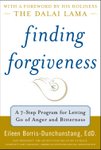
For more information on forgiveness please go to "Finding Forgiveness: A 7 Step Program for Letting Go of Anger and Bitterness" published by McGraw-Hill and to the blog on forgiveness: http://findingforgiveness.blogspot.com
www.dreileenborris.com
www.globalpeaceinitiatves.com
For more information on forgiveness please go to "Finding Forgiveness: A 7 Step Program for Letting Go of Anger and Bitterness" published by McGraw-Hill and to the blog on forgiveness: http://findingforgiveness.blogspot.com
www.dreileenborris.com
www.globalpeaceinitiatves.com
Wednesday, March 17, 2010
Giving Away Your Power - And Reclaiming it Through Forgiveness
Are you still holding on to hurtful feelings about something that has happened in the past? Pain can be difficult to let go of. And yet have you ever realized that by holding on to these painful feelings you are giving away your power and control to the person who has hurt you? The truth is, when we blame another person for how we feel, we give them power and control over our emotional well-being. Since we already feel hurt by what was done to us, giving people control will only add to and prolong our suffering.
Think about it for a moment. Why would we want to give any control over to someone else who in many cases doesn’t really care about us, some of whom may even be cruel to us? After a while, if we continually blame the same person over and over again it becomes a habit and we get caught in a groove which becomes deeper and deeper. This leads us down the road of feeling helpless and hopeless and definitely like a victim. We now have become disempowered at someone else’s hands.
There is one point I would like to stress. Holding people accountable for their action is not the same as blaming them for how you feel. People can be forgiven for what they have done and also need to be held accountable for their actions. What leads to unnecessary suffering is making people responsible for your continued suffering. Remember, forgiveness allows us to regain our power, breaking the unhealthy behavior created by our anger, guilt or fear. Forgiveness requires that we do our inner work and it is this inner work which will set us free.
Exercise: Think of a time when you gave away your power to someone who may not have cared for you. It could be a cruel and abusive parent or relative, or a friend that didn’t necessarily have your best interest at heart. Or it could be a business associate who did something implying that it was “just business” totally disregarding how hard you may have worked. Or it could be a lover or spouse who has betrayed you.
Ask yourself – why am I spending so much time blaming so and so. Who is it really hurting? Why am I choosing to stay stuck in the past instead of living in the present moment and creating a more productive and peaceful future? Haven’t I suffered enough? Now look into the present and future where this situation is no longer an issue. What does your life look like now? How does it feel to be free of this burden? What have you learned about yourself? Now take a deep relaxing breathe and think about all the things to be thankful for. Hold gratitude and joy in your heart and go on with the rest of your day.
If you would like more help in learning how to forgive go to “Finding Forgiveness: A 7 Step Program for Letting go of Anger and Bitterness” published by McGraw-Hill, the website www.dreileenborris.com and the blog on forgiveness www.findingforgiveness.blogspot.com.
Think about it for a moment. Why would we want to give any control over to someone else who in many cases doesn’t really care about us, some of whom may even be cruel to us? After a while, if we continually blame the same person over and over again it becomes a habit and we get caught in a groove which becomes deeper and deeper. This leads us down the road of feeling helpless and hopeless and definitely like a victim. We now have become disempowered at someone else’s hands.
There is one point I would like to stress. Holding people accountable for their action is not the same as blaming them for how you feel. People can be forgiven for what they have done and also need to be held accountable for their actions. What leads to unnecessary suffering is making people responsible for your continued suffering. Remember, forgiveness allows us to regain our power, breaking the unhealthy behavior created by our anger, guilt or fear. Forgiveness requires that we do our inner work and it is this inner work which will set us free.
Exercise: Think of a time when you gave away your power to someone who may not have cared for you. It could be a cruel and abusive parent or relative, or a friend that didn’t necessarily have your best interest at heart. Or it could be a business associate who did something implying that it was “just business” totally disregarding how hard you may have worked. Or it could be a lover or spouse who has betrayed you.
Ask yourself – why am I spending so much time blaming so and so. Who is it really hurting? Why am I choosing to stay stuck in the past instead of living in the present moment and creating a more productive and peaceful future? Haven’t I suffered enough? Now look into the present and future where this situation is no longer an issue. What does your life look like now? How does it feel to be free of this burden? What have you learned about yourself? Now take a deep relaxing breathe and think about all the things to be thankful for. Hold gratitude and joy in your heart and go on with the rest of your day.
If you would like more help in learning how to forgive go to “Finding Forgiveness: A 7 Step Program for Letting go of Anger and Bitterness” published by McGraw-Hill, the website www.dreileenborris.com and the blog on forgiveness www.findingforgiveness.blogspot.com.
Monday, February 22, 2010
A Resolution on Forgiveness for the United Nations
I will be away this week and not be able to write although the work of forgiveness will be prominent in my thinking. I will be spending some time at the United Nations this week speaking to people in gaining their support of me writing a resolution on forgiveness and the healing of nations. Last November I presented a paper on forgiveness and the healing of nations to members of the United Nations, UN agencies and some NGO’s. As many of you know I care about helping people personally find forgiveness in their lives. Perhaps my greatest concern and deepest reason why I feel called to do the work of forgiveness is to help heal the hatred which gets passed down from generation to generation. Hatred fuels the flames of war, genocide and other types of mass murder which we have witnessed too much of this past century. Humanity has made great intellectual, scientific and technological advances but we have not experienced the same advance in understanding our spiritual nature and the healing power of love. It will be a daunting effort to stop the destruction of humanity by the use of raw power and technology alone. We can only overcome our adversity by our sincere desire to want to change our thinking about one another and pray that our minds can be changed. As we learn to forgive ourselves and others hopefully we can take action based on the understanding gained from our collective moments of grace. It will take the power of unconditional love and our acts of kindness to transform humanities consciousness from destructive action to peace based on our ability to forgive. Yet at this moment we do not have broad enough knowledge and wisdom to understand the profound spiritual depth that forgiveness can bring. It is through this collective understanding of consciousness that we will come to know that peace gained through understanding and love is the only way to prevent our extinction and secure our future.
Vaclev Havel said in an address to a joint session of the United States Congress in 1990 that "without a global revolution in the sphere of human consciousness, a more humane society will not emerge." Stopping the cycles of anger, hatred, and fear which fuel so much suffering, requires a radical change in our thinking. Without this change we will stay stuck in the quagmire of violence and aggression, passing down to each generation the legacy of violence and guilt which will only perpetuate these cycles. If, on the other hand, we are honestly committed to harmonious relationships, then we will recognize that the true heroes are those individuals who are not afraid to look within, to change the way they think, and heal the pain of their heart. This kind of healing transformation is what forgiveness is about and this is the kind of transformation I would like to create among nations.
For those interested in obtaining a copy of my paper please feel free to contact me.
Vaclev Havel said in an address to a joint session of the United States Congress in 1990 that "without a global revolution in the sphere of human consciousness, a more humane society will not emerge." Stopping the cycles of anger, hatred, and fear which fuel so much suffering, requires a radical change in our thinking. Without this change we will stay stuck in the quagmire of violence and aggression, passing down to each generation the legacy of violence and guilt which will only perpetuate these cycles. If, on the other hand, we are honestly committed to harmonious relationships, then we will recognize that the true heroes are those individuals who are not afraid to look within, to change the way they think, and heal the pain of their heart. This kind of healing transformation is what forgiveness is about and this is the kind of transformation I would like to create among nations.
For those interested in obtaining a copy of my paper please feel free to contact me.
Wednesday, February 17, 2010
I'm Innocent So Why Do I Have To Forgive?
The first step in your forgiveness journey begins with telling your story. For many of us this story can be a painful one. Something happened which frightened us, shocked us, made us very angry or hurt us deeply. In many cases when we retell our stories we portrayed ourselves as the victim.
Yes, many of us were victimized yet that doesn’t mean that we need to remain the victim. If this is what we choose to do, we have just disempowered ourselves creating more pain to deal with. We get stuck in the victim role when we take the hurt personally and we don’t take responsibility for how we feel. Just because something awful has happened it does not mean that we have to relive it day after day.
You might be thinking, how can I not take my spouse’s extramarital affairs or emotional abuse personally. You stop taking things personally when you begin to ask the questions, why them instead of why me. What has happened in their lives that have created pain that has made them who they are today? This helps you realize that anyone in your position at that given time would have been treated in exactly the same way. When you recognize the impersonal nature of what has happened to you, then your pain does not have to cripple you.
Not taking things personally doesn’t mean that you ignore or excuse what has happened or deny your pain. It does mean that what has happened to you is not a unique situation. For example unfortunately in many marriages people have experienced pain because their spouses had extramarital affairs. When you can see the impersonal nature of the situation you can begin a new story of healing and forgiveness.
How do we fall prey to the victim role? In a sense it is part of our human condition. All of us want to present “the face of innocence.” We can be very loving, very charming, sweet and kind when we want to be. We can also find people to sympathize with us when we talk about how badly treated we may have been. We identify with other people who are also victims. We see ourselves as good people living with people who can be very hurtful. Yet underneath our innocence our anger grows because we see a world which is unable to provide nurturance and love. Because I am innocent I will not make the first attack, yet every day a hundred little things make small assaults upon our innocence, provoking irritation eventually escalating to anger in all its forms. When we choose to hold on to our pain what we are actually doing is pointing an accusing finger at the wrongdoer saying I am the innocent victim and as you look on me you are condemned because of my suffering.
The central lesson is that we have a tremendous investment in holding on to our pain so we can blame others, proving that I am right and you are wrong. When I point my finger at you, there is also a finger pointing back at me although we want to keep that buried deep within ourselves below our face of innocence. Never underestimate the power of denial for this is what keeps the dynamics of attack and defend alive and well.
It’s important to become aware of our own face of innocence. What keeps us stuck in the victim role is our inability to manage our emotional pain and to confront reality. When we break our denial of wanting to be right instead of happy we have begun our healing, moving away from victim to one who thrives.
There is a journal exercise which will help you move from a victim story to a hero’s story. Think of a time where you needed to forgive someone. Do you repeat your story over and over again and if so what is keeping you stuck and why? Write down whatever comes up for you without judgment. Allow yourself to feel whatever is happening within you. Give your emotions voice including your guilt by writing it down. When you feel that you have given your emotions full expression, ask yourself why them? What has happened in their life that has brought them where they were at the time the incident happened. Is there a way that you can look at your situation in a healthier way and see things a bit differently now? If you can’t, what are you still holding on to and why can’t you let it go. See what comes up for you and allow yourself to feel whatever emotions need more expression. If guilt keeps reappearing – ask yourself what can you do differently now to heal your guilt. Remember, you can’t change the past but you can make different choices now. Remember that holding on to guilt is a choice too.
You can repeat this exercise as often as you like to help you loosen the grip of your pain and move from victim of your circumstances to a hero. Be gentle with yourself and thank yourself for taking the time to walk the path of forgiveness.
Yes, many of us were victimized yet that doesn’t mean that we need to remain the victim. If this is what we choose to do, we have just disempowered ourselves creating more pain to deal with. We get stuck in the victim role when we take the hurt personally and we don’t take responsibility for how we feel. Just because something awful has happened it does not mean that we have to relive it day after day.
You might be thinking, how can I not take my spouse’s extramarital affairs or emotional abuse personally. You stop taking things personally when you begin to ask the questions, why them instead of why me. What has happened in their lives that have created pain that has made them who they are today? This helps you realize that anyone in your position at that given time would have been treated in exactly the same way. When you recognize the impersonal nature of what has happened to you, then your pain does not have to cripple you.
Not taking things personally doesn’t mean that you ignore or excuse what has happened or deny your pain. It does mean that what has happened to you is not a unique situation. For example unfortunately in many marriages people have experienced pain because their spouses had extramarital affairs. When you can see the impersonal nature of the situation you can begin a new story of healing and forgiveness.
How do we fall prey to the victim role? In a sense it is part of our human condition. All of us want to present “the face of innocence.” We can be very loving, very charming, sweet and kind when we want to be. We can also find people to sympathize with us when we talk about how badly treated we may have been. We identify with other people who are also victims. We see ourselves as good people living with people who can be very hurtful. Yet underneath our innocence our anger grows because we see a world which is unable to provide nurturance and love. Because I am innocent I will not make the first attack, yet every day a hundred little things make small assaults upon our innocence, provoking irritation eventually escalating to anger in all its forms. When we choose to hold on to our pain what we are actually doing is pointing an accusing finger at the wrongdoer saying I am the innocent victim and as you look on me you are condemned because of my suffering.
The central lesson is that we have a tremendous investment in holding on to our pain so we can blame others, proving that I am right and you are wrong. When I point my finger at you, there is also a finger pointing back at me although we want to keep that buried deep within ourselves below our face of innocence. Never underestimate the power of denial for this is what keeps the dynamics of attack and defend alive and well.
It’s important to become aware of our own face of innocence. What keeps us stuck in the victim role is our inability to manage our emotional pain and to confront reality. When we break our denial of wanting to be right instead of happy we have begun our healing, moving away from victim to one who thrives.
There is a journal exercise which will help you move from a victim story to a hero’s story. Think of a time where you needed to forgive someone. Do you repeat your story over and over again and if so what is keeping you stuck and why? Write down whatever comes up for you without judgment. Allow yourself to feel whatever is happening within you. Give your emotions voice including your guilt by writing it down. When you feel that you have given your emotions full expression, ask yourself why them? What has happened in their life that has brought them where they were at the time the incident happened. Is there a way that you can look at your situation in a healthier way and see things a bit differently now? If you can’t, what are you still holding on to and why can’t you let it go. See what comes up for you and allow yourself to feel whatever emotions need more expression. If guilt keeps reappearing – ask yourself what can you do differently now to heal your guilt. Remember, you can’t change the past but you can make different choices now. Remember that holding on to guilt is a choice too.
You can repeat this exercise as often as you like to help you loosen the grip of your pain and move from victim of your circumstances to a hero. Be gentle with yourself and thank yourself for taking the time to walk the path of forgiveness.
Monday, January 25, 2010
Why is Learning how to forgive so Hard?
We have all been there. Someone hurts us and for a moment we may wish to see them suffer as much as we are suffering now. The injury has just happened and emotions are churning within us, sometimes to the point of us feeling overwhelmed. While we may not want to forgive someone when we are first injured, nor necessarily should we, if we choose to lead a life where forgiveness is an integral part of it, our first step is to understand the meaning of forgiveness.
In past posts I have spoken about what forgiveness means and I would like to review a few of the most important points here.
* Forgiveness is about your inner healing, a release of your pain and not about letting someone else off the hook.
* Forgiveness is about changing the way we think and for most of us, this takes time. It is about changing our perceptions so we can see the situation differently, not through our anger, fear or guilt but through understanding and compassion.
* Forgiveness is the highest form of love that we can extend to others. It is the greatest gift we can give not only to others but especially to ourselves.
For the next few weeks I will take you step by step through a forgiveness process to help you heal the pain in your life. The first step in the forgiveness process is to truly understanding the meaning of forgiveness and to realize that it is for our benefit more than anyone else. Forgiveness is not something we should do to be good people. It is something that we want to do because we know that forgiveness will ultimately give us peace of mind and lead us towards richer fuller lives. When we understand this we can begin to move forward. Then we can look at the incident that has brought us pain. Remember, it is normal to feel angry and natural to want some form of revenge. Do not judge yourself if this is your experience. I often tell my clients if they are feeling overwhelmed with anger and a need for revenge to write out their revenge fantasy. This helps give our emotions voice and helps us to ultimately realize that revenge will not get us what we really want. When we come to this understanding we have just opened the door to the possibility of forgiveness and have started step one of our personal journey towards forgiveness.
To begin your journey ask yourself:
* How clear is my understanding about forgiveness and do I need to talk to someone who can help me better understand what forgiveness is about?
* Is there someone in my life that I am harboring anger and resentment towards and am I having difficulty with these emotions?
* How willing am I in wanting to forgive?
As you answer these questions you will learn something about yourself. In the coming posts I will continue taking you down the path of forgiveness teaching the steps to follow. Further information can be found in “Finding Forgiveness: A 7 Step Program for Letting go of Anger and Bitterness.”
In past posts I have spoken about what forgiveness means and I would like to review a few of the most important points here.
* Forgiveness is about your inner healing, a release of your pain and not about letting someone else off the hook.
* Forgiveness is about changing the way we think and for most of us, this takes time. It is about changing our perceptions so we can see the situation differently, not through our anger, fear or guilt but through understanding and compassion.
* Forgiveness is the highest form of love that we can extend to others. It is the greatest gift we can give not only to others but especially to ourselves.
For the next few weeks I will take you step by step through a forgiveness process to help you heal the pain in your life. The first step in the forgiveness process is to truly understanding the meaning of forgiveness and to realize that it is for our benefit more than anyone else. Forgiveness is not something we should do to be good people. It is something that we want to do because we know that forgiveness will ultimately give us peace of mind and lead us towards richer fuller lives. When we understand this we can begin to move forward. Then we can look at the incident that has brought us pain. Remember, it is normal to feel angry and natural to want some form of revenge. Do not judge yourself if this is your experience. I often tell my clients if they are feeling overwhelmed with anger and a need for revenge to write out their revenge fantasy. This helps give our emotions voice and helps us to ultimately realize that revenge will not get us what we really want. When we come to this understanding we have just opened the door to the possibility of forgiveness and have started step one of our personal journey towards forgiveness.
To begin your journey ask yourself:
* How clear is my understanding about forgiveness and do I need to talk to someone who can help me better understand what forgiveness is about?
* Is there someone in my life that I am harboring anger and resentment towards and am I having difficulty with these emotions?
* How willing am I in wanting to forgive?
As you answer these questions you will learn something about yourself. In the coming posts I will continue taking you down the path of forgiveness teaching the steps to follow. Further information can be found in “Finding Forgiveness: A 7 Step Program for Letting go of Anger and Bitterness.”
Tuesday, January 19, 2010
Why Do We Forgive?
Forgiveness takes us on a journey from the very pragmatic to the very sublime depending on our willingness to travel within the depth of our being. Our journey begins usually when our reality had been shattered and the pain of these broken pieces sears our heart. Over time the pain we carry becomes overwhelming and we think about what we can do to lessen our emotional burden. Perhaps this is the time we ask “Why Do We Forgive?” We forgive for a number of reasons. The list may include:
1. You want to stop being an angry person
2. You realize that holding on to this emotional burden is literally killing you.
3. The relationship which caused you pain is worth trying to fix.
4. You believe in the moral goodness of forgiveness.
Before we embark in learning how to forgive and begin to explore the mysteries of forgiveness I would like you to think about times in your life that you chose the path of forgiveness. Ask yourself, “Why did I forgive?” If you are struggling with a painful situation in your life now ask yourself what forgiveness can bring to you.
To start you on your journey of forgiveness I offer this simple exercise. Sit in a comfortable place where your back is straight and not rigid and your feet are on the floor. Now gently close your eyes. Take a few deep relaxing breaths and as you do I would like you to think about a situation where you would like to release pain. As you think about your situation open your heart to the universal love that surrounds you. As you breathe in imagine this energy fill your entire being. Focus on this love as it permeates every cell of your being. As you breathe out release the pain that you are holding in your heart. Feel yourself become lighter and freer with each breathe you take. Once you are filled with this universal love with each inbreathe take full responsibility for your emotional reactions to your situation and as you breathe out, breathe out the compassionate radiance of healing and forgiveness. Allow yourself to feel inner peace as you gently open your eyes.
This is a powerful exercise. It may give you the courage to face your pain and to forgive the person who may have hurt you or betrayed you in any way. It may also answer the question “Why do we Forgive?”
1. You want to stop being an angry person
2. You realize that holding on to this emotional burden is literally killing you.
3. The relationship which caused you pain is worth trying to fix.
4. You believe in the moral goodness of forgiveness.
Before we embark in learning how to forgive and begin to explore the mysteries of forgiveness I would like you to think about times in your life that you chose the path of forgiveness. Ask yourself, “Why did I forgive?” If you are struggling with a painful situation in your life now ask yourself what forgiveness can bring to you.
To start you on your journey of forgiveness I offer this simple exercise. Sit in a comfortable place where your back is straight and not rigid and your feet are on the floor. Now gently close your eyes. Take a few deep relaxing breaths and as you do I would like you to think about a situation where you would like to release pain. As you think about your situation open your heart to the universal love that surrounds you. As you breathe in imagine this energy fill your entire being. Focus on this love as it permeates every cell of your being. As you breathe out release the pain that you are holding in your heart. Feel yourself become lighter and freer with each breathe you take. Once you are filled with this universal love with each inbreathe take full responsibility for your emotional reactions to your situation and as you breathe out, breathe out the compassionate radiance of healing and forgiveness. Allow yourself to feel inner peace as you gently open your eyes.
This is a powerful exercise. It may give you the courage to face your pain and to forgive the person who may have hurt you or betrayed you in any way. It may also answer the question “Why do we Forgive?”
Sunday, January 17, 2010
Martin Luther King Jr. on Forgiveness
This is a sermon delivered by Martin Luther King at Dexter Avenue Baptist Church on Christmas of 1957. It deals with the question of how do we learn to love our enemies. For King the answer lies in forgiveness. In celebration of Martin Luther King day I wanted to share his inspiring words.
"First, we must develop and maintain the capacity to forgive. He who is devoid of the power to forgive is devoid of the power to love. It is impossible even to begin the act of loving one's enemies without the prior acceptance of the necessity, over and over again, of forgiving those who inflict evil and injury upon us. It is also necessary to realize that the forgiving act must always be initiated by the person who has been wronged, the victim of some great hurt, the recipient of some tortuous injustice, the absorber of some terrible act of oppression. The wrongdoer may request forgiveness. He may come to himself, and, like the prodigal son, move up some dusty road, his heart palpitating with the desire for forgiveness. But only the injured neighbor, the loving father back home, can really pour out the warm waters of forgiveness.
"Forgiveness does not mean ignoring what has been done or putting a false label on an evil act. It means, rather, that the evil act no longer remains as a barrier to the relationship. Forgiveness is a catalyst creating the atmosphere necessary for a fresh start and a new beginning. It is the lifting of a burden or the canceling of a debt. The words 'I will forgive you, but I'll never forget what you've done' never explain the real nature of forgiveness. Certainly one can never forget, if that means erasing it totally from his mind. But when we forgive, we forget in the sense that the evil deed is no longer a mental block impeding a new relationship. Likewise, we can never say, 'I will forgive you, but I won't have anything further to do with you.' Forgiveness means reconciliation, a coming together again. Without this, no man can love his enemies
"The degree to which we are able to forgive determines the degree to which we are able to love our enemies.
"Second, we must recognize that the evil deed of the enemy-neighbor, the thing that hurts, never quite expresses all that he is. An element of goodness may be found even in our worst enemy. Each of us has something of a schizophrenic personality, tragically divided against ourselves. A persistent civil war rages within all of our lives. Something within us causes us to lament with Ovid, the Latin poet, 'I see and approve the better things, but follow worse,' or to agree with Plato that human personality is like a charioteer having two headstrong horses, each wanting to go in a different direction, or to repeat with the Apostle Paul, 'The good that I would I do not: but the evil which I would not, that I do.'
"This simply means that there is some good in the worst of us and some evil in the best of us. When we discover this, we are less prone to hate our enemies. When we look beneath the surface, beneath. the impulsive evil deed, we see within our enemy-neighbor a measure of goodness and know that the viciousness and evilness of his acts are not quite representative of all that he is. We see him in a new light. We recognize that his hate grows out of fear, pride, ignorance, prejudice, and misunderstanding, but in spite of this, we know God's image is ineffably etched in being. Then we love our enemies by realizing that they are not totally bad and that they are not beyond the reach of God's redemptive love.
"Third, we must not seek to defeat or humiliate the enemy but to win his friendship and understanding. At times we are able to humiliate our worst enemy. Inevitably, his weak moments come and we are able to thrust in his side the spear of defeat. But this we must not do. Every word and deed must contribute to an understanding with the enemy and release those vast reservoirs of goodwill which have been blocked by impenetrable walls of hate.
"Let us move now from the practical how to the theoretical why: Why should we love our enemies? The first reason is fairly obvious. Returning hate for hate multiplies hate, adding deeper darkness to a night already devoid of stars. Darkness cannot drive out darkness; only light can do that. Hate cannot drive out hate; only love can do that. Hate multiplies hate, violence multiplies violence, and toughness multi# plies toughness in a descending spiral of destruction.
"So when Jesus says 'Love your enemies,' he is setting forth a profound and ultimately inescapable admonition. Have we not come to such an impasse in the modern world that we must love our enemies-or else? The chain reaction of evil-hate begetting hate, wars producing more wars-must be broken, or we shall be plunged into the dark abyss of annihilation.
"Another reason why we must love our enemies is that hate scars the soul and distorts the personality. Mindful that hate is an evil and dangerous force, we too often think of what it does to the person hated. This is understandable, for hate brings irreparable damage to its victims. We have seen its ugly consequences in the ignominious deaths brought to six million Jews by hate-obsessed madman named Hitler, in the unspeakable violence inflicted upon Negroes by bloodthirsty mobs, in the dark horrors of war, and in the terrible indignities and injustices perpetrated against millions of God's children by unconscionable oppressors.
"But there is another side which we must never overlook. Hate is just as injurious to the person who hates. Like an unchecked cancer, hate corrodes the personality and eats away its vital unity. Hate destroys a man's sense of values and his objectivity. It causes him to describe the beautiful as ugly and the ugly as beautiful, and to confuse the true with the false and the false with the true.
"A third reason why we should love our enemies is that love is the only force capable of transforming an enemy into a friend. We never get rid of an enemy by meeting hate with hate; we get rid of an enemy by getting rid of enmity. By its very nature, hate destroys and tears down; by its very nature, love creates and builds up. Love transforms with redemptive power.
"The relevance of what I have said to the crisis in race relations should be readily apparent. There will be no permanent solution to the, race problem until oppressed men develop the capacity to love their enemies. The darkness of racial injustice will be dispelled only by the light of forgiving love. For more than three centuries American Negroes have been battered by the iron rod of oppression, frustrated by day and bewildered by night by unbearable injustice and burdened with the ugly weight of discrimination. Forced to live with these shameful conditions, we are tempted to become bitter and to retaliate with a corresponding hate. But if this happens, the new order we seek will be little more than a duplicate of the old order. We must in strength and humility meet hate with love.
"My friends, we have followed the so-called practical way for too long a time now, and it has led inexorably to deeper confusion and chaos. Time is cluttered with the wreckage of communities which surrendered to hatred and violence. For the salvation of our nation and the salvation of mankind, we must follow another way.
"While abhorring segregation, we shall love the segregationist. This is the only way to create the beloved community.
"To our most bitter opponents we say: 'We shall match your capacity to inflict suffering by our capacity to endure suffering. We shall meet your physical force with soul force. Do to us what you will, and we shall continue to love you. We cannot in all good conscience obey your unjust laws because noncooperation with evil is as much a moral obligation as is cooperation with good. Throw us in jail and we shall still love you. Bomb our homes and threaten our children, and we shall still love you. Send your hooded perpetrators of violence into our community at the midnight hour and beat us and leave us half dead, and we shall still love you. But be ye assured that we will wear you down by our capacity to suffer. One day we shall win freedom but not only for ourselves. We shall so appeal to your heart and conscience that we shall win you in the process and our victory will be a double victory.'"
"First, we must develop and maintain the capacity to forgive. He who is devoid of the power to forgive is devoid of the power to love. It is impossible even to begin the act of loving one's enemies without the prior acceptance of the necessity, over and over again, of forgiving those who inflict evil and injury upon us. It is also necessary to realize that the forgiving act must always be initiated by the person who has been wronged, the victim of some great hurt, the recipient of some tortuous injustice, the absorber of some terrible act of oppression. The wrongdoer may request forgiveness. He may come to himself, and, like the prodigal son, move up some dusty road, his heart palpitating with the desire for forgiveness. But only the injured neighbor, the loving father back home, can really pour out the warm waters of forgiveness.
"Forgiveness does not mean ignoring what has been done or putting a false label on an evil act. It means, rather, that the evil act no longer remains as a barrier to the relationship. Forgiveness is a catalyst creating the atmosphere necessary for a fresh start and a new beginning. It is the lifting of a burden or the canceling of a debt. The words 'I will forgive you, but I'll never forget what you've done' never explain the real nature of forgiveness. Certainly one can never forget, if that means erasing it totally from his mind. But when we forgive, we forget in the sense that the evil deed is no longer a mental block impeding a new relationship. Likewise, we can never say, 'I will forgive you, but I won't have anything further to do with you.' Forgiveness means reconciliation, a coming together again. Without this, no man can love his enemies
"The degree to which we are able to forgive determines the degree to which we are able to love our enemies.
"Second, we must recognize that the evil deed of the enemy-neighbor, the thing that hurts, never quite expresses all that he is. An element of goodness may be found even in our worst enemy. Each of us has something of a schizophrenic personality, tragically divided against ourselves. A persistent civil war rages within all of our lives. Something within us causes us to lament with Ovid, the Latin poet, 'I see and approve the better things, but follow worse,' or to agree with Plato that human personality is like a charioteer having two headstrong horses, each wanting to go in a different direction, or to repeat with the Apostle Paul, 'The good that I would I do not: but the evil which I would not, that I do.'
"This simply means that there is some good in the worst of us and some evil in the best of us. When we discover this, we are less prone to hate our enemies. When we look beneath the surface, beneath. the impulsive evil deed, we see within our enemy-neighbor a measure of goodness and know that the viciousness and evilness of his acts are not quite representative of all that he is. We see him in a new light. We recognize that his hate grows out of fear, pride, ignorance, prejudice, and misunderstanding, but in spite of this, we know God's image is ineffably etched in being. Then we love our enemies by realizing that they are not totally bad and that they are not beyond the reach of God's redemptive love.
"Third, we must not seek to defeat or humiliate the enemy but to win his friendship and understanding. At times we are able to humiliate our worst enemy. Inevitably, his weak moments come and we are able to thrust in his side the spear of defeat. But this we must not do. Every word and deed must contribute to an understanding with the enemy and release those vast reservoirs of goodwill which have been blocked by impenetrable walls of hate.
"Let us move now from the practical how to the theoretical why: Why should we love our enemies? The first reason is fairly obvious. Returning hate for hate multiplies hate, adding deeper darkness to a night already devoid of stars. Darkness cannot drive out darkness; only light can do that. Hate cannot drive out hate; only love can do that. Hate multiplies hate, violence multiplies violence, and toughness multi# plies toughness in a descending spiral of destruction.
"So when Jesus says 'Love your enemies,' he is setting forth a profound and ultimately inescapable admonition. Have we not come to such an impasse in the modern world that we must love our enemies-or else? The chain reaction of evil-hate begetting hate, wars producing more wars-must be broken, or we shall be plunged into the dark abyss of annihilation.
"Another reason why we must love our enemies is that hate scars the soul and distorts the personality. Mindful that hate is an evil and dangerous force, we too often think of what it does to the person hated. This is understandable, for hate brings irreparable damage to its victims. We have seen its ugly consequences in the ignominious deaths brought to six million Jews by hate-obsessed madman named Hitler, in the unspeakable violence inflicted upon Negroes by bloodthirsty mobs, in the dark horrors of war, and in the terrible indignities and injustices perpetrated against millions of God's children by unconscionable oppressors.
"But there is another side which we must never overlook. Hate is just as injurious to the person who hates. Like an unchecked cancer, hate corrodes the personality and eats away its vital unity. Hate destroys a man's sense of values and his objectivity. It causes him to describe the beautiful as ugly and the ugly as beautiful, and to confuse the true with the false and the false with the true.
"A third reason why we should love our enemies is that love is the only force capable of transforming an enemy into a friend. We never get rid of an enemy by meeting hate with hate; we get rid of an enemy by getting rid of enmity. By its very nature, hate destroys and tears down; by its very nature, love creates and builds up. Love transforms with redemptive power.
"The relevance of what I have said to the crisis in race relations should be readily apparent. There will be no permanent solution to the, race problem until oppressed men develop the capacity to love their enemies. The darkness of racial injustice will be dispelled only by the light of forgiving love. For more than three centuries American Negroes have been battered by the iron rod of oppression, frustrated by day and bewildered by night by unbearable injustice and burdened with the ugly weight of discrimination. Forced to live with these shameful conditions, we are tempted to become bitter and to retaliate with a corresponding hate. But if this happens, the new order we seek will be little more than a duplicate of the old order. We must in strength and humility meet hate with love.
"My friends, we have followed the so-called practical way for too long a time now, and it has led inexorably to deeper confusion and chaos. Time is cluttered with the wreckage of communities which surrendered to hatred and violence. For the salvation of our nation and the salvation of mankind, we must follow another way.
"While abhorring segregation, we shall love the segregationist. This is the only way to create the beloved community.
"To our most bitter opponents we say: 'We shall match your capacity to inflict suffering by our capacity to endure suffering. We shall meet your physical force with soul force. Do to us what you will, and we shall continue to love you. We cannot in all good conscience obey your unjust laws because noncooperation with evil is as much a moral obligation as is cooperation with good. Throw us in jail and we shall still love you. Bomb our homes and threaten our children, and we shall still love you. Send your hooded perpetrators of violence into our community at the midnight hour and beat us and leave us half dead, and we shall still love you. But be ye assured that we will wear you down by our capacity to suffer. One day we shall win freedom but not only for ourselves. We shall so appeal to your heart and conscience that we shall win you in the process and our victory will be a double victory.'"
Tuesday, January 12, 2010
How do we Forgive?
How do we forgive the betrayal, abuse, infidelity or disappointments in our lives? In the first chapter of “Finding Forgiveness” I begin with a quote which says “The knowledge that illuminates not only sets you free, but also shows clearly that you are free.” The knowledge referred to here is about knowing yourself right to the core of your being – your spiritual essence. It is knowing the truth of who you are which sets you free. This is what forgiveness is about and why forgiveness is our ultimate freedom.
Think about a situation in your life where you have gotten hurt or where you were feeling such intense anger that you couldn’t let that anger go. As the situation happened you had already judged it, stubbornly holding on to whatever you were thinking as though your thoughts were facts. The truth is those thoughts are not facts, only your interpretation of what just took place. In a split second you became judge and jury seeing the situation through the lens colored by your life’s experiences. Ouch!
Now I know what some of you are thinking. I wasn’t the one who was the abusive spouse and ruined a marriage. I wasn’t the one who committed an infidelity and had an affair. I wasn’t the perpetrator of violence. So what do my thoughts have to do with it?
You certainly did not create the circumstances which caused you pain. Your interpretations of what happened did. Yes, our emotions created by our thoughts are very important messengers guiding us in what we need to do, AND it is when you can’t let go of them within a reasonable amount of time because of what you are thinking that the red flag waves. We do have a right to be angry and we can choose to overcome anger by seeing our situation differently, changing our thinking and letting our pain go.
Forgiveness is a process of looking at a situation and asking ourselves what this event is telling us about what we believe to be true. We begin by looking honestly at our reactions to whatever has happened including all kinds of feelings and judgments we may hold about the situation. All these feelings and thoughts are useful in uncovering our hidden beliefs. These are feelings and thoughts about ourselves which often we can only see in the perpetrator. We are learning that the feelings/thoughts along with the pain they cause were already with us before the event took place in the form of guilt. The event only seemed to cause the feelings when actually our beliefs did.
When we are willing to question our beliefs then we are in a position to begin to see the situation differently. This can be very difficult to do, and takes a lot of practice and honesty, but it is the only way we can get in touch with the beliefs that are keeping us rooted in the thinking that causes us a lot of pain. If we are willing to just say “maybe I’m wrong about this,” then the world we’ve made and all our relationships, including those we love, become our classroom for a type of learning which can bring spiritual depth to our lives. Without this spiritual knowledge we would not be aware of the mistaken beliefs about ourselves or the judgments that keep us trapped in knowing our true essence. Each step in the forgiveness process brings us more peace and takes us closer to our truth. This is our healing and it is this truth that really does sets us free.
Think about a situation in your life where you have gotten hurt or where you were feeling such intense anger that you couldn’t let that anger go. As the situation happened you had already judged it, stubbornly holding on to whatever you were thinking as though your thoughts were facts. The truth is those thoughts are not facts, only your interpretation of what just took place. In a split second you became judge and jury seeing the situation through the lens colored by your life’s experiences. Ouch!
Now I know what some of you are thinking. I wasn’t the one who was the abusive spouse and ruined a marriage. I wasn’t the one who committed an infidelity and had an affair. I wasn’t the perpetrator of violence. So what do my thoughts have to do with it?
You certainly did not create the circumstances which caused you pain. Your interpretations of what happened did. Yes, our emotions created by our thoughts are very important messengers guiding us in what we need to do, AND it is when you can’t let go of them within a reasonable amount of time because of what you are thinking that the red flag waves. We do have a right to be angry and we can choose to overcome anger by seeing our situation differently, changing our thinking and letting our pain go.
Forgiveness is a process of looking at a situation and asking ourselves what this event is telling us about what we believe to be true. We begin by looking honestly at our reactions to whatever has happened including all kinds of feelings and judgments we may hold about the situation. All these feelings and thoughts are useful in uncovering our hidden beliefs. These are feelings and thoughts about ourselves which often we can only see in the perpetrator. We are learning that the feelings/thoughts along with the pain they cause were already with us before the event took place in the form of guilt. The event only seemed to cause the feelings when actually our beliefs did.
When we are willing to question our beliefs then we are in a position to begin to see the situation differently. This can be very difficult to do, and takes a lot of practice and honesty, but it is the only way we can get in touch with the beliefs that are keeping us rooted in the thinking that causes us a lot of pain. If we are willing to just say “maybe I’m wrong about this,” then the world we’ve made and all our relationships, including those we love, become our classroom for a type of learning which can bring spiritual depth to our lives. Without this spiritual knowledge we would not be aware of the mistaken beliefs about ourselves or the judgments that keep us trapped in knowing our true essence. Each step in the forgiveness process brings us more peace and takes us closer to our truth. This is our healing and it is this truth that really does sets us free.
Sunday, January 3, 2010
The Challenge of Forgiveness
Immaculee Ilibagiza, a Rwandan woman who wrote Left to Tell (Hay House, 2006) was able to forgive the unthinkable. For 91 days of the 1994 genocide in Rwanda she hid in a tiny bathroom with seven other women in the home of her local pastor. She describes the horror she lived through and the stunning transformation she experienced because of her desire to forgive. Something happened within her where she was able to move her consciousness to deeper levels of understanding and experience inexplicable love. When the genocide ended, Immaculee met one of her family’s murderers and was able to forgive him.
How is forgiveness possible in the face of such horrific acts and what exactly is forgiveness? In the most simplistic of terms forgiveness is a willingness to let go of resentment and to stop suffering. I define forgiveness as a voluntary act in which you make a decision to see a situation differently. Instead of seeing a situation through the lens of anger, guilt or fear we see it through the eyes of compassion and understanding. I like to think of forgiveness as the science of the heart, a discipline of discovering all the ways of being that will extend your love to the world and discarding all the ways that do not. On a deeper level forgiveness is about changing the way we think which includes embracing our humanity and spiritual nature and the humanity and spiritual nature of all human beings.
In the Handbook of Forgiveness (Routledge, 2005) an anthology of scientific studies edited by Everett Worthington Jr. experts in the field expose gradations in definitions of forgiveness. In spite of this they all do agree on one thing. Unforgiveness is a state of anger, bitterness and in its extreme form hatred. Forgiveness is a prosocial change in someone’s experience after a transgression. When people choose to forgive, they change.
My question to you is, has there been something in your life in which you were able to forgive and if so, how were you changed?
How is forgiveness possible in the face of such horrific acts and what exactly is forgiveness? In the most simplistic of terms forgiveness is a willingness to let go of resentment and to stop suffering. I define forgiveness as a voluntary act in which you make a decision to see a situation differently. Instead of seeing a situation through the lens of anger, guilt or fear we see it through the eyes of compassion and understanding. I like to think of forgiveness as the science of the heart, a discipline of discovering all the ways of being that will extend your love to the world and discarding all the ways that do not. On a deeper level forgiveness is about changing the way we think which includes embracing our humanity and spiritual nature and the humanity and spiritual nature of all human beings.
In the Handbook of Forgiveness (Routledge, 2005) an anthology of scientific studies edited by Everett Worthington Jr. experts in the field expose gradations in definitions of forgiveness. In spite of this they all do agree on one thing. Unforgiveness is a state of anger, bitterness and in its extreme form hatred. Forgiveness is a prosocial change in someone’s experience after a transgression. When people choose to forgive, they change.
My question to you is, has there been something in your life in which you were able to forgive and if so, how were you changed?
Saturday, December 20, 2008
Healing Conflict through Forgiveness
I teach about forgiveness and conflict resolution both in my private practice as a psychologist as well as in corporations and with governments when I give trainings in conflict resolution and peace building in dangerous areas of conflict as a political psychologist. On a very pragmatic level forgiveness is part of a conflict resolution process. We have to heal before we can forgive and sometimes when we begin to understand why we are angry, and what are the underlying issues that caused the conflict we can begin to stop asking the question "why me" and start asking the question "why them?" what brought them to the place that they are which influenced how they behaved. This is not only part of a conflict resolution process, but also the forgiveness process. This allows us to begin to change our perceptions of the situation and begin to look at it with compassion and understanding. This is what forgiveness is about.
Subscribe to:
Posts (Atom)