


As with the rest of the nation I was heartbroken about the events which took place Saturday, January 8, 2011 in Tucson, Arizona. Senseless killings of such promising lives. A 9 year old girl who was so exceptional in many ways – gone – never to have the chance to share her many gifts with the world. There was the 30 year old staffer who gave his life in service to the democracy he loved. There was the judge who by all accounts was a very thoughtful man guided by a deep faith which he practiced beautifully. Then a husband gave his life to protect his wife. And 2 other women so loved by their family. And of course there is Gabrielle Giffords – where this nation is sending heartfelt prayers for a miraculous recovery. She is an incredible human being who believes so much in upholding democracy – a dedicated congresswoman who wanted to meet with her constituency as she always does. Saturday was truly a tragedy and yet I have also been touched by such heroism.
People are asking is there anything we can learn from the events which took place on Saturday. As a clinical psychologist who works with trauma victims I can’t help but to go over the events of that day. And what about the killer? What motivated him to act out in such vengeful ways? It is so easy to be outraged by his actions. The harder thought to swallow is that everyone that day was a victim and that as a society we have a responsibility to make sure that something like this never happens again. Yes, what the killer did was horrific and he needs to be held accountable for his actions – and he will. we also need to ask ourselves how have we failed as a society to help those so called “lone wolves” who show signs of mental distress which go unheeded. Jared Lougner was described by many as a disturbed youth but nowhere was there a report that anyone cared enough to stop and get him the help he needed long before Saturday’s tragedy. What does that say about us? We are so quick to say anything that comes to mind and call them facts when what we are really doing is making noise defending our position about something at the expense of others. After all talk is really cheap these days and few seem to care about the power of their words and the harmful effects it may have on others. What has happened to our emotional maturity? It seems to me it is going down the tubes. I even begin to wonder if we value civility any more.
This brings me to my last point about healing. So much healing is necessary because of the tragedy that took place on Saturday. We need to grieve for the senseless deaths of all those beautiful people. We also need to grieve for what happened to Gabrielle Giffords and all those who were injured. And what about the killer? He too needs to be included in the healing circle. Can we open our hearts enough to ask the question – why him – what has happened in this mans life that has created so much pain which contributed to his acting out where he was filled with so much hatred that he had to take other people’s lives. Only a twisted mind can create such carnage. Can we learn to forgive so we don’t add to the hatred in this world? Can we learn to forgive and do something positive, something healing so all those lives that were lost and all those who are dealing with agonizing pain will not have suffered in vain. If we can open our hearts to having a little willingness to forgive then perhaps we can be part of the solution and not the problem. And if we can begin to think a bit about forgiveness in our own personal lives and grow in understanding and compassion then we may have begun to take the important steps in healing our society and possibly the world.
Thursday, January 13, 2011


Tuesday, May 25, 2010
Thursday, April 29, 2010
The Council For Dignity, Forgiveness and Reconciliation
During the week of April 19, 2010 I was in Rome attending meetings as a member of the Council for Dignity, Forgiveness, and Reconciliation. Created by Maria Nicoletta Gaida the Council is part of the Ara Pacis Initiative initiated by the Glocal Forum Italy Foundation and promoted by the City of Rome with the High Patronage of the Republic of Italy and under the auspices of the Prime Minister and the Italian Ministry of Foreign Affairs. The Ara Pacis Initiative is dedicated to the human dimension of peace before, during and after conflict. This project has attracted the active interest of the President of the State of Israel, Shimon Peres, and the President of the Palestinian National Authority, Mahmoud Abbas, and has been favorably received by H.M. Mohammed VI, the King of Morocco.
The project aims to launch an active reflection on forgiveness, in its various religious and cultural meanings, as a moral, spiritual and political tool for achieving reconciliation among peoples – with a particular focus on the Mediterranean and the Israeli-Palestinian conflict. This is an initiative that will bring to light and recognize the root causes of contemporary suffering and the wounds buried deep in collective memory in order to restore dignity to those who have suffered, thereby creating the premise for a reconciliation that allows for the building of a common future.
The heart of the Ara Pacis Initiative is the Council for Dignity, Forgiveness, and Reconciliation, made up primarily of men and women who have suffered personally because of armed conflict and who have chosen the path of forgiveness, and forgiveness and reconciliation experts and practitioners who work to imagine a new community, to propose the way of political forgiveness, and to develop ongoing activities aimed at raising awareness of the necessity of working on the path of forgiveness/reconciliation through education as well as intercultural and inter-religious dialogue in all fields. Through concrete projects the Council will aim to transform relations between communities in conflict to help them take the paths of reconciliation. The work of the Council will be to share their knowledge, experiences and insight concerning dignity, forgiveness and reconciliation, and initiating projects such as sending small teams of experts to promote approaches rarely used, but dramatically necessary – like forgiveness with justice, restoring dignity, and healing from trauma.
The Council will work in strict coordination with the national and international diplomatic channels and in collaboration with grassroots organizations active on the ground – on initiatives promoting reflection and participation of the various populations in the area of forgiveness. It will guide the activities related to the gathering and documenting of testimonies of conflict victims to memorialize them, as well as the selection of representatives of the victims from all sides – as victimization from hate and violence leaves no side untouched – to participate in the Council’s hearings.
The project aims to launch an active reflection on forgiveness, in its various religious and cultural meanings, as a moral, spiritual and political tool for achieving reconciliation among peoples – with a particular focus on the Mediterranean and the Israeli-Palestinian conflict. This is an initiative that will bring to light and recognize the root causes of contemporary suffering and the wounds buried deep in collective memory in order to restore dignity to those who have suffered, thereby creating the premise for a reconciliation that allows for the building of a common future.
The heart of the Ara Pacis Initiative is the Council for Dignity, Forgiveness, and Reconciliation, made up primarily of men and women who have suffered personally because of armed conflict and who have chosen the path of forgiveness, and forgiveness and reconciliation experts and practitioners who work to imagine a new community, to propose the way of political forgiveness, and to develop ongoing activities aimed at raising awareness of the necessity of working on the path of forgiveness/reconciliation through education as well as intercultural and inter-religious dialogue in all fields. Through concrete projects the Council will aim to transform relations between communities in conflict to help them take the paths of reconciliation. The work of the Council will be to share their knowledge, experiences and insight concerning dignity, forgiveness and reconciliation, and initiating projects such as sending small teams of experts to promote approaches rarely used, but dramatically necessary – like forgiveness with justice, restoring dignity, and healing from trauma.
The Council will work in strict coordination with the national and international diplomatic channels and in collaboration with grassroots organizations active on the ground – on initiatives promoting reflection and participation of the various populations in the area of forgiveness. It will guide the activities related to the gathering and documenting of testimonies of conflict victims to memorialize them, as well as the selection of representatives of the victims from all sides – as victimization from hate and violence leaves no side untouched – to participate in the Council’s hearings.
Friday, April 16, 2010
Council for Dignity, Forgiveness and Reconciliation
I will be working on the creation of a "Council for Dignity, Forgiveness and Reconciliation" in Rome from April 18- 26. The people on the council are a group of wise and authoritative human beings who could lead the world down the paths of understanding, forgiveness and reconciliation; a body which proposes a new form of justice, which symbolically unites the human family and is at the service of peoples in conflict, that they should not be left alone in the folly of hatred and injustice; so that dignity and forgiveness can be striven for even in the heart of darkness, so that voices of sanity and of light may be heard when calls for punishment and revenge suffocate even the remotest desire for peace, so that historical wrongs, contemporary greed, spiritual derailment and the power to humiliate can be revealed and addressed in order to create space for reconciliation. I will speak more about this when I return from Rome.
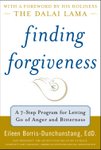
For more information on forgiveness please go to "Finding Forgiveness: A 7 Step Program for Letting Go of Anger and Bitterness" published by McGraw-Hill and to the blog on forgiveness: http://findingforgiveness.blogspot.com
www.dreileenborris.com
www.globalpeaceinitiatves.com
For more information on forgiveness please go to "Finding Forgiveness: A 7 Step Program for Letting Go of Anger and Bitterness" published by McGraw-Hill and to the blog on forgiveness: http://findingforgiveness.blogspot.com
www.dreileenborris.com
www.globalpeaceinitiatves.com
Tuesday, March 30, 2010
Forgiveness and Amish Grace
Is it possible to forgive a murderer? Would you be able to forgive the person who MURDERED someone you loved very deeply? This was the subject of the movie “Amish Grace” shown on the Lifetime Movie Network. The movie is based on a true story about the Amish community who within the fabric of their beings embraced the thinking which is the scaffolding of forgiveness. This community demonstrates how difficult it is to forgive even when deeply steeped in religious beliefs forgiveness is engrained. They also demonstrate how powerful forgiveness is in the healing of the soul.
On October 2, 2006 Carl Roberts entered into a one room school house in the Amish community of Nickel Mines, Pennsylvania. He lined up 11 young girls and shot them at point blank range. Roberts killed five of the girls and then killed himself. In an amazing act of courage the oldest girl, 13-year-old Marian Fisher asked Roberts to shoot her first. She hoped that she could spare the lives of the younger girls. And what was even more remarkable was that in just a few hours after the shooting an Amish neighbor went to the Roberts family to comfort them and to offer forgiveness.
A grandfather of one of the girls killed was telling the boys to forgive what had just happened as they prepared the body of one of the little girls for burial. How many of you could have done that? How many of you could have told the young boys that “We must not think evil of this man?” Yet these were the words of the grandfather. And what is even more unimaginable is that five days later the families who lost their daughters attended the funeral of the man who had killed them. They went not in anger or for retribution, but to comfort the family and let them know that all was forgiven.
The Amish learned to let go of their pain and suffering. What makes the Amish so remarkable is that they chose to see, using the words of Jerry Jampolsky, “the light instead of the lampshade” and saw the situation with spiritual sight, that although what this man did was an act of evil – inwardly, it was a cry for help. They were able to go beyond what their physical eyes were telling them and recognized that Roberts too was worthy of love. They were able to see Roberts not through the lens of anger, fear or guilt, but through the eyes of understanding and compassion.
As we struggle with our own difficulties in being able to forgive, we also open ourselves up to a benevolent force which is far more powerful than we could ever be. This creative force which is sometimes experienced as grace, is that inexplicable power which comes from something beyond ourselves. This power gives us the ability to forgive even when we feel within our hearts, forgiveness is humanly impossible. This moment of grace creates a profound interior renovation which completely changes the way we think. Instead of perceiving the situation through our judgments we see things differently, through what I call spiritual sight. When it happens, you can feel the power and presence of a higher intervention which transforms your relationships as you experience an outpouring of this inexplicable love.
This is the love which enabled the Amish to pray for everyone involved in what took place on October 2nd, not only for the innocent little girls who got killed and those still to recover, but for the killer himself. They knew that by expressing love it would bring about healing for all those concerned, whereas to take on and express the same evil as the attacker, that would only support evil and allow it to spread. The Amish learned that when we forgive we let our pain go.
On October 2, 2006 Carl Roberts entered into a one room school house in the Amish community of Nickel Mines, Pennsylvania. He lined up 11 young girls and shot them at point blank range. Roberts killed five of the girls and then killed himself. In an amazing act of courage the oldest girl, 13-year-old Marian Fisher asked Roberts to shoot her first. She hoped that she could spare the lives of the younger girls. And what was even more remarkable was that in just a few hours after the shooting an Amish neighbor went to the Roberts family to comfort them and to offer forgiveness.
A grandfather of one of the girls killed was telling the boys to forgive what had just happened as they prepared the body of one of the little girls for burial. How many of you could have done that? How many of you could have told the young boys that “We must not think evil of this man?” Yet these were the words of the grandfather. And what is even more unimaginable is that five days later the families who lost their daughters attended the funeral of the man who had killed them. They went not in anger or for retribution, but to comfort the family and let them know that all was forgiven.
The Amish learned to let go of their pain and suffering. What makes the Amish so remarkable is that they chose to see, using the words of Jerry Jampolsky, “the light instead of the lampshade” and saw the situation with spiritual sight, that although what this man did was an act of evil – inwardly, it was a cry for help. They were able to go beyond what their physical eyes were telling them and recognized that Roberts too was worthy of love. They were able to see Roberts not through the lens of anger, fear or guilt, but through the eyes of understanding and compassion.
As we struggle with our own difficulties in being able to forgive, we also open ourselves up to a benevolent force which is far more powerful than we could ever be. This creative force which is sometimes experienced as grace, is that inexplicable power which comes from something beyond ourselves. This power gives us the ability to forgive even when we feel within our hearts, forgiveness is humanly impossible. This moment of grace creates a profound interior renovation which completely changes the way we think. Instead of perceiving the situation through our judgments we see things differently, through what I call spiritual sight. When it happens, you can feel the power and presence of a higher intervention which transforms your relationships as you experience an outpouring of this inexplicable love.
This is the love which enabled the Amish to pray for everyone involved in what took place on October 2nd, not only for the innocent little girls who got killed and those still to recover, but for the killer himself. They knew that by expressing love it would bring about healing for all those concerned, whereas to take on and express the same evil as the attacker, that would only support evil and allow it to spread. The Amish learned that when we forgive we let our pain go.
Friday, March 19, 2010
Forgiveness Persons of the Week - The Michael Cooney family
Forgiveness stories are inspiring. Reading about the Cooney family is no exception. On Thursday, March 18th, 2010 a hearing took place in which the family of a Duluth murder victim begged for the mercy. The entire courtroom including the judge was riveted by what they heard.
The story began last July when Curtis Cooney was shot in the head and killed by a man named Philbert “Randy” Barnes who was firing a gun into a crowd of people. In January “Randy” Barnes was convicted of 2nd degree murder and 2nd degree attempted murder. This past Thursday the judge handed down the sentence. Both families were present. But before the judge spoke of his sentence the Cooney family wanted to speak.
Heidi Cooney, the victim’s mother began by saying “I was raised to be forgiving, and if you want others to forgive you you need to forgive.” Curtis Cooney’s sister began to cry commenting that she lost her best friend that night. The two of them had a very special bond. Then Curtis’s father reminded everyone that “If Curtis could be here today he would forgive you, and so do we.” Cooney Sr. asked the judge to show Barnes mercy.
The Barnes family was also present in the courtroom. The older brother, tearfully apologizing to the Cooney family begged for forgiveness. Then the judge acknowledged that what he heard was extraordinary and he would take into account all that was said. After a brief recess the judge announced the sentence. Barnes was to receive 14 years in jail for attempted murder and 29 years for murder to run concurrently. Judge Johnson told those in the courtroom that it was because of “the grace of the Cooney family” he elected to sentence Barnes concurrently. The court was moved by the fact that the Cooney family forgave Barnes and that it wasn’t looking for retribution. The judge felt that it was “extraordinary” in the way the murder victim’s family and the defendant’s family came together. Steven Bynum, Barnes brother walked over to Michael Cooney and shook his hand and rubbed his cheek. Bynum then expressed his thanks to the Cooney family for the “grace, love and compassion” they extended to his family.
Once outside the courtroom Cooney Sr. said “If you’re truly consumed with hate and bitterness, that hurts you more than anything else. Carrying around hate and rage is not good for a person. Once you forgive someone, the healing process can truly begin.”
Steven Bynum responded by saying “We want Curtis Cooney’s family to have peace and that they can go forward in the joy and love of the Lord, that’s the most important thing. . .The absolute love and mercy that the Cooney family has shown to our family is just unforgettable. . . The second most important thing is that my brother have the opportunity to rebuild his life again and to take stock in what has happened. The greatest honor that he could give to the Cooney family, to Curtis and to all of us that love and support him is that he build his life anew, that he find God, and that he takes that love and joy and extends it to others. Today was an example of the power of forgiveness and redemption and reconciliation.”
When reading this, what thoughts did you have? I would appreciate hearing them. If you have a forgiveness story you would like to share please submitted through my website www.dreileenborris.com. By sharing your stories and your struggles it will touch many other lives. You can learn more about how to forgive in “Finding Forgiveness: A 7 Step Program for Letting go of Anger and Bitterness” published by McGraw-Hill.
The story began last July when Curtis Cooney was shot in the head and killed by a man named Philbert “Randy” Barnes who was firing a gun into a crowd of people. In January “Randy” Barnes was convicted of 2nd degree murder and 2nd degree attempted murder. This past Thursday the judge handed down the sentence. Both families were present. But before the judge spoke of his sentence the Cooney family wanted to speak.
Heidi Cooney, the victim’s mother began by saying “I was raised to be forgiving, and if you want others to forgive you you need to forgive.” Curtis Cooney’s sister began to cry commenting that she lost her best friend that night. The two of them had a very special bond. Then Curtis’s father reminded everyone that “If Curtis could be here today he would forgive you, and so do we.” Cooney Sr. asked the judge to show Barnes mercy.
The Barnes family was also present in the courtroom. The older brother, tearfully apologizing to the Cooney family begged for forgiveness. Then the judge acknowledged that what he heard was extraordinary and he would take into account all that was said. After a brief recess the judge announced the sentence. Barnes was to receive 14 years in jail for attempted murder and 29 years for murder to run concurrently. Judge Johnson told those in the courtroom that it was because of “the grace of the Cooney family” he elected to sentence Barnes concurrently. The court was moved by the fact that the Cooney family forgave Barnes and that it wasn’t looking for retribution. The judge felt that it was “extraordinary” in the way the murder victim’s family and the defendant’s family came together. Steven Bynum, Barnes brother walked over to Michael Cooney and shook his hand and rubbed his cheek. Bynum then expressed his thanks to the Cooney family for the “grace, love and compassion” they extended to his family.
Once outside the courtroom Cooney Sr. said “If you’re truly consumed with hate and bitterness, that hurts you more than anything else. Carrying around hate and rage is not good for a person. Once you forgive someone, the healing process can truly begin.”
Steven Bynum responded by saying “We want Curtis Cooney’s family to have peace and that they can go forward in the joy and love of the Lord, that’s the most important thing. . .The absolute love and mercy that the Cooney family has shown to our family is just unforgettable. . . The second most important thing is that my brother have the opportunity to rebuild his life again and to take stock in what has happened. The greatest honor that he could give to the Cooney family, to Curtis and to all of us that love and support him is that he build his life anew, that he find God, and that he takes that love and joy and extends it to others. Today was an example of the power of forgiveness and redemption and reconciliation.”
When reading this, what thoughts did you have? I would appreciate hearing them. If you have a forgiveness story you would like to share please submitted through my website www.dreileenborris.com. By sharing your stories and your struggles it will touch many other lives. You can learn more about how to forgive in “Finding Forgiveness: A 7 Step Program for Letting go of Anger and Bitterness” published by McGraw-Hill.
Wednesday, March 17, 2010
Giving Away Your Power - And Reclaiming it Through Forgiveness
Are you still holding on to hurtful feelings about something that has happened in the past? Pain can be difficult to let go of. And yet have you ever realized that by holding on to these painful feelings you are giving away your power and control to the person who has hurt you? The truth is, when we blame another person for how we feel, we give them power and control over our emotional well-being. Since we already feel hurt by what was done to us, giving people control will only add to and prolong our suffering.
Think about it for a moment. Why would we want to give any control over to someone else who in many cases doesn’t really care about us, some of whom may even be cruel to us? After a while, if we continually blame the same person over and over again it becomes a habit and we get caught in a groove which becomes deeper and deeper. This leads us down the road of feeling helpless and hopeless and definitely like a victim. We now have become disempowered at someone else’s hands.
There is one point I would like to stress. Holding people accountable for their action is not the same as blaming them for how you feel. People can be forgiven for what they have done and also need to be held accountable for their actions. What leads to unnecessary suffering is making people responsible for your continued suffering. Remember, forgiveness allows us to regain our power, breaking the unhealthy behavior created by our anger, guilt or fear. Forgiveness requires that we do our inner work and it is this inner work which will set us free.
Exercise: Think of a time when you gave away your power to someone who may not have cared for you. It could be a cruel and abusive parent or relative, or a friend that didn’t necessarily have your best interest at heart. Or it could be a business associate who did something implying that it was “just business” totally disregarding how hard you may have worked. Or it could be a lover or spouse who has betrayed you.
Ask yourself – why am I spending so much time blaming so and so. Who is it really hurting? Why am I choosing to stay stuck in the past instead of living in the present moment and creating a more productive and peaceful future? Haven’t I suffered enough? Now look into the present and future where this situation is no longer an issue. What does your life look like now? How does it feel to be free of this burden? What have you learned about yourself? Now take a deep relaxing breathe and think about all the things to be thankful for. Hold gratitude and joy in your heart and go on with the rest of your day.
If you would like more help in learning how to forgive go to “Finding Forgiveness: A 7 Step Program for Letting go of Anger and Bitterness” published by McGraw-Hill, the website www.dreileenborris.com and the blog on forgiveness www.findingforgiveness.blogspot.com.
Think about it for a moment. Why would we want to give any control over to someone else who in many cases doesn’t really care about us, some of whom may even be cruel to us? After a while, if we continually blame the same person over and over again it becomes a habit and we get caught in a groove which becomes deeper and deeper. This leads us down the road of feeling helpless and hopeless and definitely like a victim. We now have become disempowered at someone else’s hands.
There is one point I would like to stress. Holding people accountable for their action is not the same as blaming them for how you feel. People can be forgiven for what they have done and also need to be held accountable for their actions. What leads to unnecessary suffering is making people responsible for your continued suffering. Remember, forgiveness allows us to regain our power, breaking the unhealthy behavior created by our anger, guilt or fear. Forgiveness requires that we do our inner work and it is this inner work which will set us free.
Exercise: Think of a time when you gave away your power to someone who may not have cared for you. It could be a cruel and abusive parent or relative, or a friend that didn’t necessarily have your best interest at heart. Or it could be a business associate who did something implying that it was “just business” totally disregarding how hard you may have worked. Or it could be a lover or spouse who has betrayed you.
Ask yourself – why am I spending so much time blaming so and so. Who is it really hurting? Why am I choosing to stay stuck in the past instead of living in the present moment and creating a more productive and peaceful future? Haven’t I suffered enough? Now look into the present and future where this situation is no longer an issue. What does your life look like now? How does it feel to be free of this burden? What have you learned about yourself? Now take a deep relaxing breathe and think about all the things to be thankful for. Hold gratitude and joy in your heart and go on with the rest of your day.
If you would like more help in learning how to forgive go to “Finding Forgiveness: A 7 Step Program for Letting go of Anger and Bitterness” published by McGraw-Hill, the website www.dreileenborris.com and the blog on forgiveness www.findingforgiveness.blogspot.com.
Wednesday, March 10, 2010
It's All My Mothers Fault and No I will NOT Forgive Her!
I remember a friend of mine telling me how mad she was at her mother. It seemed as though every time they got into a car together they would fight. There was a litany of reasons why my friend would not forgive her mother – the least of which she was stuck in the blame game.
When we blame others we are accusing them of something we believe they have done to us. We are placing fault on others insisting that they are the cause of our misery. When we are hurt because of something that has happened in the past and still feel the pain in the present we look for reasons to explain our pain. The truth is that we can never really know all the reasons why someone has hurt us, and more importantly we do not usually take the time to go within ourselves to understand what part we may have played in our life circumstances. We usually take the easy way out and like a knee jerk reaction we blame others for what may be causing our pain. That is not to say that others do not behave poorly and do things that are hurtful. What I am talking about is that when we continually blame someone else for our painful feelings, instead of making us feel better, blaming actually makes us feel worse.
Blaming causes more pain. When we blame someone else for our suffering we believe that someone else is the cause of our pain and that we need something from that person to feel better. We are dependent on them for our well being. What we actually have done is disempowered ourselves, giving other people control over how we feel. We have chosen not to take responsibility for what we are feeling.
Blaming others becomes a habit, sinking us further into the victim role. Like being in quick sand we feel powerless to change our circumstances. Underneath our need to blame is another issue that we are consistently running away from – our own feelings of guilt. Whenever we are accusing someone (blaming) of something we are secretly blaming ourselves. The content may be different but the form will be the same. If we are blaming someone for nasty horrible things they have said to us, we may not say those same kinds of things to them but if we are honest with ourselves we certainly have said unkind things to others. The important point to remember is that we are not here to beat ourselves up when we learn things about ourselves we wish we hadn’t. Now that we have gained a new understanding about ourselves we can make different choices. When we see the humanness in ourselves it is easier to see the humanness in others. Being able to then forgive ourselves we can also forgive others and stop the blame game. And remember, holding on to guilt is a choice too.
You can find more information on how to stop the blame game and to heal our guilt in “Finding Forgiveness: A 7 Step Program for Letting Go of Anger and Bitterness” published by McGraw-Hill.
When we blame others we are accusing them of something we believe they have done to us. We are placing fault on others insisting that they are the cause of our misery. When we are hurt because of something that has happened in the past and still feel the pain in the present we look for reasons to explain our pain. The truth is that we can never really know all the reasons why someone has hurt us, and more importantly we do not usually take the time to go within ourselves to understand what part we may have played in our life circumstances. We usually take the easy way out and like a knee jerk reaction we blame others for what may be causing our pain. That is not to say that others do not behave poorly and do things that are hurtful. What I am talking about is that when we continually blame someone else for our painful feelings, instead of making us feel better, blaming actually makes us feel worse.
Blaming causes more pain. When we blame someone else for our suffering we believe that someone else is the cause of our pain and that we need something from that person to feel better. We are dependent on them for our well being. What we actually have done is disempowered ourselves, giving other people control over how we feel. We have chosen not to take responsibility for what we are feeling.
Blaming others becomes a habit, sinking us further into the victim role. Like being in quick sand we feel powerless to change our circumstances. Underneath our need to blame is another issue that we are consistently running away from – our own feelings of guilt. Whenever we are accusing someone (blaming) of something we are secretly blaming ourselves. The content may be different but the form will be the same. If we are blaming someone for nasty horrible things they have said to us, we may not say those same kinds of things to them but if we are honest with ourselves we certainly have said unkind things to others. The important point to remember is that we are not here to beat ourselves up when we learn things about ourselves we wish we hadn’t. Now that we have gained a new understanding about ourselves we can make different choices. When we see the humanness in ourselves it is easier to see the humanness in others. Being able to then forgive ourselves we can also forgive others and stop the blame game. And remember, holding on to guilt is a choice too.
You can find more information on how to stop the blame game and to heal our guilt in “Finding Forgiveness: A 7 Step Program for Letting Go of Anger and Bitterness” published by McGraw-Hill.
Tuesday, March 9, 2010
Friday, March 5, 2010
Why Does it Have to Hurt so Much and Can Forgiveness Heal our Pain.
Feeling hurt or being wounded is unfortunately a life experience that all of us deal with. The difficulty is that we get stuck in these feelings not recognizing that we have choices which can lead to less suffering. Three elements come into play when we become wounded.
1. We take things too personally - When we take things too personally we assume that we know everything that is going on with the person who has hurt us. We judge their behavior not totally understanding what has happened in their life and the pain they may have experienced which has brought them to the place when the woundedness happened.
2 We blamed others for how we felt. - We forget that we are looking at the situation through our perceptual lenses tinted by our own emotional baggage – much of which we are unaware of. Instead of owning our shortcomings which is something we do not want to see within ourselves we can only see this behavior in others, not taking responsibility for our own behavior.
3 We get caught in the victim role - We have a tremendous investment in holding on to our pain so we can blame others, proving that I am right and you are wrong. When we choose to hold on to our pain what we are actually doing is pointing an accusing finger at the wrongdoer saying I am the innocent victim.
How do we begin to heal our wounds? The first step is an awareness process of what we are doing so that we can make other choices. If you can remember the three ingredients just mentioned you are well on your way to emotional freedom. As you tell your story, look at these three elements. By using the knowledge you are gaining about yourself you can hopefully gain insight into your own emotional reactions and begin to see the situation differently. Hopefully you will be able to handle your pain more skillfully.
Exercise: If you have written a story from the past posts you may want to revisit it and ask yourself in what way have I taken this situation too personally and how can I see it differently? Or pick a situation where you needed to forgive someone and write your story down. Then ask yourself:
• How can I see the perpetrator differently?
• What do I need to do to take responsibility for my own emotional reactions?
• What is it about myself that is hard to acknowledge which I blame others for?
Remember, we cannot change what has happened to us but we can change the way we respond to it and grow stronger as a result of the situation we find ourselves in. Life will always through us curve balls and we do not need to create more pain for ourselves as a result of the situations we find ourselves in.
For more information on learning how to forgive go to “Finding Forgiveness: A 7 Step Program for Letting go of Anger and Bitterness” by Dr. Eileen R. Borris-Dunchunstang.
1. We take things too personally - When we take things too personally we assume that we know everything that is going on with the person who has hurt us. We judge their behavior not totally understanding what has happened in their life and the pain they may have experienced which has brought them to the place when the woundedness happened.
2 We blamed others for how we felt. - We forget that we are looking at the situation through our perceptual lenses tinted by our own emotional baggage – much of which we are unaware of. Instead of owning our shortcomings which is something we do not want to see within ourselves we can only see this behavior in others, not taking responsibility for our own behavior.
3 We get caught in the victim role - We have a tremendous investment in holding on to our pain so we can blame others, proving that I am right and you are wrong. When we choose to hold on to our pain what we are actually doing is pointing an accusing finger at the wrongdoer saying I am the innocent victim.
How do we begin to heal our wounds? The first step is an awareness process of what we are doing so that we can make other choices. If you can remember the three ingredients just mentioned you are well on your way to emotional freedom. As you tell your story, look at these three elements. By using the knowledge you are gaining about yourself you can hopefully gain insight into your own emotional reactions and begin to see the situation differently. Hopefully you will be able to handle your pain more skillfully.
Exercise: If you have written a story from the past posts you may want to revisit it and ask yourself in what way have I taken this situation too personally and how can I see it differently? Or pick a situation where you needed to forgive someone and write your story down. Then ask yourself:
• How can I see the perpetrator differently?
• What do I need to do to take responsibility for my own emotional reactions?
• What is it about myself that is hard to acknowledge which I blame others for?
Remember, we cannot change what has happened to us but we can change the way we respond to it and grow stronger as a result of the situation we find ourselves in. Life will always through us curve balls and we do not need to create more pain for ourselves as a result of the situations we find ourselves in.
For more information on learning how to forgive go to “Finding Forgiveness: A 7 Step Program for Letting go of Anger and Bitterness” by Dr. Eileen R. Borris-Dunchunstang.
Friday, February 26, 2010
You don't have to be a Victim Anymore
Have you been hurt in a small or big way? The truth is all of us have been wounded through out our lives. Someone may not have come through in the way we wanted them too or hoped for. Or perhaps someone lied to us or abandoned us. We are wounded because something happened in our life which we didn't want to happen and in many cases we become overwhelmed with what took place. We probably lacked the skills to confront the reality of things not turning out the way we had hoped. Without the skills to handle the situation in the very best way, we become wounded.
When we experience a painful life event we often react with anger or depression. You hold on to that life experience not realizing that the specifics of what happened are not as important as learning how to deal with your reactions to your experience. Whatever has happened to you, adding difficult emotions adds to your pain.
Are you someone who has trouble letting go of the past? Do you get tired of all the time you dwell over something which happened yesterday? Remember, you have a choice as to how much time you will spend on thinking about something that has caused you pain.
To help you let go of your past you may want to write about what has happend. Before you do take a few deep relaxing breathes and when you feel relaxed think of a situation in your life which has created pain. When you have the situation clearly in your mind write your story down. What happened that may have led up to the situation, the situation itself and its aftermath. Think not only about what happened but also how you felt about it. Then ask yourself:
1. How much time are you willing to think about your hurt and/or disappointment?
2. When you think about these hurts how much intensity is there?
3. Why haven't you thought of all the good in your life with the same intensity as your pain?
The answer to these questions are an indication of the depth of your forgiveness work. Just because painful things have happened it doesn't mean that you need to dwell on this. The importance of these questions is not to deny that people have hurt you, they are to help you recognize that we get into habits. The more we think of the negative, the deeper the groove becomes in our mind. After awhile that groove is so deep that it becomes difficult to break out of that groove. We always have choice and if you keep dwelling on something you give those thoughts power. What you focus your attention on is what you become. If you focus on your pain that is what you will experience. If you focus on forgiveness your world will begin to look very different.
You can find more information on how to forgive in "Finding Forgiveness: A 7 Step Program for Letting go of Anger and Bitterness" published by McGraw-Hill.
When we experience a painful life event we often react with anger or depression. You hold on to that life experience not realizing that the specifics of what happened are not as important as learning how to deal with your reactions to your experience. Whatever has happened to you, adding difficult emotions adds to your pain.
Are you someone who has trouble letting go of the past? Do you get tired of all the time you dwell over something which happened yesterday? Remember, you have a choice as to how much time you will spend on thinking about something that has caused you pain.
To help you let go of your past you may want to write about what has happend. Before you do take a few deep relaxing breathes and when you feel relaxed think of a situation in your life which has created pain. When you have the situation clearly in your mind write your story down. What happened that may have led up to the situation, the situation itself and its aftermath. Think not only about what happened but also how you felt about it. Then ask yourself:
1. How much time are you willing to think about your hurt and/or disappointment?
2. When you think about these hurts how much intensity is there?
3. Why haven't you thought of all the good in your life with the same intensity as your pain?
The answer to these questions are an indication of the depth of your forgiveness work. Just because painful things have happened it doesn't mean that you need to dwell on this. The importance of these questions is not to deny that people have hurt you, they are to help you recognize that we get into habits. The more we think of the negative, the deeper the groove becomes in our mind. After awhile that groove is so deep that it becomes difficult to break out of that groove. We always have choice and if you keep dwelling on something you give those thoughts power. What you focus your attention on is what you become. If you focus on your pain that is what you will experience. If you focus on forgiveness your world will begin to look very different.
You can find more information on how to forgive in "Finding Forgiveness: A 7 Step Program for Letting go of Anger and Bitterness" published by McGraw-Hill.
Monday, February 22, 2010
A Resolution on Forgiveness for the United Nations
I will be away this week and not be able to write although the work of forgiveness will be prominent in my thinking. I will be spending some time at the United Nations this week speaking to people in gaining their support of me writing a resolution on forgiveness and the healing of nations. Last November I presented a paper on forgiveness and the healing of nations to members of the United Nations, UN agencies and some NGO’s. As many of you know I care about helping people personally find forgiveness in their lives. Perhaps my greatest concern and deepest reason why I feel called to do the work of forgiveness is to help heal the hatred which gets passed down from generation to generation. Hatred fuels the flames of war, genocide and other types of mass murder which we have witnessed too much of this past century. Humanity has made great intellectual, scientific and technological advances but we have not experienced the same advance in understanding our spiritual nature and the healing power of love. It will be a daunting effort to stop the destruction of humanity by the use of raw power and technology alone. We can only overcome our adversity by our sincere desire to want to change our thinking about one another and pray that our minds can be changed. As we learn to forgive ourselves and others hopefully we can take action based on the understanding gained from our collective moments of grace. It will take the power of unconditional love and our acts of kindness to transform humanities consciousness from destructive action to peace based on our ability to forgive. Yet at this moment we do not have broad enough knowledge and wisdom to understand the profound spiritual depth that forgiveness can bring. It is through this collective understanding of consciousness that we will come to know that peace gained through understanding and love is the only way to prevent our extinction and secure our future.
Vaclev Havel said in an address to a joint session of the United States Congress in 1990 that "without a global revolution in the sphere of human consciousness, a more humane society will not emerge." Stopping the cycles of anger, hatred, and fear which fuel so much suffering, requires a radical change in our thinking. Without this change we will stay stuck in the quagmire of violence and aggression, passing down to each generation the legacy of violence and guilt which will only perpetuate these cycles. If, on the other hand, we are honestly committed to harmonious relationships, then we will recognize that the true heroes are those individuals who are not afraid to look within, to change the way they think, and heal the pain of their heart. This kind of healing transformation is what forgiveness is about and this is the kind of transformation I would like to create among nations.
For those interested in obtaining a copy of my paper please feel free to contact me.
Vaclev Havel said in an address to a joint session of the United States Congress in 1990 that "without a global revolution in the sphere of human consciousness, a more humane society will not emerge." Stopping the cycles of anger, hatred, and fear which fuel so much suffering, requires a radical change in our thinking. Without this change we will stay stuck in the quagmire of violence and aggression, passing down to each generation the legacy of violence and guilt which will only perpetuate these cycles. If, on the other hand, we are honestly committed to harmonious relationships, then we will recognize that the true heroes are those individuals who are not afraid to look within, to change the way they think, and heal the pain of their heart. This kind of healing transformation is what forgiveness is about and this is the kind of transformation I would like to create among nations.
For those interested in obtaining a copy of my paper please feel free to contact me.
Subscribe to:
Posts (Atom)