


The first step in your forgiveness journey begins with telling your story. For many of us this story can be a painful one. Something happened which frightened us, shocked us, made us very angry or hurt us deeply. In many cases when we retell our stories we portrayed ourselves as the victim.
Yes, many of us were victimized yet that doesn’t mean that we need to remain the victim. If this is what we choose to do, we have just disempowered ourselves creating more pain to deal with. We get stuck in the victim role when we take the hurt personally and we don’t take responsibility for how we feel. Just because something awful has happened it does not mean that we have to relive it day after day.
You might be thinking, how can I not take my spouse’s extramarital affairs or emotional abuse personally. You stop taking things personally when you begin to ask the questions, why them instead of why me. What has happened in their lives that have created pain that has made them who they are today? This helps you realize that anyone in your position at that given time would have been treated in exactly the same way. When you recognize the impersonal nature of what has happened to you, then your pain does not have to cripple you.
Not taking things personally doesn’t mean that you ignore or excuse what has happened or deny your pain. It does mean that what has happened to you is not a unique situation. For example unfortunately in many marriages people have experienced pain because their spouses had extramarital affairs. When you can see the impersonal nature of the situation you can begin a new story of healing and forgiveness.
How do we fall prey to the victim role? In a sense it is part of our human condition. All of us want to present “the face of innocence.” We can be very loving, very charming, sweet and kind when we want to be. We can also find people to sympathize with us when we talk about how badly treated we may have been. We identify with other people who are also victims. We see ourselves as good people living with people who can be very hurtful. Yet underneath our innocence our anger grows because we see a world which is unable to provide nurturance and love. Because I am innocent I will not make the first attack, yet every day a hundred little things make small assaults upon our innocence, provoking irritation eventually escalating to anger in all its forms. When we choose to hold on to our pain what we are actually doing is pointing an accusing finger at the wrongdoer saying I am the innocent victim and as you look on me you are condemned because of my suffering.
The central lesson is that we have a tremendous investment in holding on to our pain so we can blame others, proving that I am right and you are wrong. When I point my finger at you, there is also a finger pointing back at me although we want to keep that buried deep within ourselves below our face of innocence. Never underestimate the power of denial for this is what keeps the dynamics of attack and defend alive and well.
It’s important to become aware of our own face of innocence. What keeps us stuck in the victim role is our inability to manage our emotional pain and to confront reality. When we break our denial of wanting to be right instead of happy we have begun our healing, moving away from victim to one who thrives.
There is a journal exercise which will help you move from a victim story to a hero’s story. Think of a time where you needed to forgive someone. Do you repeat your story over and over again and if so what is keeping you stuck and why? Write down whatever comes up for you without judgment. Allow yourself to feel whatever is happening within you. Give your emotions voice including your guilt by writing it down. When you feel that you have given your emotions full expression, ask yourself why them? What has happened in their life that has brought them where they were at the time the incident happened. Is there a way that you can look at your situation in a healthier way and see things a bit differently now? If you can’t, what are you still holding on to and why can’t you let it go. See what comes up for you and allow yourself to feel whatever emotions need more expression. If guilt keeps reappearing – ask yourself what can you do differently now to heal your guilt. Remember, you can’t change the past but you can make different choices now. Remember that holding on to guilt is a choice too.
You can repeat this exercise as often as you like to help you loosen the grip of your pain and move from victim of your circumstances to a hero. Be gentle with yourself and thank yourself for taking the time to walk the path of forgiveness.
Wednesday, February 17, 2010


Thursday, February 11, 2010
When Our Pain Returns - Finding Forgiveness
It would be so nice if when we told our painful stories of the past, all our suffering would magically disappear. Unfortunately it doesn’t happen like that. Many of us get stuck in the quagmire of our emotions not letting the ghosts of the past be in the past. How can we work through these emotions? We heal our emotions by feeling them completely. The only way we can get to the other side is by walking through that door. Yes, it hurts yet the paradox is that when we give ourselves permission to feel our emotions completely, we begin to dissipate its energy. One of the reasons why we struggle so much with forgiveness is that we want to avoid feeling pain, but in order to finally let our emotional burdens go, we have to know what’s there.
Forgiveness is a process that usually takes time. If done fully, forgiveness changes us in a very fundamental way. It changes our thinking and creates within us a new way of being in this world. When we become a person who can forgive, then we find the ultimate freedom forgiveness brings. This freedom expands our consciousness giving us the gift of an all encompassing love. Challenging ourselves to grow beyond our “small” selves is difficult and yet it reaps great rewards.
So what are the ways you can begin to let go of your past? Soul searching is a good starting point. Take out your journal and ask yourself the following questions.
• Do you really want to forgive this person? It’s ok if you don’t – and if that is the case just be gentle with yourself. It is healthier to be able to acknowledge that then to say “I forgive” when you are still seething inside. Working with our emotions takes time. There are also times when we feel that we “should” forgive someone for a variety of reasons. This never works. Forgive is a choice, a voluntary act and if it is forced resentment builds just beneath the surface.
• Do you want to step out of being a victim? If not why is it that you are choosing to hold on to your anger and/or guilt? This question is a hard one. All of us are invested in being stuck in the victim role. Do you want to get back at someone by being the innocent victim, showing the world how much you are suffering at the hands of another? Remember, we disempower ourselves when we are stuck in the victim role, blaming others and not taking responsibility for our own lives. Conversely we empower ourselves when we take responsibility for our emotional well being. Often it is our feelings of guilt that keeps us stuck. We may not feel that we deserve feeling better or we feel guilty that someone else may have suffered and not us. When this happens ask yourself, what is under these feelings – why do I want to beat myself up? Why am I not willing to love and nurture myself? Remember – holding on to guilt is a choice too.
• Do you really want to heal? This is another hard question and be gentle with yourself with whatever comes up. The important issue here is to be aware that you are making choices, awareness being the first step in any healing process.
As I have mentioned before – forgiveness takes work. Being honest, loving and gentle with yourself will take you on the road to recovery. Get help if you need too for you do not need to do this work on your own. And remember, you are not alone.
Forgiveness is a process that usually takes time. If done fully, forgiveness changes us in a very fundamental way. It changes our thinking and creates within us a new way of being in this world. When we become a person who can forgive, then we find the ultimate freedom forgiveness brings. This freedom expands our consciousness giving us the gift of an all encompassing love. Challenging ourselves to grow beyond our “small” selves is difficult and yet it reaps great rewards.
So what are the ways you can begin to let go of your past? Soul searching is a good starting point. Take out your journal and ask yourself the following questions.
• Do you really want to forgive this person? It’s ok if you don’t – and if that is the case just be gentle with yourself. It is healthier to be able to acknowledge that then to say “I forgive” when you are still seething inside. Working with our emotions takes time. There are also times when we feel that we “should” forgive someone for a variety of reasons. This never works. Forgive is a choice, a voluntary act and if it is forced resentment builds just beneath the surface.
• Do you want to step out of being a victim? If not why is it that you are choosing to hold on to your anger and/or guilt? This question is a hard one. All of us are invested in being stuck in the victim role. Do you want to get back at someone by being the innocent victim, showing the world how much you are suffering at the hands of another? Remember, we disempower ourselves when we are stuck in the victim role, blaming others and not taking responsibility for our own lives. Conversely we empower ourselves when we take responsibility for our emotional well being. Often it is our feelings of guilt that keeps us stuck. We may not feel that we deserve feeling better or we feel guilty that someone else may have suffered and not us. When this happens ask yourself, what is under these feelings – why do I want to beat myself up? Why am I not willing to love and nurture myself? Remember – holding on to guilt is a choice too.
• Do you really want to heal? This is another hard question and be gentle with yourself with whatever comes up. The important issue here is to be aware that you are making choices, awareness being the first step in any healing process.
As I have mentioned before – forgiveness takes work. Being honest, loving and gentle with yourself will take you on the road to recovery. Get help if you need too for you do not need to do this work on your own. And remember, you are not alone.
Sunday, February 7, 2010
"It's Not Love that makes the World go Round - It's Guilt!"
The most important issue to deal with in the forgiveness process is our feelings of guilt. We can have a hard enough time getting in touch with our anger. Getting in touch with our guilt is even more difficult. None of us like to feel that awful feeling in the pit of our stomach. And for those of us feeling guilty for what we have done, that guilt blocks any possibility for us to feel love which we feel so unworthy of. When we don’t accept love we can’t be healed.
There is another reason why it is so important to uncover our guilt. If we pretend that the guilt buried within ourselves doesn’t exist, the only thing we can do with these feelings is literally place that guilt on someone else. Since guilt includes all the negative feelings we believe to be true about ourselves, now we only see those negatives in the people around us. We become very judgmental because of the lack of love within ourselves, and we attack others through the filter of our guilt. As soon as something happens to us, we can only see the situation through our negative thinking caused by our guilt. Until we recognize what we are doing, we will continue to blame others and have a distorted view of what actually happened. We need to learn how to see through our smoke screens and own our guilt
So how do we work with our guilt?
1. Don’t be afraid to talk about your feelings of guilt and recognize that as awful as a situation may be, we did the best we could.
2. Take responsibility for your choices and if you are the one who needs forgiveness realize that now that you can see what you have done – you can choose again.
3. Keep in mind that holding on to guilt and being stuck in a victim role is a choice, too.
4. Accept responsibility for your emotional reactions.
5. Listen within.
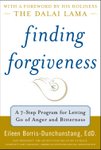
To help yourself heal your guilt and move forward in your personal forgiveness process take out your journal and ask yourself “What do I feel guilty of in relation to this situation?” Explore what comes up without judgment. Don’t be afraid to reach back in time for feelings of guilt. This is part of your healing process. Feel your feelings as they surface and be open to what they want to say to you. Is there something now or in the past that needs healing and if so, what actions can I take to heal it? Even if it is clear that you did nothing to the perpetrator, you still may have feelings of guilt. If there is something that you feel ashamed of, explore those feelings to get to the roots of your wound. This action will uncover something you need to forgive yourself for. Journal with whatever comes up. You will probably have to repeat this journal exercise a number of times before you are able to release some of your guilt. Guilt runs deep. It is important that you be gentle with yourself as you do this work. After you have explored your guilt feelings ask yourself, “How have I place my feelings of guilt on others, such as through blaming or judging? What can I do differently now?” Go deep within and listen. (For more on this exercise go to Finding Forgiveness: A 7 Step Program for Letting Go of Anger and Bitterness)
There is another reason why it is so important to uncover our guilt. If we pretend that the guilt buried within ourselves doesn’t exist, the only thing we can do with these feelings is literally place that guilt on someone else. Since guilt includes all the negative feelings we believe to be true about ourselves, now we only see those negatives in the people around us. We become very judgmental because of the lack of love within ourselves, and we attack others through the filter of our guilt. As soon as something happens to us, we can only see the situation through our negative thinking caused by our guilt. Until we recognize what we are doing, we will continue to blame others and have a distorted view of what actually happened. We need to learn how to see through our smoke screens and own our guilt
So how do we work with our guilt?
1. Don’t be afraid to talk about your feelings of guilt and recognize that as awful as a situation may be, we did the best we could.
2. Take responsibility for your choices and if you are the one who needs forgiveness realize that now that you can see what you have done – you can choose again.
3. Keep in mind that holding on to guilt and being stuck in a victim role is a choice, too.
4. Accept responsibility for your emotional reactions.
5. Listen within.
To help yourself heal your guilt and move forward in your personal forgiveness process take out your journal and ask yourself “What do I feel guilty of in relation to this situation?” Explore what comes up without judgment. Don’t be afraid to reach back in time for feelings of guilt. This is part of your healing process. Feel your feelings as they surface and be open to what they want to say to you. Is there something now or in the past that needs healing and if so, what actions can I take to heal it? Even if it is clear that you did nothing to the perpetrator, you still may have feelings of guilt. If there is something that you feel ashamed of, explore those feelings to get to the roots of your wound. This action will uncover something you need to forgive yourself for. Journal with whatever comes up. You will probably have to repeat this journal exercise a number of times before you are able to release some of your guilt. Guilt runs deep. It is important that you be gentle with yourself as you do this work. After you have explored your guilt feelings ask yourself, “How have I place my feelings of guilt on others, such as through blaming or judging? What can I do differently now?” Go deep within and listen. (For more on this exercise go to Finding Forgiveness: A 7 Step Program for Letting Go of Anger and Bitterness)
Friday, February 5, 2010
Wednesday, February 3, 2010
GOT ANGER?
“Fry those Bastards! I want Timothy McVeigh and Terry Nichols hanged no trials necessary.” These were the words of Bud Welch whose 23 year old daughter was killed in the bombing of the Murrah Federal Building in Oklahoma City. “From the moment I learned it was a bomb I survived on anger and hate.”
Bud’s anger was focused on Timothy McVeigh and Terry Nichols, and like so many others, Bud wished for their speedy conviction and execution. “I was opposed to the death penalty all my life until my daughter Julie Marie was killed in the Oklahoma City bombing. For many months after the bombing I could have killed Timothy McVeigh myself. Temporary insanity is real, and I have lived it. You can’t think of enough adjectives to describe the anger and hatred I felt. But after time, I was able to examine my conscience, and I realized that if McVeigh is put to death, it won’t help me in the healing process. People talk about executions bringing closure. But how can there be closure when my little girl is never coming back. I finally realized that the death penalty is all about revenge and hate, and revenge and hate are why Julie Marie and 167 others are died.”
When Bud saw McVeigh’s father on television a few months after the bombing, his emotions began to change. He realized that “this man has lost a child too.” Bud eventually arranged to meet with Timothy McVeigh’s father, Bill. “I saw a deep pain in a father’s eye, but also an incredible love for his son.” Bud says, “I was able to tell him that I truly understood the pain that he was going through, and that he – as I – was a victim of what happened in Oklahoma City.”
Not all of us could come to this conclusion so quickly. Yet before Bud could get to this place of recognizing that both fathers were dealing with a painful lose he had to deal with his personal healing. What Bud was able to accomplish you too will be able to do, if you choose.
Step Three: Working with Anger. Anger tells us that our circumstances need to change. If we can’t let go of our anger it is also telling us that we need to change. This is the time when we get into the trenches of our emotions and have the difficult dialogue with ourselves about what happened and how we will choose to deal with it in a healing capacity. It is the time when we roll up our sleeves and become very honest with ourselves. Our tendencies are to want to feel sorry for ourselves and stay stuck in a victim role. By playing “poor me,” we disempower ourselves or continue to play the blame game and not take responsibility or positive action in our lives. Instead of seeing the situation as the good guy versus the bad guy, we would be better served to learn the lessons our emotions are trying to teach us and to understand what is making the person behave that way.
This is a difficult phase because it requires introspection and honest soul searching. Although we may think we are angry at someone, else if we are having difficulty letting go of anger it is an indication that we are in the need of healing. Don’t be afraid to dialogue with the anger inside of you. Ask your anger what it wants to tell you. You can have this conversation be either writing down whatever comes to mind or sharing what is inside of you with someone you trust. Honor what your anger says to you. You may need to journal many times focusing on your anger. You can also draw it. There may be multiple meanings to your anger. Your anger could be protecting you. It could also be telling you what you need to do to heal.
The question you need to ask yourself is “What am I accusing the other person of?” because the truth is that is what we are secretly accusing ourselves of. Our egos are slippery snakes so the content will be different but the form will be the same. For example we may never betray our spouse by being unfaithful but have we ever been unfaithful to ourselves? When we can look at that within ourselves we can begin to recognize the humanity in your spouse. This is not to say that you don’t take appropriate action to protect yourself. By seeing that we are all capable of betrayal it will help as let go of our anger around the situation and have greater peace of mind.
Bud’s anger was focused on Timothy McVeigh and Terry Nichols, and like so many others, Bud wished for their speedy conviction and execution. “I was opposed to the death penalty all my life until my daughter Julie Marie was killed in the Oklahoma City bombing. For many months after the bombing I could have killed Timothy McVeigh myself. Temporary insanity is real, and I have lived it. You can’t think of enough adjectives to describe the anger and hatred I felt. But after time, I was able to examine my conscience, and I realized that if McVeigh is put to death, it won’t help me in the healing process. People talk about executions bringing closure. But how can there be closure when my little girl is never coming back. I finally realized that the death penalty is all about revenge and hate, and revenge and hate are why Julie Marie and 167 others are died.”
When Bud saw McVeigh’s father on television a few months after the bombing, his emotions began to change. He realized that “this man has lost a child too.” Bud eventually arranged to meet with Timothy McVeigh’s father, Bill. “I saw a deep pain in a father’s eye, but also an incredible love for his son.” Bud says, “I was able to tell him that I truly understood the pain that he was going through, and that he – as I – was a victim of what happened in Oklahoma City.”
Not all of us could come to this conclusion so quickly. Yet before Bud could get to this place of recognizing that both fathers were dealing with a painful lose he had to deal with his personal healing. What Bud was able to accomplish you too will be able to do, if you choose.
Step Three: Working with Anger. Anger tells us that our circumstances need to change. If we can’t let go of our anger it is also telling us that we need to change. This is the time when we get into the trenches of our emotions and have the difficult dialogue with ourselves about what happened and how we will choose to deal with it in a healing capacity. It is the time when we roll up our sleeves and become very honest with ourselves. Our tendencies are to want to feel sorry for ourselves and stay stuck in a victim role. By playing “poor me,” we disempower ourselves or continue to play the blame game and not take responsibility or positive action in our lives. Instead of seeing the situation as the good guy versus the bad guy, we would be better served to learn the lessons our emotions are trying to teach us and to understand what is making the person behave that way.
This is a difficult phase because it requires introspection and honest soul searching. Although we may think we are angry at someone, else if we are having difficulty letting go of anger it is an indication that we are in the need of healing. Don’t be afraid to dialogue with the anger inside of you. Ask your anger what it wants to tell you. You can have this conversation be either writing down whatever comes to mind or sharing what is inside of you with someone you trust. Honor what your anger says to you. You may need to journal many times focusing on your anger. You can also draw it. There may be multiple meanings to your anger. Your anger could be protecting you. It could also be telling you what you need to do to heal.
The question you need to ask yourself is “What am I accusing the other person of?” because the truth is that is what we are secretly accusing ourselves of. Our egos are slippery snakes so the content will be different but the form will be the same. For example we may never betray our spouse by being unfaithful but have we ever been unfaithful to ourselves? When we can look at that within ourselves we can begin to recognize the humanity in your spouse. This is not to say that you don’t take appropriate action to protect yourself. By seeing that we are all capable of betrayal it will help as let go of our anger around the situation and have greater peace of mind.
Subscribe to:
Posts (Atom)